Clinical Knowledge › Internal medicine › Haematology and oncology › Principles of oncology
Principles of cancer screening
Cancer screening is the systematic testing of apparently healthy people to find cancer or its precursors early enough that treatment changes the outcome. It is a programme, not a single test: invitation, testing, follow-up of positives, treatment and quality assurance must all work. The Wilson–Jungner principles (1968) and modern criteria such as those of the UK National Screening Committee ask whether the condition is important, has a detectable preclinical phase, has an acceptable and accurate test, and whether randomised trials show lower cancer-specific mortality with benefits outweighing harms. Survival statistics mislead because of lead-time, length-time and overdiagnosis bias. Established programmes cover breast (mammography), cervical (primary HPV testing), colorectal (FIT or colonoscopy) and, increasingly, lung cancer (annual low-dose CT for high-risk smokers). PSA screening for prostate cancer remains a shared decision. Harms include false positives, anxiety, overdiagnosis, overtreatment and procedural complications, so informed choice and equity matter as much as accuracy.
Patient case, mechanism, investigations, management, flashcards and exam-style questions.Open the lesson →
Key facts
- Screening tests asymptomatic people; anyone with symptoms needs a diagnostic pathway, not a screening test
- Wilson–Jungner principles: important condition, recognisable early stage, suitable acceptable test, effective treatment, agreed policy on whom to treat, cost-effectiveness and a continuous process
- The valid end point is reduced cancer-specific (ideally all-cause) mortality in randomised trials; longer survival alone may reflect lead-time or length-time bias
- Overdiagnosis is detection of a cancer that would never have caused symptoms or death in the person's lifetime; it is highest in prostate, breast (DCIS) and thyroid screening
- Positive predictive value depends on prevalence: the same test has a lower PPV in a low-risk population
- USPSTF 2024: biennial mammography from 40 to 74; UK NHS breast screening every 3 years from 50 to 71
- Cervical screening uses primary high-risk HPV testing (WHO 2021); colorectal screening uses FIT (England every 2 years, 50–74) or colonoscopy (USPSTF from 45)
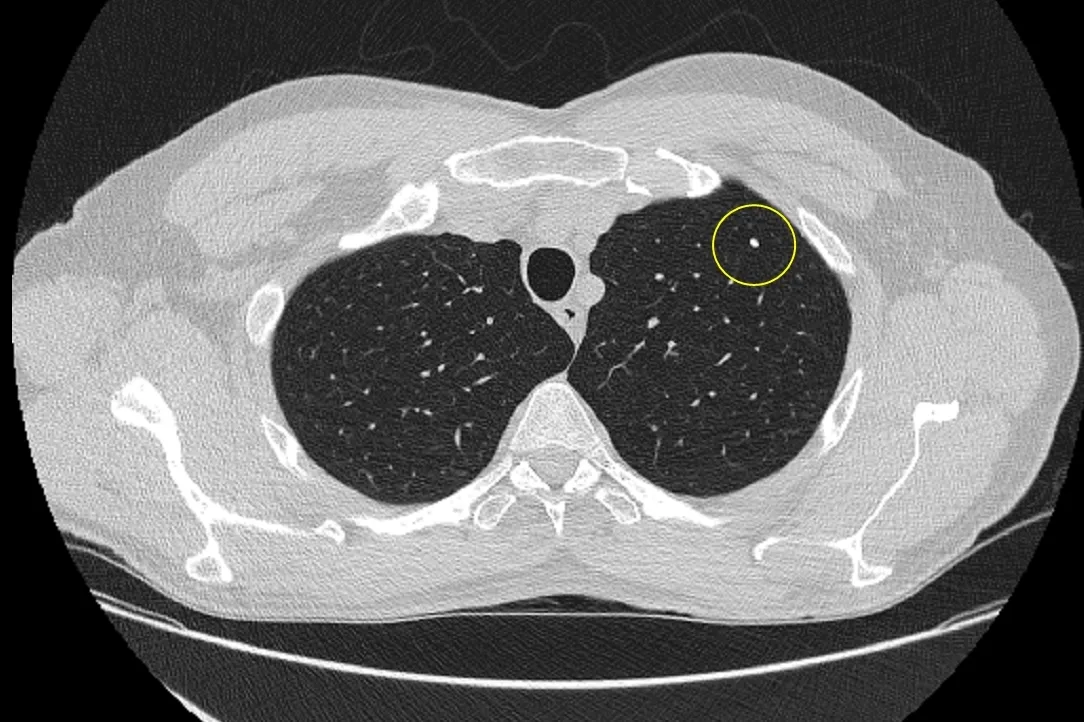
- Lung screening with annual low-dose CT for high-risk smokers reduced lung cancer mortality by about 20% (NLST) and 24% in men (NELSON); USPSTF 2021: age 50–80 with 20 or more pack-years
Differential diagnosis
| Condition | Clues | Key test |
|---|---|---|
| Screening | Asymptomatic population offered a test by invitation | Programme test (mammography, HPV, FIT, LDCT) |
| Diagnostic testing | Patient has symptoms or signs (lump, bleeding, weight loss) | Urgent suspected cancer referral and diagnostic imaging or endoscopy |
| Surveillance of high-risk individuals | Known genetic syndrome or previous cancer | Specialist protocol (for example breast MRI, 2-yearly colonoscopy) |
| Case-finding (opportunistic) | Test offered during an unrelated consultation without organised follow-up | Variable; less quality assurance |
| Overdiagnosed indolent cancer | Low-grade lesion found by screening that would not progress | Active surveillance where appropriate (for example low-risk prostate cancer) |
| False-positive result | Abnormal screen with normal diagnostic work-up | Recall imaging, colonoscopy or biopsy |
| Interval cancer | Cancer diagnosed between scheduled screens after a negative test | Diagnostic work-up; programme audit |
Exam pearls
Guideline
UK National Screening Committee criteria (updated 2022) and US Preventive Services Task Force recommendations: breast 2024, colorectal 2021, lung 2021, prostate 2018, cervical 2018 (draft update 2024); WHO cervical screening guideline 2nd edition (2021)
References
- Wilson JMG, Jungner G.. Principles and practice of screening for disease (Public Health Papers 34). World Health Organization, Geneva 1968.
- UK National Screening Committee. Criteria for appraising the viability, effectiveness and appropriateness of a screening programme. GOV.UK 2022.
- US Preventive Services Task Force. Screening for breast cancer: US Preventive Services Task Force recommendation statement. JAMA 2024.
- US Preventive Services Task Force. Screening for colorectal cancer: US Preventive Services Task Force recommendation statement. JAMA 2021.
- US Preventive Services Task Force. Screening for lung cancer: US Preventive Services Task Force recommendation statement. JAMA 2021.
- US Preventive Services Task Force. Screening for prostate cancer: US Preventive Services Task Force recommendation statement. JAMA 2018.
Related topics
By Dr Khalid Seidi (B.Sc., M.D.) · MedEd World Clinical Knowledge library. Original teaching content checked against current guidelines (November 2026); confirm the latest local guidance before clinical use. Not a substitute for clinical judgement.