Clinical Knowledge › Internal medicine › Infectious diseases › Urinary and sexually transmitted infections
Chancroid, lymphogranuloma venereum and donovanosis
Chancroid, lymphogranuloma venereum (LGV) and donovanosis are bacterial STIs causing genital ulcers and inguinal swelling. Chancroid, caused by Haemophilus ducreyi, produces painful, soft, ragged, purulent ulcers with tender suppurating inguinal buboes; it is now rare and mostly sporadic in parts of Africa and Asia. LGV, caused by the invasive Chlamydia trachomatis serovars L1–L3, starts with a transient painless papule, then painful inguinal lymphadenopathy (sometimes with the groove sign) or, in men who have sex with men, a haemorrhagic proctitis that mimics inflammatory bowel disease; untreated it leads to strictures, fistulae and genital elephantiasis. Donovanosis (granuloma inguinale), caused by Klebsiella granulomatis, gives painless, beefy-red, friable ulcers that bleed on contact, with Donovan bodies on tissue smears. Test every genital ulcer for syphilis, herpes and HIV. Treat chancroid with single-dose azithromycin or ceftriaxone, LGV with doxycycline for 21 days and donovanosis with azithromycin until healed.
Patient case, mechanism, investigations, management, flashcards and exam-style questions.Open the lesson →
Key facts
- Chancroid (H. ducreyi): painful, soft, undermined purulent ulcer(s) with tender unilateral inguinal bubo that may suppurate
- LGV (C. trachomatis L1–L3): painless transient papule, then painful inguinal nodes (groove sign) or proctocolitis in men who have sex with men
- Donovanosis (Klebsiella granulomatis): painless, beefy-red, friable ulcer that bleeds on touch; subcutaneous 'pseudobuboes', not true nodes
- Every genital ulcer needs testing for syphilis (serology ± PCR), herpes simplex (PCR) and HIV; mixed infection is common
- Diagnose LGV with a chlamydia NAAT on a rectal, ulcer or bubo sample followed by LGV-specific genotyping PCR
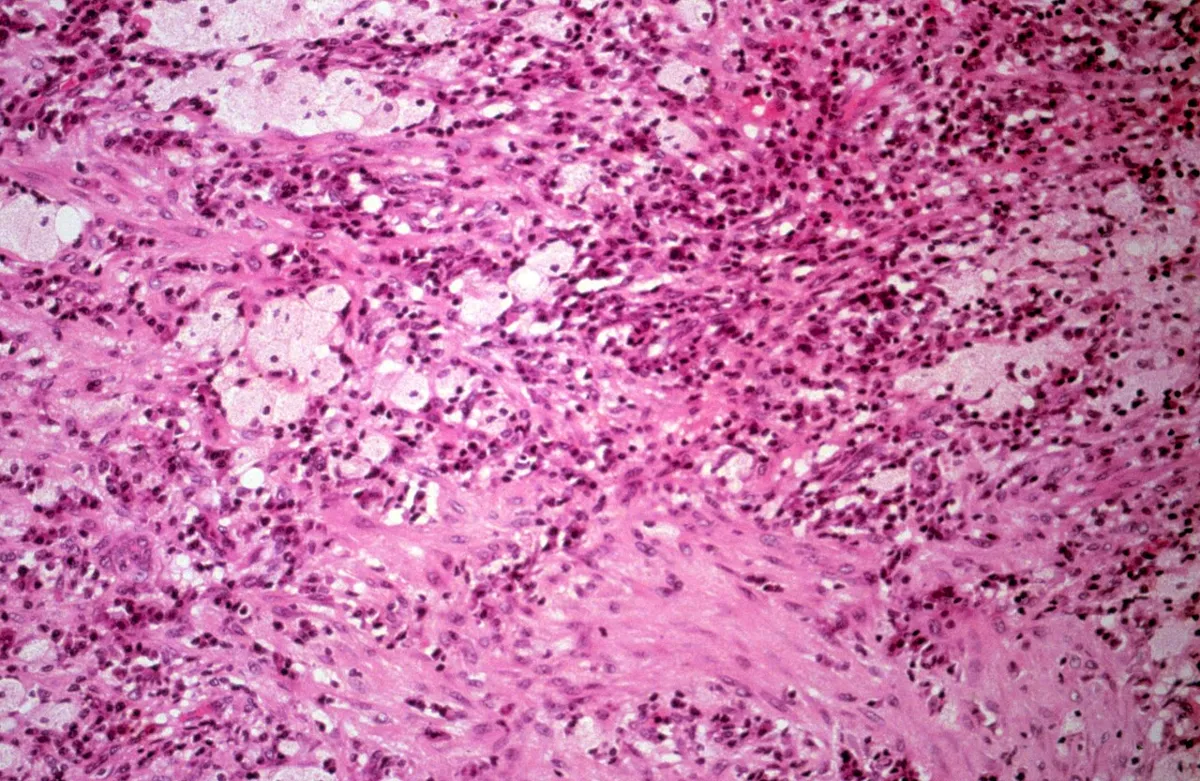
- Donovan bodies (bipolar 'safety-pin' intracellular bacteria in macrophages) on a Giemsa-stained tissue crush smear or biopsy confirm donovanosis
- Treat chancroid with azithromycin 1 g once or ceftriaxone IM once; LGV with doxycycline 100 mg twice daily for 21 days; donovanosis with azithromycin for at least 3 weeks and until healed
- Fluctuant buboes should be aspirated or incised and drained; all three infections greatly increase HIV acquisition and transmission
Differential diagnosis
| Condition | Clues | Key test |
|---|---|---|
| Primary syphilis | Single painless indurated clean-based chancre; painless rubbery nodes | Treponemal serology, T. pallidum PCR or dark-field microscopy |
| Genital herpes | Multiple painful vesicles and shallow erosions, recurrent; tender nodes | HSV PCR swab |
| Behçet disease | Recurrent painful oral and genital ulcers, uveitis, pathergy | Clinical criteria; negative infection screen |
| Fixed drug eruption or trauma | Recurrence at the same site after a drug (e.g. NSAID, co-trimoxazole) or history of injury | History; negative infection screen |
| Squamous cell carcinoma | Persistent indurated ulcer in an older person; does not heal on antibiotics | Biopsy |
| Crohn disease or ulcerative colitis (vs LGV proctitis) | Proctitis with bleeding, mucus and tenesmus | Rectal chlamydia NAAT with LGV genotyping; colonoscopy and biopsy |
| Inguinal lymphadenitis from other causes (lymphoma, cat scratch disease, TB) | Inguinal swelling without genital ulcer or sexual risk | Node aspirate or biopsy, culture and histology |
Exam pearls
Guideline
CDC Sexually Transmitted Infections Treatment Guidelines (2021) and WHO guidelines for the management of symptomatic sexually transmitted infections (2021), with European IUSTI guidelines on chancroid (2017), donovanosis (2016) and lymphogranuloma venereum (2019) and BASHH LGV guideline (2013)
References
- Workowski KA, Bachmann LH, Chan PA, et al.. Sexually transmitted infections treatment guidelines, 2021. MMWR Recomm Rep 2021.
- World Health Organization. Guidelines for the management of symptomatic sexually transmitted infections. WHO, Geneva 2021.
- de Vries HJC, de Barbeyrac B, de Vrieze NHN, et al.. 2019 European guideline on the management of lymphogranuloma venereum. J Eur Acad Dermatol Venereol 2019.
- Lautenschlager S, Kemp M, Christensen JJ, Mayans MV, Moi H.. 2017 European guideline for the management of chancroid. Int J STD AIDS 2017.
- O'Farrell N, Moi H.. 2016 European guideline on donovanosis. Int J STD AIDS 2016.
- White J, O'Farrell N, Daniels D.. 2013 UK National Guideline for the management of lymphogranuloma venereum. Int J STD AIDS 2013.
Related topics
By Dr Khalid Seidi (B.Sc., M.D.) · MedEd World Clinical Knowledge library. Original teaching content checked against current guidelines (November 2026); confirm the latest local guidance before clinical use. Not a substitute for clinical judgement.