Clinical Knowledge › Internal medicine › Infectious diseases › Urinary and sexually transmitted infections
Prostatitis and epididymo-orchitis
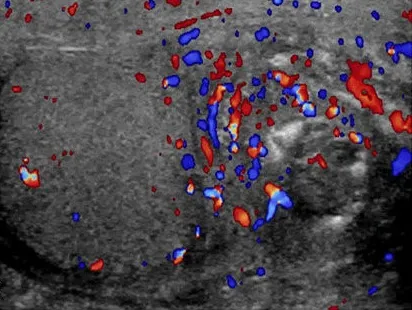
Prostatitis and epididymo-orchitis are infections of the male genital tract that usually arise from ascending urethral or bladder infection. Acute bacterial prostatitis is caused mainly by E. coli and other Enterobacterales, sometimes after transrectal prostate biopsy or catheterisation, and presents with fever, rigors, perineal pain, dysuria and voiding difficulty with an exquisitely tender prostate. It is diagnosed clinically with urine and blood cultures, and treated with a quinolone or trimethoprim for about 14 days, IV agents if septic, and drainage of retention or abscess. Chronic bacterial prostatitis causes relapsing UTI from the same organism, while chronic pelvic pain syndrome is commoner and is not infectious. Epididymo-orchitis causes unilateral scrotal pain and swelling developing over hours to days. In younger sexually active men it is usually due to Chlamydia trachomatis or Neisseria gonorrhoeae; in older men, after instrumentation, and in men who have insertive anal sex, enteric organisms predominate. Mumps causes orchitis in unvaccinated men. Testicular torsion must always be excluded, and STI-related cases need partner notification.
Patient case, mechanism, investigations, management, flashcards and exam-style questions.Open the lesson →
Key facts
- NIH prostatitis categories: I acute bacterial, II chronic bacterial, III chronic prostatitis/chronic pelvic pain syndrome (inflammatory or non-inflammatory), IV asymptomatic inflammatory
- Acute bacterial prostatitis: fever, perineal pain, dysuria, retention; gentle rectal examination shows an exquisitely tender, swollen prostate – avoid prostatic massage
- NICE NG110 (2018): oral ciprofloxacin or ofloxacin, or trimethoprim if a quinolone is unsuitable, for 14 days then review
- Chronic bacterial prostatitis causes recurrent UTI with the same organism; diagnosed by pre- and post-massage urine cultures and treated with about 4 weeks of a fluoroquinolone
- Epididymo-orchitis under 35 or sexually acquired: Chlamydia and gonorrhoea; over 35 or after instrumentation: E. coli and other enteric organisms; insertive anal sex: enteric organisms as well as STIs
- Testicular torsion (sudden severe pain, high-riding horizontal testis, absent cremasteric reflex) needs urgent surgical exploration; do not delay for Doppler
- Sexually acquired epididymo-orchitis: ceftriaxone 1 g IM single dose plus doxycycline 100 mg twice daily for 10–14 days (BASHH); CDC uses ceftriaxone 500 mg
- Mumps orchitis follows parotitis by about 4–8 days in unvaccinated adolescents and men; it can cause testicular atrophy and subfertility
Differential diagnosis
| Condition | Clues | Key test |
|---|---|---|
| Testicular torsion | Sudden severe pain, adolescent, high-riding horizontal testis, absent cremasteric reflex | Urgent surgical exploration; Doppler only if it will not delay surgery |
| Torsion of testicular appendage | Child, focal upper-pole tenderness, blue dot sign | Ultrasound; analgesia |
| Testicular tumour | Painless firm mass, may bleed and cause pain | Ultrasound; AFP, β-hCG, LDH |
| Inguinal hernia or hydrocele | Swelling you cannot get above, or transilluminates | Clinical examination; ultrasound |
| Fournier gangrene | Severe perineal pain, crepitus, systemic toxicity, diabetes | Emergency surgical debridement; CT |
| Acute cystitis or pyelonephritis in a man | Dysuria with fever but non-tender prostate | Urine culture; rectal examination |
| Chronic pelvic pain syndrome | Pelvic pain for 3 months or more, sterile cultures | NIH-CPSI score; exclusion of infection |
| Prostate cancer | Older man, hard irregular prostate, raised PSA without infection | MRI prostate and biopsy pathway |
Exam pearls
Guideline
NICE NG110 Prostatitis (acute): antimicrobial prescribing (2018), BASHH UK national guideline for the management of epididymo-orchitis (2020), 2024 European (IUSTI) guideline on the management of epididymo-orchitis, CDC STI Treatment Guidelines (2021) and EAU Guidelines on Urological Infections (2025)
References
- National Institute for Health and Care Excellence. Prostatitis (acute): antimicrobial prescribing (NG110). NICE 2018.
- British Association for Sexual Health and HIV. UK national guideline for the management of epididymo-orchitis. BASHH 2020.
- Justice ED, Fricker J, Ross JDC, et al.. The 2024 European guideline on the management of epididymo-orchitis. J Eur Acad Dermatol Venereol 2026.
- Workowski KA, Bachmann LH, Chan PA, et al.. Sexually transmitted infections treatment guidelines, 2021. MMWR Recomm Rep 2021.
- European Association of Urology (EAU). EAU Guidelines on Urological Infections. EAU Guidelines Office, Arnhem 2025.
- Medicines and Healthcare products Regulatory Agency. Fluoroquinolone antibiotics: must now only be prescribed when other commonly recommended antibiotics are inappropriate. Drug Safety Update 2024.
Related topics
By Dr Khalid Seidi (B.Sc., M.D.) · MedEd World Clinical Knowledge library. Original teaching content checked against current guidelines (November 2026); confirm the latest local guidance before clinical use. Not a substitute for clinical judgement.