Clinical Knowledge › Internal medicine › Infectious diseases › Urinary and sexually transmitted infections
Pelvic inflammatory disease (PID)
Pelvic inflammatory disease is infection of the upper female genital tract, including endometritis, salpingitis, tubo-ovarian abscess and pelvic peritonitis, caused by organisms ascending from the cervix and vagina. Chlamydia trachomatis and Neisseria gonorrhoeae are the classic causes, but Mycoplasma genitalium, anaerobes and other vaginal flora account for many cases and often no organism is found. It mainly affects sexually active women under 25. It causes lower abdominal pain, deep dyspareunia, discharge or abnormal bleeding, sometimes fever; many cases are subclinical. No single test is reliable and delay worsens tubal damage, so pelvic pain with cervical motion, uterine or adnexal tenderness is enough to treat once pregnancy and surgical causes are excluded. Tests include a pregnancy test, NAATs, vaginal microscopy, inflammatory markers and transvaginal ultrasound. Treatment covers gonorrhoea, chlamydia and anaerobes for 14 days, usually as outpatients, with partner notification. Complications are infertility, ectopic pregnancy and chronic pelvic pain.
Patient case, mechanism, investigations, management, flashcards and exam-style questions.Open the lesson →
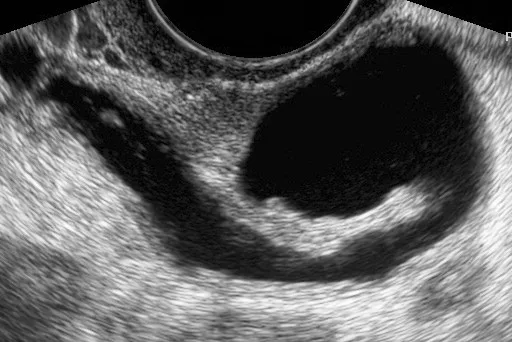
Key facts
- PID is polymicrobial: chlamydia and gonorrhoea are found in only a minority of UK cases; M. genitalium and anaerobes also contribute
- Minimum clinical criteria (CDC): pelvic or lower abdominal pain with cervical motion, uterine or adnexal tenderness, with no other cause
- Always do a pregnancy test: ectopic pregnancy is the critical differential
- Absence of pus cells on vaginal microscopy has a high negative predictive value; positive NAATs support but negative NAATs do not exclude PID
- UK outpatient regimen: ceftriaxone 1 g IM once, then doxycycline 100 mg twice daily plus metronidazole 400 mg twice daily for 14 days
- Admit if a surgical emergency cannot be excluded, tubo-ovarian abscess, severe illness, pregnancy, or failure of oral therapy
- An IUD can usually stay in for mild to moderate PID; consider removal if there is no improvement within 48–72 hours
- After one episode, about 1 in 5–10 women have tubal infertility; risk rises with each further episode, delayed treatment and severity
Differential diagnosis
| Condition | Clues | Key test |
|---|---|---|
| Ectopic pregnancy | Amenorrhoea, vaginal bleeding, shoulder-tip pain, shock | Urine or serum hCG; transvaginal ultrasound |
| Acute appendicitis | Periumbilical pain migrating to right iliac fossa, anorexia; less cervical tenderness | Clinical; ultrasound or CT |
| Ovarian torsion | Sudden severe unilateral pain with vomiting | Doppler ultrasound; urgent laparoscopy |
| Ruptured or haemorrhagic ovarian cyst | Sudden mid-cycle pain | Pelvic ultrasound; free fluid |
| Endometriosis | Cyclical pain, dysmenorrhoea, dyspareunia over months | Laparoscopy; ultrasound for endometrioma |
| Urinary tract infection | Dysuria, frequency, loin pain | Urine dipstick and culture |
| Cholecystitis (if RUQ pain) | Right upper quadrant pain after meals | Ultrasound shows gallstones; consider Fitz-Hugh–Curtis |
Exam pearls
Guideline
BASHH UK national guideline for the management of pelvic inflammatory disease (2019 update), CDC STI Treatment Guidelines (2021) and European (IUSTI) PID guideline (2017)
References
- Ross J, Cole M, Evans C, et al.. UK national guideline for the management of pelvic inflammatory disease (2019 interim update). BASHH 2019.
- Workowski KA, Bachmann LH, Chan PA, et al.. Sexually transmitted infections treatment guidelines, 2021. MMWR Recomm Rep 2021.
- Ross J, Guaschino S, Cusini M, Jensen J. 2017 European guideline for the management of pelvic inflammatory disease. Int J STD AIDS 2018.
- Ness RB, Soper DE, Holley RL, et al.. Effectiveness of inpatient and outpatient treatment strategies for women with pelvic inflammatory disease: results from the PID Evaluation and Clinical Health (PEACH) randomized trial. Am J Obstet Gynecol 2002.
- Wiesenfeld HC, Meyn LA, Darville T, et al.. A randomized controlled trial of ceftriaxone and doxycycline, with or without metronidazole, for the treatment of acute pelvic inflammatory disease. Clin Infect Dis 2021.
- Brunham RC, Gottlieb SL, Paavonen J. Pelvic inflammatory disease. N Engl J Med 2015.
Related topics
By Dr Khalid Seidi (B.Sc., M.D.) · MedEd World Clinical Knowledge library. Original teaching content checked against current guidelines (November 2026); confirm the latest local guidance before clinical use. Not a substitute for clinical judgement.