Clinical Knowledge › Internal medicine › Infectious diseases › Urinary and sexually transmitted infections
Gonorrhoea
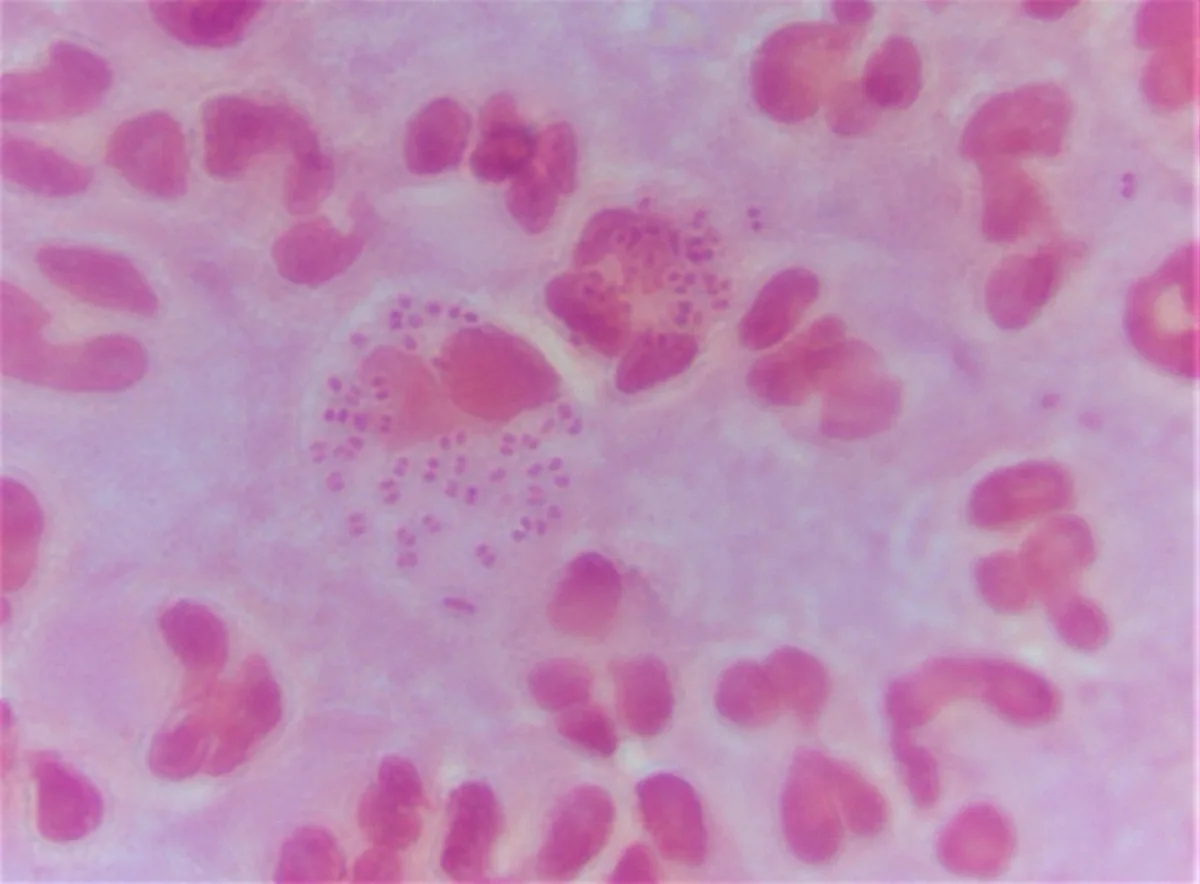
Gonorrhoea is a sexually transmitted infection caused by Neisseria gonorrhoeae, a Gram-negative intracellular diplococcus that infects columnar epithelium of the urethra, endocervix, rectum, pharynx and conjunctiva. Urethral infection in men causes purulent discharge within 2–5 days; cervical, rectal and pharyngeal infections are often silent. Untreated infection causes pelvic inflammatory disease, infertility and epididymo-orchitis, and bacteraemia produces disseminated infection with tenosynovitis, pustules and septic arthritis. Nucleic acid amplification tests (NAAT) on first-void urine, vulvovaginal, rectal and pharyngeal swabs are the most sensitive tests, but culture before treatment is essential for susceptibility testing because resistance has emerged to almost every class. Current UK and WHO guidance recommends a single 1 g intramuscular dose of ceftriaxone (500 mg in the US), with partner notification, testing for other STIs and test of cure where indicated. Two oral agents, zoliflodacin and gepotidacin, were approved in the US in late 2025.
Patient case, mechanism, investigations, management, flashcards and exam-style questions.Open the lesson →
Key facts
- N. gonorrhoeae is a Gram-negative, oxidase-positive intracellular diplococcus that ferments glucose but not maltose
- Over 90% of men with urethral infection have symptoms; up to half of cervical and most rectal and pharyngeal infections are asymptomatic
- NAAT is the most sensitive test; culture before treatment is needed for antimicrobial susceptibility testing
- UK (BASHH 2025) and WHO (2024) first line: ceftriaxone 1 g IM single dose; CDC (2020/2021): ceftriaxone 500 mg IM (1 g if 150 kg or more)
- Severe beta-lactam allergy: gentamicin 240 mg IM plus azithromycin 2 g orally (poor for pharyngeal infection)
- Pharyngeal infection is the main site of treatment failure and resistance emergence; always sample the pharynx
- Disseminated infection: arthritis–dermatitis syndrome or purulent septic arthritis; terminal complement deficiency predisposes
- UK began offering the 4CMenB meningococcal B vaccine to people at higher risk of gonorrhoea in 2025 (partial cross-protection)
Differential diagnosis
| Condition | Clues | Key test |
|---|---|---|
| Chlamydia trachomatis infection | Mucoid, scanty discharge; often coexists | NAAT (dual chlamydia/gonorrhoea assay) |
| Mycoplasma genitalium | Persistent urethritis after standard treatment | M. genitalium NAAT with macrolide-resistance testing |
| Trichomonas vaginalis | Frothy green-yellow discharge, vulvitis, strawberry cervix | T. vaginalis NAAT or wet mount |
| Urinary tract infection | Frequency and urgency, no urethral discharge | Urine dipstick and culture |
| Reactive arthritis | Arthritis, urethritis and conjunctivitis 1–4 weeks after infection; sterile joint | Joint aspirate culture negative; HLA-B27 |
| Non-gonococcal septic arthritis | Single hot joint, no skin lesions or tenosynovitis | Synovial fluid Gram stain and culture (S. aureus) |
| Genital herpes | Painful ulcers, dysuria with vesicles | HSV PCR of lesion swab |
Exam pearls
Guideline
BASHH UK national guideline for the management of infection with Neisseria gonorrhoeae (2025), WHO updated recommendations for the treatment of N. gonorrhoeae, C. trachomatis and syphilis (2024), CDC STI Treatment Guidelines (2021, gonorrhoea update 2020) and European (IUSTI) gonorrhoea guideline (2020)
References
- Fifer H, Ismail MA, Soni S, et al.. British Association for Sexual Health and HIV UK national guideline for the management of infection with Neisseria gonorrhoeae, 2025. Int J STD AIDS 2025.
- World Health Organization. Updated recommendations for the treatment of Neisseria gonorrhoeae, Chlamydia trachomatis and Treponema pallidum (syphilis), and new recommendations on syphilis testing and partner services. WHO, Geneva 2024.
- Workowski KA, Bachmann LH, Chan PA, et al.. Sexually transmitted infections treatment guidelines, 2021. MMWR Recomm Rep 2021.
- Unemo M, Ross J, Serwin AB, et al.. 2020 European guideline for the diagnosis and treatment of gonorrhoea in adults. Int J STD AIDS 2020.
- St Cyr S, Barbee L, Workowski KA, et al.. Update to CDC's treatment guidelines for gonococcal infection, 2020. MMWR Morb Mortal Wkly Rep 2020.
- Unemo M, Seifert HS, Hook EW 3rd, et al.. Gonorrhoea. Nat Rev Dis Primers 2019.
Related topics
By Dr Khalid Seidi (B.Sc., M.D.) · MedEd World Clinical Knowledge library. Original teaching content checked against current guidelines (November 2026); confirm the latest local guidance before clinical use. Not a substitute for clinical judgement.