Clinical Knowledge › Internal medicine › Infectious diseases › Urinary and sexually transmitted infections
Genital herpes
Genital herpes is infection of the anogenital skin and mucosa with herpes simplex virus type 1 or 2. After a first episode the virus establishes lifelong latency in sacral dorsal root ganglia and reactivates to cause recurrences and asymptomatic shedding, which accounts for most transmission. HSV-1, acquired increasingly through oral sex, now causes most first episodes in many high-income countries, but HSV-2 recurs far more often. A first episode produces multiple painful vesicles that ulcerate, with dysuria, tender inguinal lymphadenopathy and often fever and myalgia; urinary retention and aseptic meningitis can occur. Recurrences are milder and shorter, often preceded by tingling. Diagnosis is by HSV PCR of a lesion swab with typing. Oral aciclovir or valaciclovir started within 5 days of onset shortens the first episode; recurrences are treated with short episodic courses or prevented with daily suppressive therapy. The gravest risk is neonatal herpes, highest after a first episode late in pregnancy, when caesarean birth is advised.
Patient case, mechanism, investigations, management, flashcards and exam-style questions.Open the lesson →
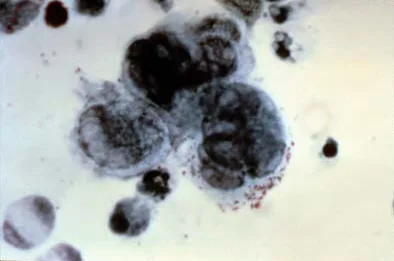
Key facts
- HSV-1 and HSV-2 both cause genital herpes; HSV-2 recurs about four to six times a year in the first year, HSV-1 genital infection about once
- Latency in sacral sensory ganglia; reactivation causes recurrences and asymptomatic shedding, the main source of transmission
- First episode: multiple painful vesicles and ulcers, dysuria, bilateral tender inguinal nodes, fever and myalgia 2–12 days after exposure
- HSV PCR (NAAT) of a lesion swab with typing is the diagnostic test; type-specific serology is not used routinely
- First episode: aciclovir 400 mg three times daily (or valaciclovir 500 mg twice daily) for 5 days, longer if new lesions keep forming (CDC: 7–10 days)
- Suppressive therapy (for example aciclovir 400 mg twice daily) for frequent or distressing recurrences reduces recurrences and halves transmission to partners
- Neonatal herpes risk is highest after a first-episode infection in the third trimester; caesarean birth is advised if it occurs within 6 weeks of delivery
- Aciclovir is a guanosine analogue activated by viral thymidine kinase; resistance (usually in immunosuppression) is treated with foscarnet
Differential diagnosis
| Condition | Clues | Key test |
|---|---|---|
| Primary syphilis | Single painless indurated ulcer, painless nodes | T. pallidum PCR and syphilis serology |
| Chancroid | Painful deep ragged ulcer, suppurating buboes; tropics | H. ducreyi PCR |
| Lymphogranuloma venereum | Small painless ulcer then large tender nodes or proctitis | Chlamydia NAAT with LGV typing |
| Fixed drug eruption | Recurs at same site after a drug (NSAID, co-trimoxazole) | Drug history; HSV PCR negative |
| Behçet disease | Recurrent oral and genital aphthae, uveitis, pathergy | Clinical criteria; HSV PCR negative |
| Candida vulvovaginitis or balanitis | Itch, erythema and fissures, no vesicles | Microscopy and culture for yeast |
| Herpes zoster (sacral dermatome) | Unilateral dermatomal vesicles, older or immunosuppressed | VZV PCR of lesion |
Exam pearls
Guideline
BASHH UK national guideline for the management of anogenital herpes (2024), joint BASHH/RCOG guideline on genital herpes in pregnancy (2024), CDC STI Treatment Guidelines (2021) and European (IUSTI) genital herpes guideline (2017)
References
- Patel R, Green J, Clarke E, et al.. British Association of Sexual Health and HIV UK national guideline for the management of anogenital herpes, 2024. Int J STD AIDS 2024.
- Clarke E, et al.. Joint BASHH and RCOG guideline: management of genital herpes in pregnancy. BASHH/RCOG 2024.
- Workowski KA, Bachmann LH, Chan PA, et al.. Sexually transmitted infections treatment guidelines, 2021. MMWR Recomm Rep 2021.
- Patel R, Green J, Clarke E, et al.. 2017 European guidelines for the management of genital herpes. Int J STD AIDS 2017.
- Corey L, Wald A, Patel R, et al.. Once-daily valacyclovir to reduce the risk of transmission of genital herpes. N Engl J Med 2004.
- Brown ZA, Wald A, Morrow RA, et al.. Effect of serologic status and cesarean delivery on transmission rates of herpes simplex virus from mother to infant. JAMA 2003.
Related topics
By Dr Khalid Seidi (B.Sc., M.D.) · MedEd World Clinical Knowledge library. Original teaching content checked against current guidelines (November 2026); confirm the latest local guidance before clinical use. Not a substitute for clinical judgement.