Clinical Knowledge › Obstetrics and gynaecology › Labour and delivery
Chorioamnionitis
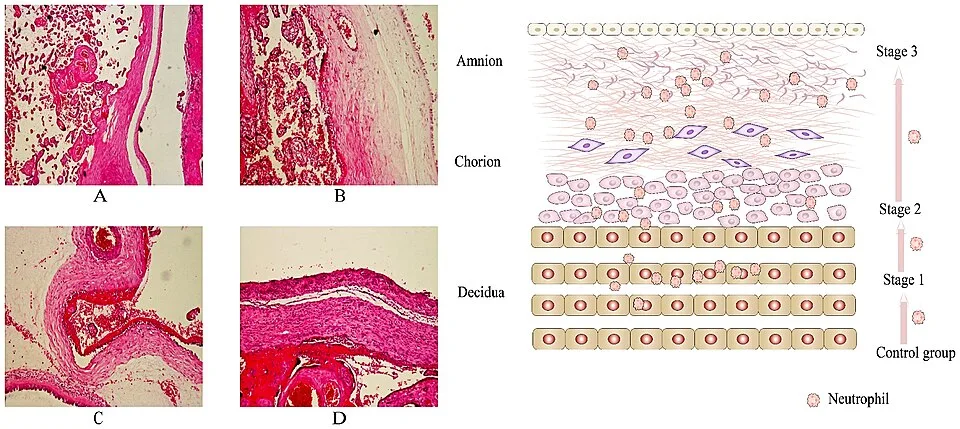
Chorioamnionitis, now often called intraamniotic infection or 'Triple I' (intrauterine inflammation or infection or both), is infection or inflammation of the amniotic fluid, fetal membranes, placenta or decidua. It complicates about 1–4% of term births and a much larger share of preterm births, especially after preterm prelabour rupture of membranes. Infection usually ascends from the vagina and is polymicrobial (genital mycoplasmas, group B streptococcus, Escherichia coli, anaerobes); Listeria spreads haematogenously. Prolonged rupture of membranes, long labour, multiple vaginal examinations and internal monitoring are the main risk factors. The key sign is intrapartum maternal fever, with maternal or fetal tachycardia, uterine tenderness, purulent or offensive liquor and leucocytosis. ACOG's 2024 update allows a suspected diagnosis with a temperature of 39.0 °C or more alone, or 38.0–38.9 °C with one other clinical sign. Treatment is prompt broad-spectrum intravenous antibiotics with group B streptococcal cover, paracetamol, continuous fetal monitoring and birth by the usual obstetric indications; caesarean is not indicated for infection alone. The neonatal team must be informed because of the risk of early-onset sepsis.
Patient case, mechanism, investigations, management, flashcards and exam-style questions.Open the lesson →
Key facts
- Triple I (NICHD 2016): isolated maternal fever, suspected intraamniotic infection, or confirmed infection (positive amniotic fluid Gram stain, culture or biochemistry, or placental histology)
- ACOG Clinical Practice Update (2024): suspect intraamniotic infection with maternal temperature 39.0 °C or more, or 38.0–38.9 °C plus one other clinical risk factor; it may be suspected without fever if other signs are present
- Supporting signs: fetal tachycardia above 160 bpm, maternal leucocytosis (above about 15 ×10^9/L without steroids), purulent or offensive cervical discharge, uterine tenderness, maternal tachycardia
- NICE intrapartum: temperature 38 °C or more once, or 37.5 °C or more on two readings an hour apart, needs assessment for infection and continuous CTG
- Organisms: usually polymicrobial ascending infection – Ureaplasma and Mycoplasma, GBS, E. coli, anaerobes; Listeria via the blood
- Teaching regimen (ACOG): ampicillin 2 g IV 6-hourly plus gentamicin 5 mg/kg IV daily (or 2 mg/kg then 1.5 mg/kg 8-hourly); add clindamycin or metronidazole at caesarean
- Chorioamnionitis alone is not an indication for caesarean; aim for birth with augmentation as needed, using caesarean for usual obstetric indications
- Neonatal risks: early-onset sepsis, pneumonia, meningitis, cerebral palsy and chronic lung disease; maternal risks: dysfunctional labour, caesarean, atonic PPH, endometritis and sepsis
Differential diagnosis
| Condition | Clues | Key test |
|---|---|---|
| Epidural-related maternal fever | Gradual low-grade fever after several hours of epidural; no other signs | Diagnosis of exclusion; treat as infection if signs overlap |
| Urinary tract infection or pyelonephritis | Dysuria, loin pain, renal angle tenderness | Urinalysis and urine culture |
| Influenza or COVID-19 and other respiratory infection | Cough, coryza, myalgia, contacts | Viral PCR, chest examination |
| Listeriosis | Flu-like illness, preterm labour, meconium-stained liquor at preterm gestation | Blood cultures; placental culture |
| Placental abruption | Constant pain, tense tender uterus, bleeding, no fever | Clinical, CTG, coagulation |
| Appendicitis or other surgical cause | Localised abdominal pain, fever, vomiting | Ultrasound or MRI; surgical review |
| Invasive group A streptococcal infection | Severe pain, rapid deterioration, shock, sore throat contact | Blood cultures, lactate, throat and vaginal swabs |
Exam pearls
Guideline
ACOG Clinical Practice Update: criteria for suspected diagnosis of intraamniotic infection (2024), updating ACOG Committee Opinion No. 712 (2017); NICE NG235 Intrapartum care (2023) and NICE NG195 Neonatal infection (2021, last updated 2026)
References
- American College of Obstetricians and Gynecologists. ACOG Clinical Practice Update: Update on criteria for suspected diagnosis of intraamniotic infection. Obstet Gynecol 2024.
- American College of Obstetricians and Gynecologists. Committee Opinion No. 712: Intrapartum management of intraamniotic infection. Obstet Gynecol 2017.
- Higgins RD, Saade G, Polin RA, et al.. Evaluation and management of women and newborns with a maternal diagnosis of chorioamnionitis: summary of a workshop. Obstet Gynecol 2016.
- National Institute for Health and Care Excellence. Intrapartum care (NG235). NICE guideline NG235 2023.
- National Institute for Health and Care Excellence. Neonatal infection: antibiotics for prevention and treatment (NG195). NICE guideline NG195 2021.
- Thomson AJ. Care of women presenting with suspected preterm prelabour rupture of membranes from 24+0 weeks of gestation: Green-top Guideline No. 73. BJOG 2019.
Related topics
By Dr Khalid Seidi (B.Sc., M.D.) · MedEd World Clinical Knowledge library. Original teaching content checked against current guidelines (November 2026); confirm the latest local guidance before clinical use. Not a substitute for clinical judgement.