Clinical Knowledge › Paediatrics › Child development, behaviour and safeguarding
Eating disorders in adolescents
Eating disorders are serious mental illnesses that usually begin in adolescence. The main types are anorexia nervosa (restriction with low weight and fear of weight gain), atypical anorexia nervosa (the same features after major weight loss but with weight in the normal range), bulimia nervosa (binge eating with purging or other compensatory behaviour), binge eating disorder and avoidant/restrictive food intake disorder (ARFID, restriction without body-image concerns, common in younger children and boys). Malnutrition causes bradycardia, postural hypotension, hypothermia, delayed puberty, growth failure and loss of peak bone mass, and anorexia nervosa has one of the highest mortality rates of any psychiatric disorder. Assessment uses percentage of median BMI for age and sex, vital signs including lying and standing heart rate and blood pressure, ECG and electrolytes, interpreted with MEED. Most adolescents are treated as outpatients with eating-disorder-focused family therapy; medically unstable patients need admission for careful refeeding with phosphate monitoring to prevent refeeding syndrome.
Patient case, mechanism, investigations, management, flashcards and exam-style questions.Open the lesson →
Key facts
- Peak onset 13–18 years; anorexia nervosa affects about 1% of adolescent girls; boys are under-recognised; ARFID is commoner in younger children and boys
- Use percentage of median BMI (%mBMI) for age and sex, not adult BMI cut-offs; under 70% mBMI indicates severe malnutrition
- Atypical anorexia nervosa can cause the same bradycardia and instability as anorexia nervosa despite normal weight
- Medical instability (examples): daytime HR under 50/min, SBP under 90 mmHg, orthostatic HR rise over 40/min in adolescents, temperature under 35.6 °C, electrolyte derangement, syncope
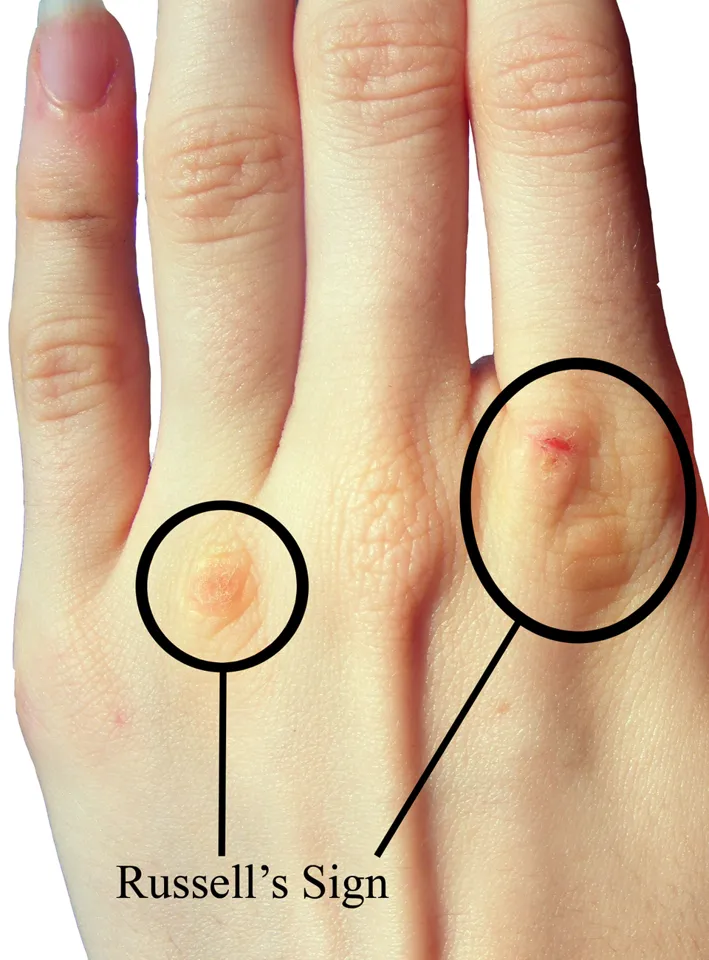
- Purging: hypokalaemic hypochloraemic metabolic alkalosis, parotid swelling, dental erosion, Russell sign
- First-line for adolescent anorexia nervosa: eating-disorder-focused family therapy (FT-AN/family-based treatment)
- Refeeding syndrome: hypophosphataemia, hypokalaemia, hypomagnesaemia in the first 1–2 weeks; higher-calorie refeeding with monitoring is safe in hospital
- Anorexia nervosa has one of the highest standardised mortality ratios of any psychiatric disorder (cardiac death and suicide)
Differential diagnosis
| Condition | Clues | Key test |
|---|---|---|
| Coeliac disease | Weight loss, abdominal symptoms, iron deficiency, no fear of weight gain | Tissue transglutaminase IgA with total IgA |
| Inflammatory bowel disease | Diarrhoea, blood per rectum, growth failure, raised inflammatory markers | CRP, faecal calprotectin, endoscopy |
| Hyperthyroidism | Weight loss with tachycardia, heat intolerance, tremor (bradycardia in anorexia) | TSH and free T4 |
| Type 1 diabetes (including insulin omission) | Polyuria, polydipsia, ketosis; deliberate insulin restriction for weight | Glucose, HbA1c, ketones |
| Brain tumour (hypothalamic) | Weight loss, headache, visual field defect, vomiting, diabetes insipidus | MRI brain |
| Depression or anxiety | Low appetite without body-image concerns or deliberate restriction | Mental state examination |
| Adrenal insufficiency | Weight loss, salt craving, pigmentation, hypotension, hyponatraemia with hyperkalaemia | Morning cortisol, ACTH, Synacthen test |
Exam pearls
Guideline
NICE NG69 Eating disorders (2017, updated 2020); RCPsych MEED Medical emergencies in eating disorders (CR233, 2022); AAP clinical report (2021); SAHM position paper (2022)
References
- National Institute for Health and Care Excellence. Eating disorders: recognition and treatment (NG69). NICE guideline 2017.
- Royal College of Psychiatrists. Medical emergencies in eating disorders (MEED): guidance on recognition and management (CR233). College report 2022.
- Hornberger LL, Lane MA. Identification and Management of Eating Disorders in Children and Adolescents. Pediatrics 2021.
- Society for Adolescent Health and Medicine. Medical management of restrictive eating disorders in adolescents and young adults. J Adolesc Health 2022.
- Lock J, Le Grange D, Agras WS, et al.. Randomized clinical trial comparing family-based treatment with adolescent-focused individual therapy for adolescents with anorexia nervosa. Arch Gen Psychiatry 2010.
- Garber AK, Cheng J, Accurso EC, et al.. Short-term outcomes of the study of refeeding to optimize inpatient gains for patients with atypical anorexia nervosa. Int J Eat Disord 2024.
Related topics
By Dr Khalid Seidi (B.Sc., M.D.) · MedEd World Clinical Knowledge library. Original teaching content checked against current guidelines (November 2026); confirm the latest local guidance before clinical use. Not a substitute for clinical judgement.