Clinical Knowledge › Paediatrics › Child development, behaviour and safeguarding
Hearing and vision screening in children
Screening for hearing and vision problems is a core part of child health surveillance because both are common, often invisible to parents, and most treatable when found early, while the developing brain is still plastic. Permanent childhood hearing loss affects about 1–2 per 1000 newborns, more in neonatal intensive care graduates. Universal newborn hearing screening uses automated otoacoustic emissions, with automated auditory brainstem response for babies after intensive care or a failed first screen, aiming for screening by 1 month, diagnosis by 3 months and intervention by 6 months. Vision screening starts with the red reflex and eye examination at birth and 6–8 weeks to detect cataract, retinoblastoma and glaucoma, and continues with acuity screening at about 3–5 years to detect amblyopia, strabismus and refractive error. Targeted surveillance covers risk groups such as preterm infants (retinopathy of prematurity), congenital CMV, meningitis and Down syndrome. Any parental concern should be assessed whatever the screen result.
Patient case, mechanism, investigations, management, flashcards and exam-style questions.Open the lesson →
Key facts
- Permanent childhood hearing loss: about 1–2 per 1000 live births; about 1 in 100 NICU graduates
- Well babies: automated otoacoustic emissions (AOAE); NICU stay over 48 hours: AOAE plus automated auditory brainstem response (AABR), because OAE misses auditory neuropathy
- JCIH 1-3-6 goals: screen by 1 month, diagnose by 3 months, start intervention by 6 months (1-2-3 encouraged where 1-3-6 is already met)
- Congenital CMV is the commonest non-genetic cause of sensorineural hearing loss; test saliva or urine PCR within 21 days of birth when the newborn hearing screen is failed
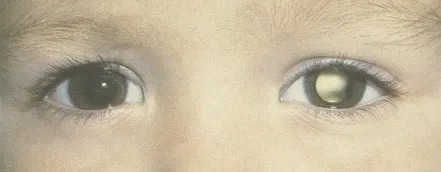
- An absent or white red reflex needs urgent ophthalmology: congenital cataract or retinoblastoma
- Amblyopia affects about 2–3% of children; treatment (glasses, then patching or atropine) works best before about 7 years
- USPSTF: vision screening at least once between 3 and 5 years (grade B); UK: orthoptist-led screening at 4–5 years
- A passed screen never overrides parental concern about hearing or vision
Differential diagnosis
| Condition | Clues | Key test |
|---|---|---|
| Auditory neuropathy spectrum disorder | Passes OAE but abnormal ABR; NICU, hyperbilirubinaemia, hypoxia | Diagnostic ABR |
| Transient conductive loss (vernix or fluid in canal) | Failed first OAE soon after birth, passes repeat | Repeat AOAE, then AABR |
| Otitis media with effusion | Fluctuating hearing loss in preschool children, flat tympanogram | Tympanometry and audiometry |
| Congenital cataract | Absent or dull red reflex, nystagmus later | Urgent ophthalmology |
| Retinoblastoma | White pupillary reflex (leukocoria), new squint | Urgent ophthalmology (within 2 weeks; same day if acute) |
| Congenital glaucoma | Large cloudy cornea, watering and photophobia | Urgent ophthalmology with intraocular pressure measurement |
| Pseudostrabismus | Broad nasal bridge and epicanthic folds; symmetrical corneal light reflex | Corneal light reflex and cover test |
Exam pearls
Guideline
Joint Committee on Infant Hearing Position Statement (2019); USPSTF vision screening in children aged 6 months to 5 years (2017); AAP/AAPOS/AAO vision screening clinical reports (2016); UK NHS newborn hearing, newborn and infant physical examination and child vision screening programmes; UK ROP guideline (RCPCH/RCOphth, 2022, revised 2024)
References
- Joint Committee on Infant Hearing. Year 2019 position statement: principles and guidelines for early hearing detection and intervention programs. Journal of Early Hearing Detection and Intervention 2019.
- US Preventive Services Task Force. Vision screening in children aged 6 months to 5 years: US Preventive Services Task Force recommendation statement. JAMA 2017.
- Donahue SP, Baker CN; Committee on Practice and Ambulatory Medicine; Section on Ophthalmology. Procedures for the evaluation of the visual system by pediatricians. Pediatrics 2016.
- World Health Organization. World report on hearing. WHO, Geneva 2021.
- Kimberlin DW, Jester PM, Sánchez PJ, et al.. Valganciclovir for symptomatic congenital cytomegalovirus disease. N Engl J Med 2015.
- Royal College of Paediatrics and Child Health; Royal College of Ophthalmologists; BAPM; BLISS. UK screening and treatment of retinopathy of prematurity: clinical guideline. RCPCH 2022.
Related topics
By Dr Khalid Seidi (B.Sc., M.D.) · MedEd World Clinical Knowledge library. Original teaching content checked against current guidelines (November 2026); confirm the latest local guidance before clinical use. Not a substitute for clinical judgement.