Clinical Knowledge › Internal medicine › Endocrinology › Reproductive endocrinology
Endocrine evaluation of infertility
Infertility is failure to achieve a clinical pregnancy after 12 months of regular unprotected intercourse; about 1 in 6 people are affected during their lives. Evaluation starts after 12 months, or 6 months if the woman is 35 or older, and both partners are assessed together. Male factors contribute to about half and ovulatory disorders to about a quarter. The endocrine work-up asks three questions. Is the woman ovulating (cycle history, mid-luteal progesterone)? If not, which WHO group is she in: hypogonadotropic (group I), normogonadotropic, usually PCOS (group II), or hypergonadotropic ovarian insufficiency (group III), with hyperprolactinaemia and thyroid disease checked separately? Is sperm production normal (semen analysis against WHO 2021 reference limits, then FSH, LH, testosterone, karyotype and Y microdeletions when severely abnormal)? Treatment follows: letrozole for PCOS, pulsatile GnRH or gonadotrophins for group I, dopamine agonists for prolactinomas, hCG with FSH for hypogonadotropic men, and assisted reproduction when needed.
Patient case, mechanism, investigations, management, flashcards and exam-style questions.Open the lesson →
Key facts
- Infertility = no pregnancy after 12 months of regular unprotected intercourse; investigate after 6 months if the woman is 35 or older, or earlier if there is an obvious cause
- Assess both partners from the start; a male factor contributes to about 40–50% of couples
- Mid-luteal progesterone (about 7 days before the expected period) above about 30 nmol/L (about 10 ng/mL) confirms ovulation
- WHO ovulatory groups: I hypogonadotropic hypogonadism (low FSH, low oestradiol); II normogonadotropic normo-oestrogenic (mainly PCOS); III hypergonadotropic (POI)
- AMH and antral follicle count predict ovarian response to stimulation, not the chance of natural conception
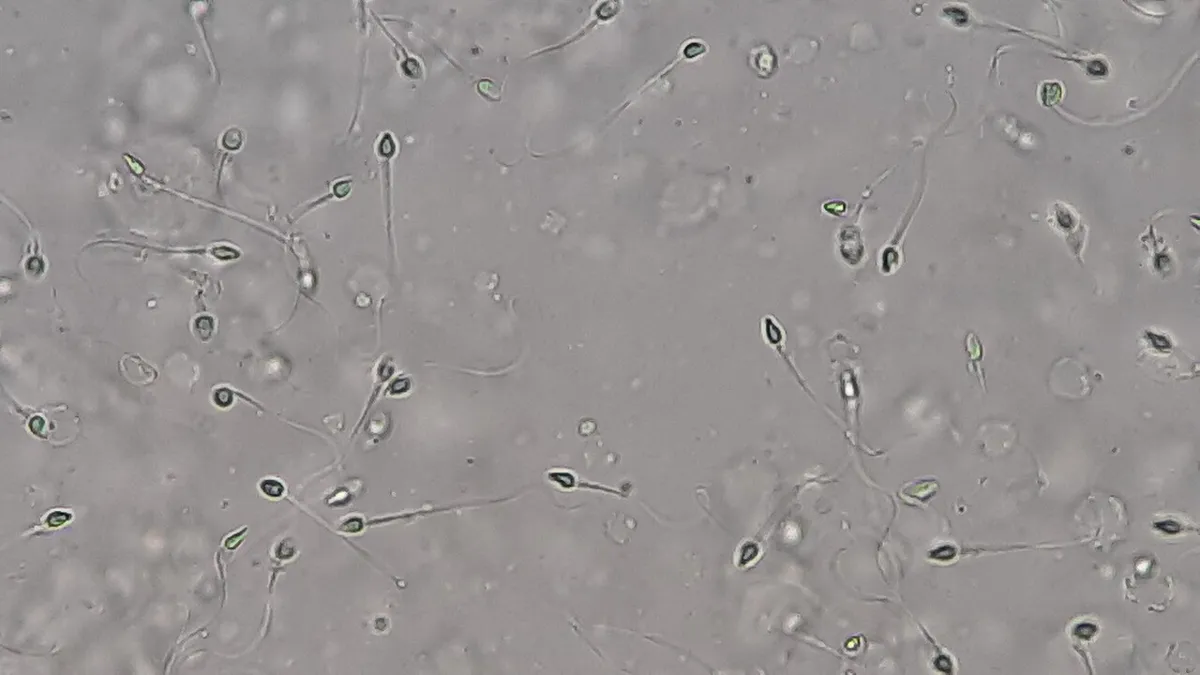
- WHO 2021 semen lower reference limits: volume 1.4 mL, concentration 16 million/mL, total motility 42%, progressive motility 30%, normal forms 4%
- Azoospermia with high FSH and small testes = non-obstructive (karyotype, Y microdeletions); with normal FSH, normal testes and low acidic volume = obstruction (CFTR if absent vas)
- Exogenous testosterone and anabolic steroids suppress LH and FSH and cause azoospermia; never prescribe testosterone to a man trying to conceive
Differential diagnosis
| Condition | Clues | Key test |
|---|---|---|
| Polycystic ovary syndrome | Oligo-anovulation with hirsutism or acne, often raised BMI | Testosterone or free androgen index, AMH or ovarian morphology; exclude other causes |
| Functional hypothalamic amenorrhoea | Low weight, intense exercise or stress; low FSH, LH and oestradiol | History; low gonadotrophins; normal prolactin |
| Hyperprolactinaemia | Galactorrhoea, oligomenorrhoea, low libido in men | Prolactin (exclude macroprolactin, drugs, hypothyroidism); pituitary MRI |
| Premature ovarian insufficiency | Amenorrhoea under 40 years with menopausal symptoms | One FSH above 25 IU/L with 4 months of oligo/amenorrhoea (repeat or AMH if uncertain); karyotype and FMR1 |
| Thyroid dysfunction | Menstrual disturbance with hypothyroid or thyrotoxic symptoms | TSH and free T4 |
| Klinefelter syndrome | Azoospermic man with small firm testes and high FSH | Karyotype 47,XXY |
| Anabolic steroid-induced hypogonadism | Muscular man with small testes and azoospermia; low LH and FSH | History; suppressed gonadotrophins; high haematocrit |
| Congenital bilateral absence of the vas deferens | Low-volume acidic ejaculate, normal FSH and testes, impalpable vasa | CFTR testing for both partners |
Exam pearls
Guideline
WHO Guideline for the prevention, diagnosis and treatment of infertility (2025), ESHRE/ASRM/CRE-WHiRL/IMS premature ovarian insufficiency guideline (2024), International PCOS guideline (2023), NICE fertility problems guidance (CG156; check the current UK edition), AUA/ASRM male infertility guideline (2020, with later amendments) and EAU Sexual and Reproductive Health guidelines (2025)
References
- World Health Organization. Guideline for the prevention, diagnosis and treatment of infertility. World Health Organization, Geneva 2025.
- National Institute for Health and Care Excellence. Fertility problems: assessment and treatment (CG156; check for the current edition). NICE, London 2013.
- Practice Committee of the American Society for Reproductive Medicine. Fertility evaluation of infertile women: a committee opinion. Fertil Steril 2021.
- Schlegel PN, Sigman M, Collura B, et al.. Diagnosis and treatment of infertility in men: AUA/ASRM guideline part I. J Urol 2021.
- European Association of Urology. EAU Guidelines on Sexual and Reproductive Health. EAU Guidelines Office, Arnhem 2025.
- World Health Organization. WHO laboratory manual for the examination and processing of human semen. World Health Organization, Geneva 2021.
Related topics
By Dr Khalid Seidi (B.Sc., M.D.) · MedEd World Clinical Knowledge library. Original teaching content checked against current guidelines (November 2026); confirm the latest local guidance before clinical use. Not a substitute for clinical judgement.