Clinical Knowledge › Internal medicine › Endocrinology › Reproductive endocrinology
Polycystic ovary syndrome (PCOS)
Polycystic ovary syndrome is the commonest endocrine disorder of women of reproductive age, affecting about 10–13% worldwide. It combines ovulatory dysfunction, androgen excess and polycystic ovarian morphology. In adults the Rotterdam criteria need two of three features once thyroid disease, hyperprolactinaemia, non-classic congenital adrenal hyperplasia and androgen-secreting tumours are excluded; the 2023 international guideline allows a raised anti-Müllerian hormone (AMH) to replace ultrasound in adults, but in adolescents both irregular cycles and hyperandrogenism are needed and ultrasound is not used. Raised LH and hyperinsulinaemia drive theca-cell androgen excess and lower SHBG. Consequences include infertility, hirsutism, type 2 and gestational diabetes, dyslipidaemia, sleep apnoea, depression and endometrial hyperplasia. Management is tailored to the woman's priorities: lifestyle change for all, combined oral contraceptive for cycles and hirsutism, metformin or anti-obesity drugs for metabolic risk, endometrial protection, and letrozole as first-line ovulation induction.
Patient case, mechanism, investigations, management, flashcards and exam-style questions.Open the lesson →
Key facts
- Rotterdam criteria (adults): 2 of 3 — ovulatory dysfunction, clinical or biochemical hyperandrogenism, polycystic ovarian morphology (or raised AMH) — after exclusions
- Adolescents: need BOTH irregular cycles and hyperandrogenism; do not use ultrasound or AMH within 8 years of menarche
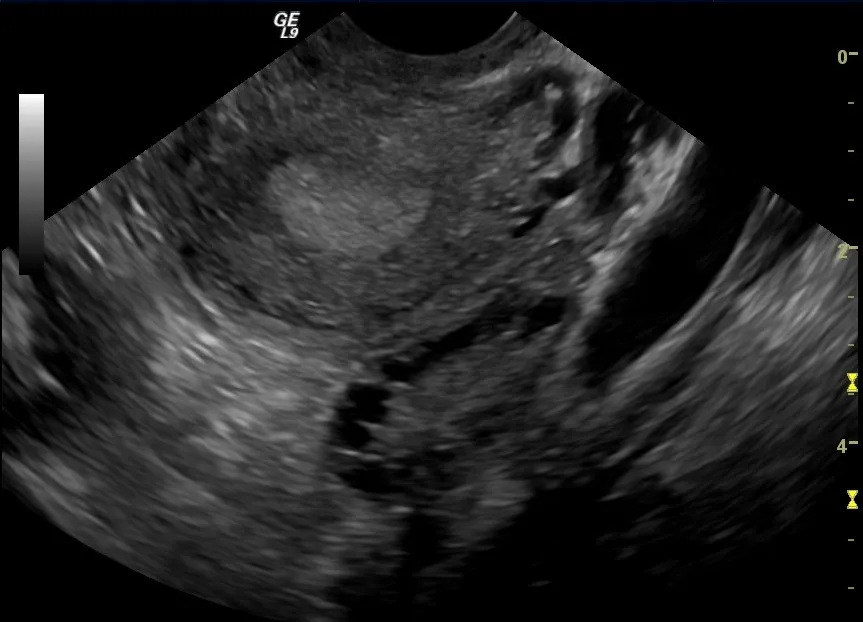
- Ultrasound PCOM (transvaginal, 8 MHz or more): 20 or more follicles per ovary and/or ovarian volume 10 mL or more in either ovary
- Exclude: TSH, prolactin, 17-hydroxyprogesterone (non-classic CAH), FSH/oestradiol; very high testosterone or rapid virilisation suggests a tumour
- Insulin resistance occurs in most, including lean women; screen glycaemia at diagnosis and every 1–3 years, preferably with a 75 g OGTT
- Combined oral contraceptive is first-line for irregular cycles and hirsutism; metformin is added for metabolic features
- Letrozole is first-line ovulation induction: higher live-birth rate than clomiphene (PPCOS II)
- Fewer than 4 periods a year risks endometrial hyperplasia: give progestogen withdrawal bleeds, a COC or a levonorgestrel IUD
Differential diagnosis
| Condition | Clues | Key test |
|---|---|---|
| Non-classic congenital adrenal hyperplasia | Hirsutism and irregular cycles; family history; certain ethnic groups | Early-morning follicular 17-hydroxyprogesterone; ACTH stimulation if borderline |
| Hyperprolactinaemia | Amenorrhoea with galactorrhoea or drug cause | Serum prolactin |
| Thyroid dysfunction | Menstrual change with thyroid symptoms | TSH |
| Androgen-secreting ovarian or adrenal tumour | Rapid virilisation, clitoromegaly, deep voice; testosterone often more than about 5 nmol/L | Testosterone, DHEAS, pelvic ultrasound, adrenal CT |
| Cushing syndrome | Proximal myopathy, purple striae, easy bruising, hypertension | Overnight dexamethasone suppression test |
| Functional hypothalamic amenorrhoea | Low weight, exercise or stress; low LH and oestradiol | LH, FSH, oestradiol; history |
| Premature ovarian insufficiency | Amenorrhoea under 40 with hot flushes | FSH raised on two occasions |
Exam pearls
Guideline
International evidence-based guideline for the assessment and management of PCOS 2023 (with the Rotterdam 2003 criteria)
References
- Teede HJ, Tay CT, Laven JJE, et al.. Recommendations from the 2023 international evidence-based guideline for the assessment and management of polycystic ovary syndrome. J Clin Endocrinol Metab 2023.
- Rotterdam ESHRE/ASRM-Sponsored PCOS Consensus Workshop Group. Revised 2003 consensus on diagnostic criteria and long-term health risks related to polycystic ovary syndrome. Fertil Steril 2004.
- Martin KA, Anderson RR, Chang RJ, et al.. Evaluation and treatment of hirsutism in premenopausal women: an Endocrine Society clinical practice guideline. J Clin Endocrinol Metab 2018.
- Legro RS, Brzyski RG, Diamond MP, et al.. Letrozole versus clomiphene for infertility in the polycystic ovary syndrome. N Engl J Med 2014.
- Joham AE, Norman RJ, Stener-Victorin E, et al.. Polycystic ovary syndrome. Lancet Diabetes Endocrinol 2022.
- Azziz R, Carmina E, Chen Z, et al.. Polycystic ovary syndrome. Nat Rev Dis Primers 2016.
Related topics
By Dr Khalid Seidi (B.Sc., M.D.) · MedEd World Clinical Knowledge library. Original teaching content checked against current guidelines (November 2026); confirm the latest local guidance before clinical use. Not a substitute for clinical judgement.