Clinical Knowledge › Internal medicine › Endocrinology › Reproductive endocrinology
Precocious and delayed puberty
Puberty normally starts with breast development in girls between 8 and 13 years and testicular enlargement to 4 mL or more in boys between 9 and 14 years. Precocious puberty is onset before 8 in girls or 9 in boys. Central (gonadotrophin-dependent) precocious puberty results from early activation of hypothalamic GnRH pulses; it is usually idiopathic in girls but more often caused by a brain lesion in boys. Peripheral (gonadotrophin-independent) precocity comes from sex steroids made independently of GnRH, as in congenital adrenal hyperplasia, McCune–Albright syndrome, gonadal or adrenal tumours and exogenous hormones. Premature thelarche and adrenarche are benign variants. Delayed puberty is no breast development by 13 in girls or testes under 4 mL at 14 in boys. Constitutional delay is commonest, but chronic illness, permanent hypogonadotropic hypogonadism and gonadal failure must be excluded. Growth velocity, bone age, LH, FSH, sex steroids and selected imaging guide diagnosis. GnRH agonists treat progressive central precocity; short courses of sex steroids help delayed puberty.
Patient case, mechanism, investigations, management, flashcards and exam-style questions.Open the lesson →
Key facts
- Normal onset: girls 8–13 years (thelarche first), boys 9–14 years (testes 4 mL or more first); population ages are falling slightly
- Precocious puberty: signs before 8 in girls or 9 in boys; delayed puberty: no breast bud by 13 in girls or testes under 4 mL at 14 in boys
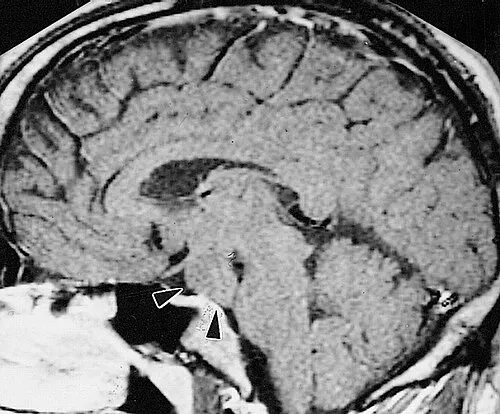
- Central precocious puberty (CPP) is idiopathic in about 90% of girls but has an organic cause in a much larger share of boys: MRI brain for all boys and young girls
- Peripheral precocity: CAH, McCune–Albright syndrome, familial male-limited precocious puberty, hCG-secreting germ cell tumours, ovarian or adrenal tumours, exogenous sex steroids, severe primary hypothyroidism
- Basal LH in the pubertal range (sensitive assay) or a stimulated LH peak of about 5 IU/L or more confirms central activation; bone age is usually advanced
- GnRH agonists (leuprorelin, triptorelin, histrelin implant) suppress progressive CPP to preserve adult height and ease psychosocial burden
- Constitutional delay of growth and puberty is the commonest cause of delayed puberty, especially in boys; separating it from CHH can be difficult before 18
- High FSH in delayed puberty means gonadal failure: karyotype for Turner or Klinefelter syndrome
Differential diagnosis
| Condition | Clues | Key test |
|---|---|---|
| Premature thelarche | Isolated breast development in a girl under 3 years, normal growth velocity and bone age | Observation; prepubertal LH; normal uterus on ultrasound |
| Premature adrenarche | Pubic hair and body odour without breast or testicular change | DHEAS mildly raised; bone age near normal; 17-OHP to exclude CAH |
| Non-classic congenital adrenal hyperplasia | Early pubic hair, accelerated growth, advanced bone age; small testes in boys | Morning 17-hydroxyprogesterone; ACTH stimulation |
| McCune–Albright syndrome | Peripheral precocity with café-au-lait macules and fibrous dysplasia; recurrent ovarian cysts | Suppressed LH; GNAS testing; bone scan |
| Severe primary hypothyroidism | Precocity with growth slowing and delayed bone age (Van Wyk–Grumbach) | TSH and free T4 |
| Constitutional delay of growth and puberty | Short, late-maturing adolescent with family history and delayed bone age | Normal smell and screening tests; spontaneous progression |
| Congenital hypogonadotropic hypogonadism | Delayed puberty with prepubertal testes, anosmia or micropenis | LH/FSH low; smell test; MRI; genetic panel |
| Turner or Klinefelter syndrome | Delayed or arrested puberty with high FSH | Karyotype |
Exam pearls
Guideline
Use of GnRH analogues in children: update by an international consortium (2019), building on the 2009 consensus statement, with the European Consensus Statement on congenital hypogonadotropic hypogonadism (2015) AAP guidance on evaluation of early puberty (2016) and the international Turner syndrome guideline (2024)
References
- Bangalore Krishna K, Fuqua JS, Rogol AD, et al.. Use of gonadotropin-releasing hormone analogs in children: update by an international consortium. Horm Res Paediatr 2019.
- Carel JC, Eugster EA, Rogol A, et al.. Consensus statement on the use of gonadotropin-releasing hormone analogs in children. Pediatrics 2009.
- Latronico AC, Brito VN, Carel JC.. Causes, diagnosis, and treatment of central precocious puberty. Lancet Diabetes Endocrinol 2016.
- Palmert MR, Dunkel L.. Delayed puberty. N Engl J Med 2012.
- Boehm U, Bouloux PM, Dattani MT, et al.. Expert consensus document: European Consensus Statement on congenital hypogonadotropic hypogonadism—pathogenesis, diagnosis and treatment. Nat Rev Endocrinol 2015.
- Abreu AP, Dauber A, Macedo DB, et al.. Central precocious puberty caused by mutations in the imprinted gene MKRN3. N Engl J Med 2013.
Related topics
By Dr Khalid Seidi (B.Sc., M.D.) · MedEd World Clinical Knowledge library. Original teaching content checked against current guidelines (November 2026); confirm the latest local guidance before clinical use. Not a substitute for clinical judgement.