Clinical Knowledge › Internal medicine › Infectious diseases › Zoonoses and parasitic infections
Hydatid disease (echinococcosis)
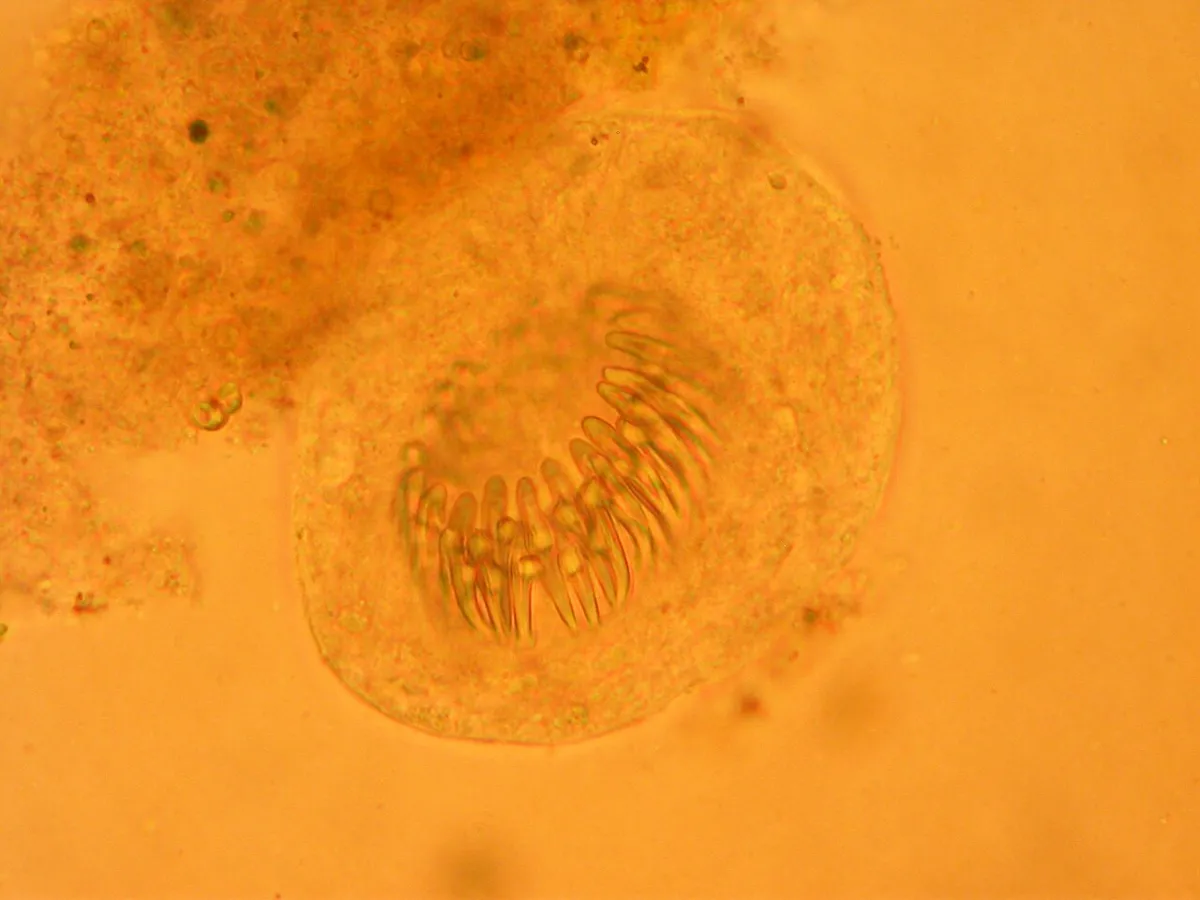
Hydatid disease results from infection with the larval stage of Echinococcus tapeworms. Cystic echinococcosis, caused by Echinococcus granulosus, follows ingestion of eggs passed by dogs that have eaten infected sheep or other livestock offal; slowly growing fluid-filled cysts develop mainly in liver (about 70%) and lung (about 20%). Most are silent for years and found incidentally, but they can cause pain, mass effect, biliary obstruction, secondary infection, rupture with anaphylaxis, or cough and haemoptysis when a lung cyst ruptures. Alveolar echinococcosis, caused by Echinococcus multilocularis from foxes and dogs in the northern hemisphere, grows invasively like a malignancy and carries a much worse prognosis. Ultrasound with the WHO stage-based classification drives management: watch and wait for inactive cysts, percutaneous treatment (PAIR) or surgery with albendazole cover for active cysts, and lifelong or prolonged albendazole with radical resection for alveolar disease.
Patient case, mechanism, investigations, management, flashcards and exam-style questions.Open the lesson →
Key facts
- Cystic echinococcosis (E. granulosus): dog definitive host, sheep and other livestock intermediate hosts, humans accidental
- Liver is involved in about 70% of cases and lung in about 20%; cysts grow slowly (often around 1 cm a year, but rates vary widely) and are often silent for years
- Ultrasound WHO-IWGE staging (CE1-CE5) determines whether to watch, puncture, operate or treat medically
- Daughter cysts and the 'water lily sign' from detached endocyst membranes are characteristic radiological findings
- Cyst rupture can release antigen and cause urticaria, bronchospasm or anaphylaxis, plus seeding of protoscolices
- Albendazole is given before and after any intervention to reduce the risk of secondary echinococcosis
- PAIR (puncture, aspiration, injection of a scolicidal agent, reaspiration) suits selected uncomplicated liver cysts, not lung cysts
- Alveolar echinococcosis (E. multilocularis) behaves like a slow liver cancer and usually requires radical surgery plus long-term albendazole
Differential diagnosis
| Condition | Clues | Key test |
|---|---|---|
| Simple hepatic cyst | Thin wall, anechoic, no daughter cysts or calcification | Ultrasound; negative Echinococcus serology |
| Pyogenic liver abscess | Fever, rigors, raised inflammatory markers, rapid onset | Ultrasound or CT with aspiration and culture |
| Amoebic liver abscess | Travel, right upper quadrant pain, single abscess, 'anchovy sauce' aspirate | Entamoeba serology, imaging |
| Hepatocellular carcinoma or metastasis | Solid or necrotic mass, cirrhosis, weight loss | Contrast imaging, alpha-fetoprotein, biopsy |
| Cholangiocarcinoma or biliary cystadenoma | Biliary dilatation, septations, raised CA 19-9 | MRI/MRCP and tissue diagnosis |
| Pulmonary abscess or tuberculosis cavity | Fever, purulent sputum or constitutional symptoms | Sputum microscopy and culture, CT chest |
| Congenital lung cyst or bronchogenic cyst | Present since childhood, no endemic exposure | CT chest; serology negative |
Exam pearls
Guideline
WHO-IWGE Expert consensus for the diagnosis and treatment of cystic and alveolar echinococcosis in humans (2010) with subsequent WHO-IWGE updates on the watch-and-wait approach
References
- Brunetti E, Kern P, Vuitton DA. Expert consensus for the diagnosis and treatment of cystic and alveolar echinococcosis in humans. Acta Trop 2010.
- Brunetti E, Tamarozzi F. Watch-and-wait approach for inactive echinococcal cysts: scoping review update since the issue of the WHO-IWGE Expert Consensus and current perspectives. Curr Opin Infect Dis 2023.
- Casulli A, Abela B, Petrone D, et al.. Unveiling the incidences and trends of alveolar echinococcosis in Europe: a systematic review from the KNOW-PATH project. Lancet Infect Dis 2025.
- McManus DP, Zhang W, Li J, Bartley PB. Echinococcosis. Lancet 2003.
- Farrar J, Garcia PJ, Hotez PJ, et al., eds.. Manson's Tropical Diseases. 2023.
- Penman ID, Ralston SH, Strachan MWJ, Hobson RP, eds.. Davidson's Principles and Practice of Medicine. 2022.
Related topics
By Dr Khalid Seidi (B.Sc., M.D.) · MedEd World Clinical Knowledge library. Original teaching content checked against current guidelines (November 2026); confirm the latest local guidance before clinical use. Not a substitute for clinical judgement.