Clinical Knowledge › Internal medicine › Infectious diseases › Zoonoses and parasitic infections
Intestinal nematodes (Ascaris, hookworm, Strongyloides)
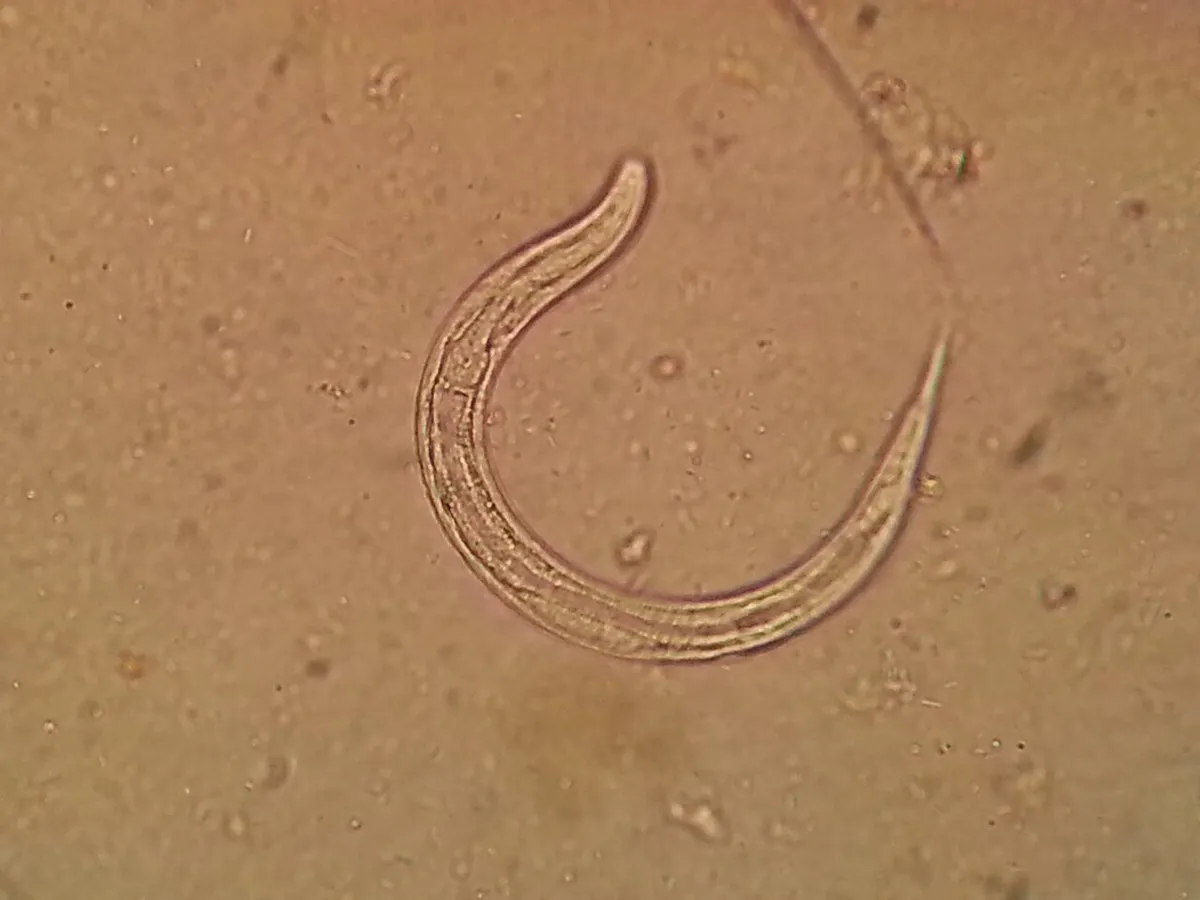
Ascaris lumbricoides, the hookworms Necator americanus and Ancylostoma duodenale, and Strongyloides stercoralis are soil-transmitted nematodes that together infect well over a billion people, mostly where sanitation is poor. Ascaris and Trichuris are swallowed as embryonated eggs; hookworm and Strongyloides larvae penetrate skin. Ascaris and hookworm larvae migrate through the lungs and can cause a transient eosinophilic pneumonitis (Loffler syndrome). Established infection is often silent: heavy Ascaris loads obstruct bowel or biliary tract, hookworm causes iron-deficiency anaemia and protein loss, and Strongyloides causes intermittent abdominal symptoms with larva currens. Strongyloides is unique because autoinfection allows lifelong carriage and, when cell-mediated immunity falls (corticosteroids, HTLV-1, transplantation), hyperinfection and disseminated disease with Gram-negative sepsis. Diagnosis uses stool microscopy, Strongyloides serology and eosinophil counts. Albendazole or mebendazole treat Ascaris and hookworm; ivermectin is the drug of choice for Strongyloides.
Patient case, mechanism, investigations, management, flashcards and exam-style questions.Open the lesson →
Key facts
- Ascaris and Trichuris are acquired by swallowing eggs; hookworm and Strongyloides larvae penetrate intact skin (bare feet, soil contact)
- Loffler syndrome: transient migratory pulmonary infiltrates with cough, wheeze and marked eosinophilia during larval lung passage
- Hookworm adults feed on blood: iron-deficiency anaemia and hypoalbuminaemia proportional to worm burden
- Strongyloides autoinfection allows infection to persist for decades after leaving an endemic area
- Corticosteroids are the commonest trigger of Strongyloides hyperinfection; HTLV-1 co-infection is a major risk factor
- Hyperinfection causes Gram-negative bacteraemia or meningitis as larvae carry gut flora through the bowel wall
- Stool microscopy is insensitive for Strongyloides; use serology (and repeated or concentrated stool samples or agar plate culture)
- Screen for Strongyloides (serology plus eosinophil count) before corticosteroids, chemotherapy or transplantation in anyone with relevant exposure
Differential diagnosis
| Condition | Clues | Key test |
|---|---|---|
| Schistosomiasis | Freshwater exposure; haematuria or hepatosplenic disease | Urine or stool microscopy for ova, serology |
| Coeliac disease | Diarrhoea, weight loss, iron deficiency without travel | Tissue transglutaminase IgA, duodenal biopsy |
| Colonic cancer | Older adult, iron-deficiency anaemia, change in bowel habit | Colonoscopy |
| Asthma or ABPA | Wheeze with eosinophilia but no travel or larval exposure | Spirometry, Aspergillus IgE, chest imaging |
| Drug reaction with eosinophilia | New drug, rash, fever, organ involvement | Drug history, eosinophil count, liver tests |
| Eosinophilic granulomatosis with polyangiitis | Asthma, sinus disease, neuropathy, ANCA | ANCA, biopsy, organ imaging |
| Toxocariasis (visceral larva migrans) | Child, puppy exposure, hepatomegaly, very high eosinophilia | Toxocara serology |
Exam pearls
Guideline
WHO guideline on control and elimination of soil-transmitted helminthiases (2017 preventive chemotherapy guideline and 2030 NTD road map) with WHO preventive chemotherapy guidance including ivermectin for strongyloidiasis
References
- Jourdan PM, Lamberton PHL, Fenwick A, Addiss DG. Soil-transmitted helminth infections. Lancet 2018.
- World Health Organization. Guideline: preventive chemotherapy to control soil-transmitted helminth infections in at-risk population groups. WHO 2017.
- World Health Organization. Ending the neglect to attain the Sustainable Development Goals: a road map for neglected tropical diseases 2021-2030. WHO 2020.
- Nutman TB. Human infection with Strongyloides stercoralis and other related Strongyloides species. Parasitology 2017.
- Farrar J, Garcia PJ, Hotez PJ, et al., eds.. Manson's Tropical Diseases. 2023.
- Penman ID, Ralston SH, Strachan MWJ, Hobson RP, eds.. Davidson's Principles and Practice of Medicine. 2022.
Related topics
By Dr Khalid Seidi (B.Sc., M.D.) · MedEd World Clinical Knowledge library. Original teaching content checked against current guidelines (November 2026); confirm the latest local guidance before clinical use. Not a substitute for clinical judgement.