Clinical Knowledge › Internal medicine › Infectious diseases › Zoonoses and parasitic infections
Lyme disease
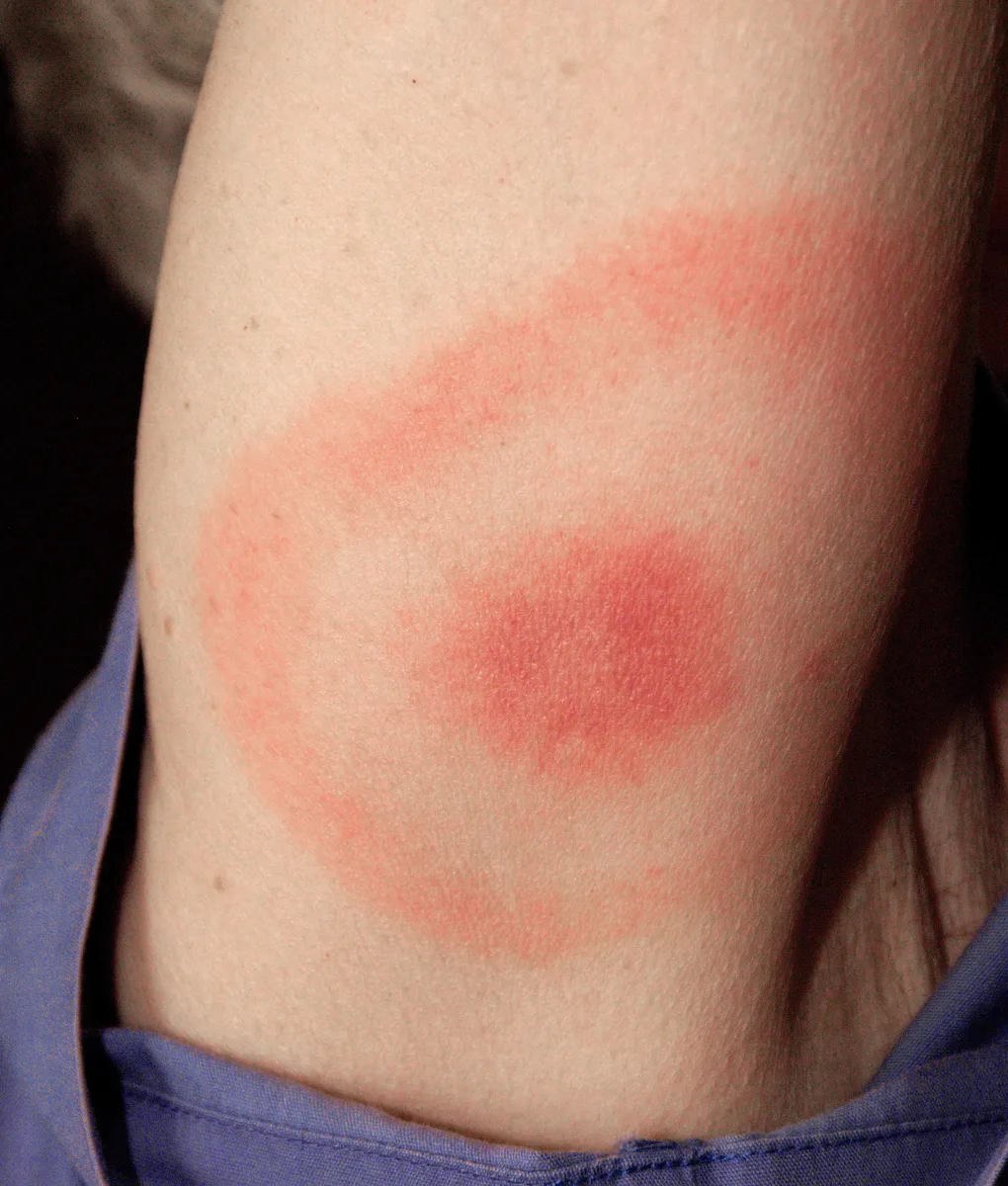
Lyme disease (Lyme borreliosis) is a tick-borne infection caused by spirochaetes of the Borrelia burgdorferi sensu lato complex: B. burgdorferi sensu stricto in North America and mainly B. afzelii and B. garinii in Europe and Asia. It is transmitted by hard Ixodes ticks, usually nymphs, in woodland, heath and parkland in spring to autumn, and transmission generally needs more than 24 hours of attachment. Early localised disease is erythema migrans, an expanding red rash at least 5 cm across appearing 3–30 days after the bite. Haematogenous spread then causes multiple erythema migrans, cranial neuropathy (especially facial palsy), lymphocytic meningitis, painful radiculoneuritis or carditis with atrioventricular block; months later, untreated infection causes arthritis of large joints (mainly in North America) or acrodermatitis chronica atrophicans (Europe). Erythema migrans is a clinical diagnosis and should be treated without testing. Other manifestations need serology (ELISA followed by immunoblot or a second immunoassay), with CSF antibody testing for neuroborreliosis. Doxycycline is first line for most forms, with amoxicillin, azithromycin or IV ceftriaxone as alternatives. Prolonged antibiotics do not help persistent symptoms after treatment.
Patient case, mechanism, investigations, management, flashcards and exam-style questions.Open the lesson →
Key facts
- Vector: Ixodes ticks (I. ricinus in Europe, I. scapularis and I. pacificus in North America); nymphs cause most infections
- Risk of transmission is low if the tick is removed within 24 hours
- Erythema migrans: expanding red rash ≥5 cm, 3–30 days after the bite; diagnose clinically and treat without testing
- Early serology may be negative: antibodies take 2–4 weeks to appear
- Two-tier serology: sensitive ELISA (EIA) first, then immunoblot or a second EIA to confirm
- Neuroborreliosis: facial palsy (often bilateral), lymphocytic meningitis, painful radiculitis; Lyme carditis causes variable AV block
- Doxycycline is first line for most adults (21 days in NICE; 10–14 days for erythema migrans in IDSA guidance)
- Post-treatment Lyme disease syndrome does not respond to prolonged antibiotics
Differential diagnosis
| Condition | Clues | Key test |
|---|---|---|
| Cellulitis | Painful, hot, rapidly spreading, fever, no tick history | Clinical; responds to flucloxacillin |
| Tick-bite hypersensitivity reaction | Red patch under 5 cm appearing within 48 hours and fading | Clinical; does not expand |
| Tinea corporis | Scaly annular edge with central clearing, itchy | Skin scraping microscopy |
| Idiopathic Bell palsy | Unilateral facial palsy, no rash or tick exposure | Clinical; Lyme serology in endemic areas or if bilateral |
| Viral meningitis | Acute headache and fever, summer enterovirus | CSF PCR; Lyme CSF antibody index |
| Reactive or septic arthritis | Hot swollen knee, high fever, recent infection | Joint aspiration: culture, crystals, Borrelia PCR |
| Tick-borne encephalitis or anaplasmosis (co-infections) | Biphasic fever with encephalitis, or leucopenia and raised ALT | TBE serology; Anaplasma PCR |
Exam pearls
Guideline
NICE NG95 Lyme disease (2018) and IDSA/AAN/ACR 2020 guidelines for the prevention, diagnosis and treatment of Lyme disease
References
- National Institute for Health and Care Excellence. Lyme disease (NG95). NICE 2018.
- Lantos PM, Rumbaugh J, Bockenstedt LK, et al.. Clinical practice guidelines by the IDSA, AAN and ACR: 2020 guidelines for the prevention, diagnosis and treatment of Lyme disease. Clin Infect Dis 2021.
- Steere AC, Strle F, Wormser GP, et al.. Lyme borreliosis. Nat Rev Dis Primers 2016.
- Mead P, Petersen J, Hinckley A. Updated CDC recommendation for serologic diagnosis of Lyme disease. MMWR Morb Mortal Wkly Rep 2019.
- Berende A, ter Hofstede HJ, Vos FJ, et al.. Randomized trial of longer-term therapy for symptoms attributed to Lyme disease. N Engl J Med 2016.
- Nadelman RB, Nowakowski J, Fish D, et al.. Prophylaxis with single-dose doxycycline for the prevention of Lyme disease after an Ixodes scapularis tick bite. N Engl J Med 2001.
Related topics
By Dr Khalid Seidi (B.Sc., M.D.) · MedEd World Clinical Knowledge library. Original teaching content checked against current guidelines (November 2026); confirm the latest local guidance before clinical use. Not a substitute for clinical judgement.