Clinical Knowledge › Paediatrics › Paediatric neurology
Neural tube defects
Neural tube defects (NTDs) result from failure of the neural tube to close between days 21 and 28 after conception, often before a woman knows she is pregnant. Open defects include anencephaly (fatal) and myelomeningocele (the commonest disabling form); closed defects include meningocele, encephalocele and occult spinal dysraphism, often marked by a dimple, hair tuft or lipoma. Worldwide prevalence is roughly 1 per 1000 births and is lower where flour is fortified with folic acid. Risk factors include folate deficiency, a previous affected pregnancy, valproate and other antiseizure drugs, pre-existing diabetes and obesity. Periconceptional folic acid prevents most NTDs: 400 micrograms daily for all, and 5 mg for higher-risk women. Most open defects are detected on the mid-pregnancy anomaly scan (lemon and banana signs). Myelomeningocele causes paralysis and sensory loss below the lesion, hydrocephalus with Chiari II malformation, neurogenic bladder and bowel, orthopaedic deformity and latex allergy, and needs lifelong multidisciplinary care.
Patient case, mechanism, investigations, management, flashcards and exam-style questions.Open the lesson →
Key facts
- The neural tube closes by about day 28 after conception: prevention must start before conception
- Folic acid 400 micrograms daily from before conception to 12 weeks; 5 mg daily for higher-risk women (e.g. previous NTD, diabetes, antiseizure drugs, BMI 30 or more)
- Folic acid reduced recurrence by about 72% in the 1991 MRC Vitamin Study
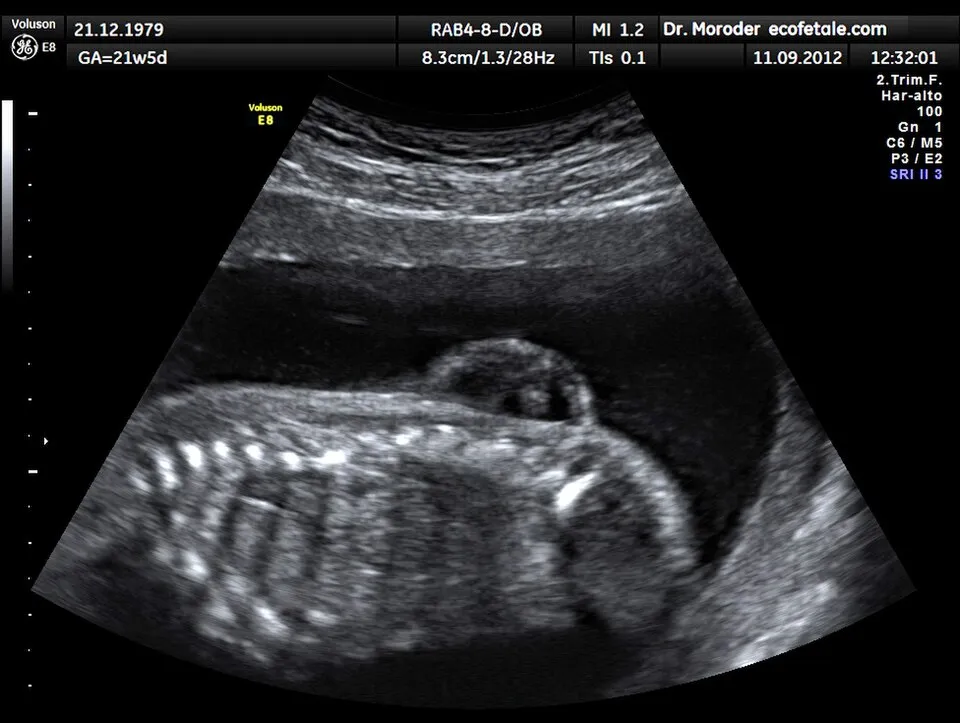
- Anomaly scan at 18–20+6 weeks: lemon sign (frontal scalloping) and banana sign (cerebellum in Chiari II)
- Myelomeningocele: about 80–90% develop hydrocephalus; almost all have Chiari II malformation
- Fetal repair before 26 weeks (MOMS trial 2011) halved shunt need and improved motor outcome but increased preterm birth
- Neurogenic bladder needs early urodynamics and clean intermittent catheterisation to protect the kidneys
- Recurrence risk after one affected pregnancy is about 2–5%
Differential diagnosis
| Condition | Clues | Key test |
|---|---|---|
| Sacrococcygeal teratoma | Large mass at the sacrum, often exophytic; neurology usually normal | Ultrasound and MRI; raised alpha-fetoprotein after birth |
| Simple sacral dimple | Within the natal cleft, under 5 mm, within 2.5 cm of the anus, no other stigmata | Clinical; ultrasound spine only if atypical |
| Occult spinal dysraphism (tethered cord) | Hair tuft, lipoma, haemangioma or dimple above the natal cleft; later gait or bladder change | Spinal ultrasound in infancy; MRI spine |
| Caudal regression syndrome | Sacral agenesis, maternal diabetes, flat buttocks | Spinal X-ray and MRI |
| Isolated hydrocephalus | Large head without spinal lesion | Cranial ultrasound or MRI |
| Encephalocele versus cephalohaematoma or dermoid | Midline skull defect with pulsatile or transilluminating mass | Ultrasound, MRI |
Exam pearls
Guideline
USPSTF folic acid reaffirmation (2023); NICE NG201 Antenatal care (2021); UK folic acid flour fortification legislation (2024); MHRA valproate Pregnancy Prevention Programme
References
- MRC Vitamin Study Research Group. Prevention of neural tube defects: results of the Medical Research Council Vitamin Study. Lancet 1991.
- Adzick NS, Thom EA, Spong CY, et al.. A randomized trial of prenatal versus postnatal repair of myelomeningocele. N Engl J Med 2011.
- Barry MJ, Nicholson WK, et al.. Folic acid supplementation to prevent neural tube defects: US Preventive Services Task Force reaffirmation recommendation statement. JAMA 2023.
- National Institute for Health and Care Excellence. Antenatal care (NG201). NICE guideline 2021.
- Medicines and Healthcare products Regulatory Agency. Valproate: new safety and educational materials and restrictions on use in patients under 55. Drug Safety Update 2024.
- Paediatric Formulary Committee. BNF for Children. BMJ Group, Pharmaceutical Press and RCPCH Publications 2025.
Related topics
By Dr Khalid Seidi (B.Sc., M.D.) · MedEd World Clinical Knowledge library. Original teaching content checked against current guidelines (November 2026); confirm the latest local guidance before clinical use. Not a substitute for clinical judgement.