Clinical Knowledge › Obstetrics and gynaecology › Complications of later pregnancy
Polyhydramnios and oligohydramnios
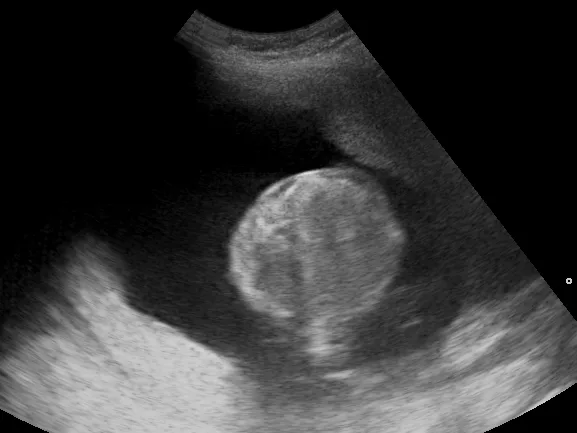
Amniotic fluid volume reflects a balance between production (mainly fetal urine from about 16 weeks, plus lung fluid) and removal (fetal swallowing and intramembranous absorption). It is assessed by ultrasound as the deepest vertical pocket (DVP, normal 2–8 cm) or the amniotic fluid index (AFI, normal about 5–24 cm). Polyhydramnios (DVP 8 cm or more, AFI 24–25 cm or more) affects 1–2% of pregnancies; most mild cases are idiopathic, but important causes are maternal diabetes, fetal swallowing problems (oesophageal or duodenal atresia, neuromuscular or CNS disorders), aneuploidy, fetal anaemia and hydrops, and the recipient twin in twin–twin transfusion. Oligohydramnios (DVP below 2 cm, AFI below 5 cm) is most often due to ruptured membranes, placental insufficiency with growth restriction or post-term pregnancy; renal agenesis, urinary tract obstruction and drugs (NSAIDs, ACE inhibitors) are fetal or iatrogenic causes. Prolonged mid-trimester anhydramnios causes pulmonary hypoplasia and the Potter sequence. Management targets the cause, fetal surveillance and timing of birth.
Patient case, mechanism, investigations, management, flashcards and exam-style questions.Open the lesson →
Key facts
- From 16 weeks amniotic fluid is mainly fetal urine; it is removed by fetal swallowing and intramembranous absorption
- Normal DVP 2–8 cm; normal AFI about 5–24 cm; DVP is preferred to diagnose oligohydramnios because AFI over-diagnoses it without improving outcomes
- Polyhydramnios: DVP 8 cm or more or AFI 24–25 cm or more; mild DVP 8–11 cm, moderate 12–15 cm, severe 16 cm or more
- Polyhydramnios causes: idiopathic (most mild cases), diabetes, GI atresia (oesophageal, duodenal), neuromuscular or CNS anomalies, aneuploidy, fetal anaemia or hydrops, TTTS recipient, chorioangioma
- Polyhydramnios complications: preterm labour, PPROM, unstable lie, cord prolapse, abruption at membrane rupture, PPH, maternal breathlessness
- Oligohydramnios: DVP below 2 cm or AFI below 5 cm; commonest causes are ruptured membranes, FGR from placental insufficiency and post-term pregnancy
- Fetal renal causes: bilateral renal agenesis, bilateral cystic dysplasia, posterior urethral valves (megacystis, keyhole sign); drugs: NSAIDs, ACE inhibitors and ARBs
- Anhydramnios before about 24 weeks causes pulmonary hypoplasia and Potter sequence (flat facies, limb deformities, talipes)
Differential diagnosis
| Condition | Clues | Key test |
|---|---|---|
| Macrosomia (large fetus) | Large SFH with normal fluid | Ultrasound biometry |
| Multiple pregnancy | Large uterus, multiple poles | Ultrasound |
| Rupture of membranes (cause of low fluid) | Fluid leak, pooling on speculum | Speculum; IGFBP-1 or PAMG-1 test |
| Fetal growth restriction | Small SFH, low fluid with abnormal Doppler | Biometry and umbilical artery Doppler |
| Incorrect dates | Fundal height inconsistent with dates | First-trimester dating |
| Uterine fibroids or ovarian mass | Irregular large abdomen | Ultrasound |
Exam pearls
Guideline
SMFM Consult Series No. 46 Evaluation and management of polyhydramnios (2018); ACOG Committee Opinion No. 831 Medically indicated late-preterm and early-term deliveries (2021); ISUOG practice guidance on routine third-trimester and mid-trimester ultrasound; Cochrane review on DVP versus AFI (2008)
References
- Dashe JS, Pressman EK, Hibbard JU.. SMFM Consult Series #46: Evaluation and management of polyhydramnios. Am J Obstet Gynecol 2018.
- American College of Obstetricians and Gynecologists. Medically indicated late-preterm and early-term deliveries: ACOG Committee Opinion No. 831. Obstet Gynecol 2021.
- Nabhan AF, Abdelmoula YA.. Amniotic fluid index versus single deepest vertical pocket as a screening test for preventing adverse pregnancy outcome. Cochrane Database Syst Rev 2008.
- Rossi AC, Prefumo F.. Perinatal outcomes of isolated oligohydramnios at term and post-term pregnancy: a systematic review of literature with meta-analysis. Eur J Obstet Gynecol Reprod Biol 2013.
- Morris RK, Malin GL, Quinlan-Jones E, et al.. Percutaneous vesicoamniotic shunting versus conservative management for fetal lower urinary tract obstruction (PLUTO): a randomised trial. Lancet 2013.
- National Institute for Health and Care Excellence. Antenatal care (NG201). NICE guideline NG201 2021.
Related topics
By Dr Khalid Seidi (B.Sc., M.D.) · MedEd World Clinical Knowledge library. Original teaching content checked against current guidelines (November 2026); confirm the latest local guidance before clinical use. Not a substitute for clinical judgement.