Clinical Knowledge › Obstetrics and gynaecology › Complications of later pregnancy
Preterm labour
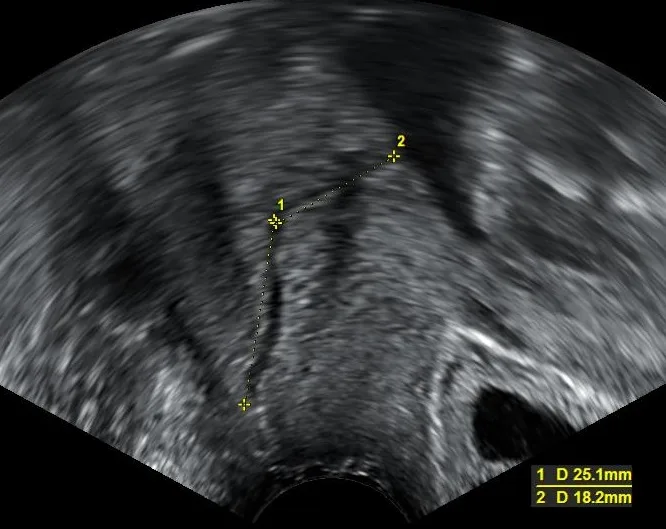
Preterm labour is regular uterine contractions with progressive cervical change before 37+0 weeks. About 13 million babies (roughly 1 in 10) are born preterm each year, and complications of prematurity are the leading cause of death in children under 5. The strongest predictors are a previous spontaneous preterm birth and a short cervix. Diagnosis combines symptoms with examination and, from 30 weeks in NICE guidance, transvaginal cervical length (15 mm or less suggests true labour) or fetal fibronectin (50 ng/mL or more). Management aims to improve neonatal outcome rather than simply delay birth: in-utero transfer to a unit with suitable neonatal care, antenatal corticosteroids, magnesium sulfate for neuroprotection before about 32 weeks, intrapartum antibiotic prophylaxis against group B streptococcus, and delayed cord clamping. Tocolysis (nifedipine or atosiban) only buys about 48 hours to allow steroids and transfer; APOSTEL 8 (2025) found no neonatal benefit from atosiban at 30–33+6 weeks.
Patient case, mechanism, investigations, management, flashcards and exam-style questions.Open the lesson →
Key facts
- Preterm birth: before 37+0 weeks; extremely preterm below 28, very preterm 28–31+6, moderate to late preterm 32–36+6 weeks
- Strongest risk factors: previous spontaneous preterm birth or mid-trimester loss, short cervix, multiple pregnancy, cervical surgery (LLETZ, cone), uterine anomaly, infection
- NICE NG25: below 30 weeks diagnose clinically; from 30+0 weeks use transvaginal cervical length (15 mm or less = diagnosed preterm labour) or fetal fibronectin (50 ng/mL or more = positive)
- Corticosteroids (NICE): offer 24+0–33+6 weeks, consider 22+0–23+6 and 34+0–35+6; betamethasone 12 mg IM two doses 24 h apart or dexamethasone 6 mg IM four doses 12 h apart
- Magnesium sulfate neuroprotection: offer 24+0–29+6, consider 30+0–33+6 weeks; 4 g IV over 15 minutes then 1 g/hour for up to 24 hours or until birth
- Tocolysis: nifedipine first line (consider 24+0–25+6, offer 26+0–33+6 with intact membranes); atosiban if nifedipine is contraindicated; never betamimetics
- Intrapartum GBS prophylaxis in preterm labour; do not give routine antibiotics with intact membranes and no infection (ORACLE II 7-year follow-up: more functional impairment and cerebral palsy)
- Prevention: vaginal progesterone or cerclage for short cervix (25 mm or less at 16–24 weeks) in women with risk factors; delayed cord clamping at least 60 seconds after birth
Differential diagnosis
| Condition | Clues | Key test |
|---|---|---|
| Braxton Hicks contractions | Irregular, painless or mild tightenings without cervical change | Speculum and cervical length; fFN negative |
| Preterm prelabour rupture of membranes | Fluid leak, pooling, may not have contractions | Speculum; IGFBP-1 or PAMG-1 test |
| Placental abruption | Constant pain, tender uterus, bleeding, hypertonus | Clinical; CTG; coagulation |
| Urinary tract infection or pyelonephritis | Dysuria, loin pain, fever; may trigger contractions | Urine culture |
| Chorioamnionitis | Fever, maternal and fetal tachycardia, uterine tenderness | Clinical; blood cultures; CRP |
| Round ligament pain or constipation | Localised pain without contractions | Clinical; normal cervix |
| Acute appendicitis or other surgical cause | Persistent localised pain, fever, raised inflammatory markers | Ultrasound or MRI |
Exam pearls
Guideline
NICE NG25 Preterm labour and birth (2015, updated 2022); WHO recommendations on antenatal corticosteroids for improving preterm birth outcomes (2022); ACOG Practice Bulletin No. 171 Management of preterm labor (2016, reaffirmed) and Committee Opinion No. 713 antenatal corticosteroids; RCOG Green-top Guideline No. 36 group B streptococcal disease (2017)
References
- National Institute for Health and Care Excellence. Preterm labour and birth (NG25). NICE guideline NG25 2015.
- World Health Organization. WHO recommendations on antenatal corticosteroids for improving preterm birth outcomes. WHO 2022.
- American College of Obstetricians and Gynecologists. Management of preterm labor: Practice Bulletin No. 171. Obstet Gynecol 2016.
- Hughes RG, Brocklehurst P, Steer PJ, Heath P, Stenson BM.. Prevention of early-onset neonatal group B streptococcal disease. Green-top Guideline No. 36. BJOG 2017.
- van der Windt LI, Klumper J, Duijnhoven RG, et al.. Atosiban versus placebo for threatened preterm birth (APOSTEL 8): a multicentre, randomised controlled trial. Lancet 2025.
- EPPPIC Group. Evaluating Progestogens for Preventing Preterm birth International Collaborative (EPPPIC): meta-analysis of individual participant data from randomised controlled trials. Lancet 2021.
Related topics
By Dr Khalid Seidi (B.Sc., M.D.) · MedEd World Clinical Knowledge library. Original teaching content checked against current guidelines (November 2026); confirm the latest local guidance before clinical use. Not a substitute for clinical judgement.