Clinical Knowledge › Paediatrics › Respiratory and ENT
Acute otitis media
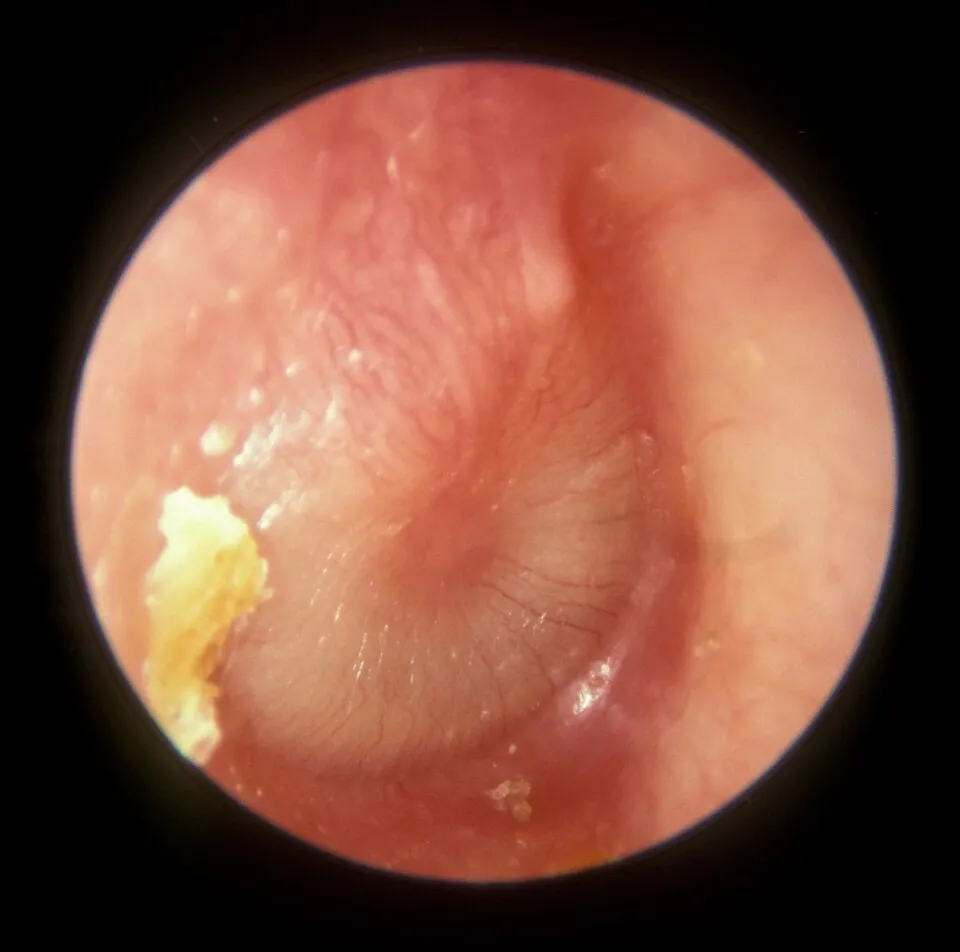
Acute otitis media (AOM) is acute infection of the middle ear with an effusion and rapid onset of symptoms. It peaks between 6 and 18 months, because the infant Eustachian tube is short, horizontal and floppy and upper respiratory infections are frequent. Viruses start most episodes; Streptococcus pneumoniae, non-typeable Haemophilus influenzae and Moraxella catarrhalis are the main bacteria. Children present with ear pain, ear tugging, fever, irritability and poor sleep; diagnosis needs a bulging, opaque, red tympanic membrane or new otorrhoea. Most cases resolve within 3–7 days without antibiotics, so management centres on regular paracetamol or ibuprofen and, without perforation, anaesthetic ear drops. Antibiotics help most in children under 2 with bilateral AOM, those with otorrhoea, and those who are systemically unwell; amoxicillin for 5–7 days is first line (NICE NG91). Complications are uncommon but serious: tympanic membrane perforation, mastoiditis, facial nerve palsy, meningitis and intracranial abscess.
Patient case, mechanism, investigations, management, flashcards and exam-style questions.Open the lesson →
Key facts
- Peak incidence 6–18 months; most children have at least one episode by age 3
- Pathogens: viruses commonly initiate; S. pneumoniae, non-typeable H. influenzae, M. catarrhalis are the main bacteria
- Diagnosis (AAP 2013): moderate or severe bulging of the tympanic membrane, or new otorrhoea not due to otitis externa, or mild bulging with recent ear pain or intense erythema
- Most episodes settle in 3 days and nearly all within 1 week; antibiotics have no effect on pain at 24 hours
- Analgesia is central: paracetamol 15 mg/kg or ibuprofen 5–10 mg/kg (teaching doses); phenazone–lidocaine ear drops if the drum is intact (NICE NG91 2022 update)
- Antibiotics benefit most: under 2 with bilateral AOM (NNT about 4) and AOM with otorrhoea (NNT about 3) (Cochrane IPD)
- Amoxicillin 5–7 days (NICE NG91) is first line; co-amoxiclav second line; clarithromycin if penicillin allergic
- Red flags: postauricular swelling with the pinna pushed forward (mastoiditis), facial weakness, vertigo, neck stiffness, drowsiness
Differential diagnosis
| Condition | Clues | Key test |
|---|---|---|
| Otitis media with effusion | Effusion without acute symptoms; dull retracted drum, hearing loss | Otoscopy, tympanometry (type B) |
| Otitis externa | Pain on moving pinna or tragus, swollen canal, discharge; drum normal if seen | Otoscopy |
| Myringitis (viral or bullous) | Painful blebs on drum, no middle-ear effusion | Otoscopy |
| Referred otalgia | Teething, tonsillitis, dental abscess, temporomandibular pain; normal drum | Examine mouth, throat and teeth |
| Foreign body or impacted wax | Unilateral discomfort or hearing loss, no fever | Otoscopy |
| Acute mastoiditis | Postauricular tenderness, swelling, pinna displaced forward and outward | Clinical; CT or MRI if complications suspected |
| Cholesteatoma | Persistent foul otorrhoea, attic retraction pocket with keratin | Otomicroscopy; CT temporal bone |
Exam pearls
Guideline
NICE NG91 Otitis media (acute): antimicrobial prescribing (2018, updated 2022); AAP clinical practice guideline on the diagnosis and management of AOM (2013); NICE NG143 fever in under 5s (2019, updated 2021)
References
- National Institute for Health and Care Excellence. Otitis media (acute): antimicrobial prescribing (NG91). NICE guideline 2018.
- Lieberthal AS, Carroll AE, Chonmaitree T, et al.. The diagnosis and management of acute otitis media. Pediatrics 2013.
- Venekamp RP, Sanders SL, Glasziou PP, Del Mar CB, Rovers MM.. Antibiotics for acute otitis media in children. Cochrane Database Syst Rev 2015.
- Hoberman A, Paradise JL, Rockette HE, et al.. Treatment of acute otitis media in children under 2 years of age. N Engl J Med 2011.
- Hoberman A, Paradise JL, Rockette HE, et al.. Shortened antimicrobial treatment for acute otitis media in young children. N Engl J Med 2016.
- National Institute for Health and Care Excellence. Fever in under 5s: assessment and initial management (NG143). NICE guideline 2019.
Related topics
By Dr Khalid Seidi (B.Sc., M.D.) · MedEd World Clinical Knowledge library. Original teaching content checked against current guidelines (November 2026); confirm the latest local guidance before clinical use. Not a substitute for clinical judgement.