Clinical Knowledge › Paediatrics › Respiratory and ENT
Asthma in children
Asthma is the commonest chronic disease of childhood, affecting about 1 in 10–11 children in the UK and similar countries. It is chronic airway inflammation with variable airflow obstruction, causing recurrent wheeze, cough, breathlessness and chest tightness, typically worse at night, with exercise, viral colds, allergens and smoke. Most children are atopic. Diagnosis is difficult under 5 years, when many children have viral-induced wheeze; from 5 years objective tests support it: NICE NG245 (2024) uses FeNO of 35 ppb or more, then bronchodilator reversibility (FEV1 rise of 12% or more) and peak flow variability. Maintenance treatment is based on inhaled corticosteroids: paediatric low-dose ICS plus a reliever, stepping to MART, LABA or LTRA add-on and specialist referral. GINA 2026 no longer recommends SABA-only treatment for children 6–11 years after the CARE trial showed fewer attacks with as-needed budesonide–formoterol. Acute attacks are graded by age-specific heart and respiratory rates, saturation and peak flow, and treated with salbutamol via spacer, oral prednisolone and, if severe, nebulised bronchodilators, ipratropium and IV magnesium. Every child needs a written action plan, inhaler technique checks, growth monitoring and a smoke-free home.
Patient case, mechanism, investigations, management, flashcards and exam-style questions.Open the lesson →
Key facts
- About 1 in 10–11 children have asthma in the UK and many high-income countries; boys predominate before puberty and girls after
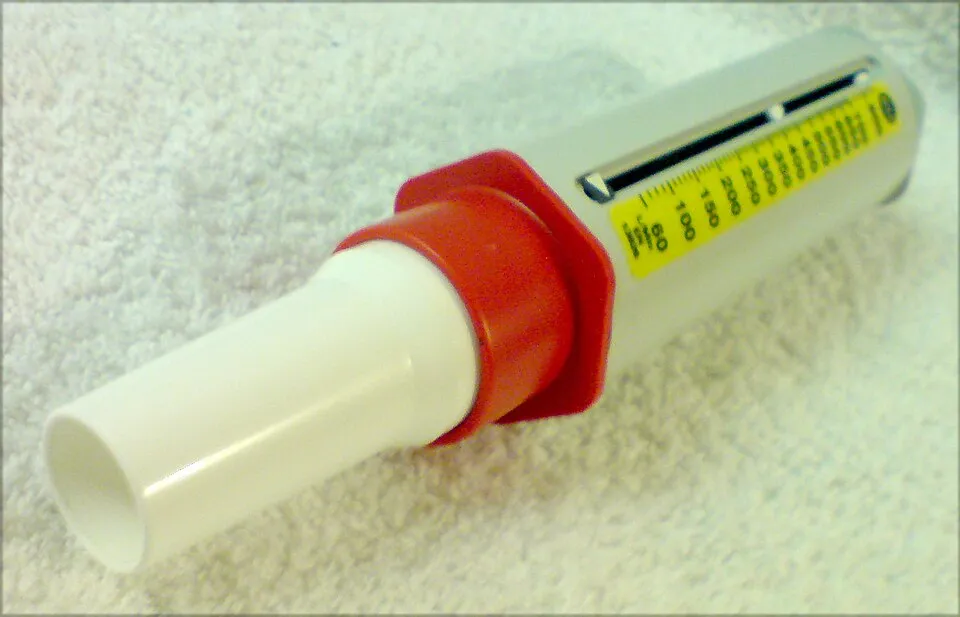
- Diagnosis in 5–16 years (NICE NG245): FeNO 35 ppb or more; or FEV1 bronchodilator reversibility of 12% or more; or PEF variability of 20% or more over 2 weeks
- Under 5 years: diagnose on clinical grounds and a monitored treatment trial; review when the child can do objective tests
- Maintenance 5–11 years (NG245): paediatric low-dose ICS plus SABA, then paediatric low-dose MART if the child can manage it, then moderate dose, then specialist referral
- GINA 2026: SABA-only treatment no longer recommended for children 6–11; as-needed low-dose budesonide–formoterol is an option (CARE trial, 2025)
- Acute severe in children: SpO2 below 92%, PEF 33–50%, too breathless to talk or feed, HR over 140 (2–5 years) or over 125 (over 5), RR over 40 (2–5) or over 30 (over 5)
- Life-threatening (any one, in a child with severe features): SpO2 below 92%, PEF below 33%, silent chest, poor respiratory effort, cyanosis, hypotension, exhaustion, agitation or altered consciousness
- Teaching doses: prednisolone 20 mg (2–5 years) or 30–40 mg (over 5 years) for 3 days; IV magnesium sulfate 40 mg/kg (maximum 2 g) over 20 minutes
Differential diagnosis
| Condition | Clues | Key test |
|---|---|---|
| Preschool viral-induced wheeze | Under 5, wheeze only with colds, well between episodes | Clinical; review course over time |
| Inhaled foreign body | Sudden choking, unilateral wheeze or reduced breath sounds | Inspiratory/expiratory X-ray, rigid bronchoscopy |
| Cystic fibrosis | Wet cough, faltering growth, steatorrhoea, recurrent chest infections | Sweat test, CFTR genetics |
| Primary ciliary dyskinesia | Daily wet cough from infancy, chronic rhinitis, glue ear, situs inversus | Nasal nitric oxide, ciliary studies |
| Protracted bacterial bronchitis | Chronic wet cough over 4 weeks without wheeze, responds to antibiotics | Response to 2 weeks of amoxicillin–clavulanate |
| Dysfunctional breathing or inducible laryngeal obstruction | Adolescent, inspiratory noise, throat tightness with exercise, normal tests | Laryngoscopy during exercise, breathing assessment |
| Congenital airway or cardiac anomaly | Symptoms from birth, fixed monophonic wheeze, murmur | Bronchoscopy, CT, echocardiography |
| Bronchiolitis obliterans | Persistent wheeze after severe adenovirus infection | Expiratory CT mosaic attenuation |
Exam pearls
Guideline
BTS/NICE/SIGN Asthma: diagnosis, monitoring and chronic asthma management (NICE NG245, 2024), GINA 2026 report, and BTS/SIGN 158 acute asthma management (2019)
References
- National Institute for Health and Care Excellence, British Thoracic Society, Scottish Intercollegiate Guidelines Network. Asthma: diagnosis, monitoring and chronic asthma management (BTS, NICE, SIGN) (NG245). NICE guideline 2024.
- Global Initiative for Asthma. Global strategy for asthma management and prevention, 2026 update. GINA report 2026.
- Hatter L, Holliday M, Oldfield K, et al.. Budesonide-formoterol versus salbutamol as reliever therapy in children with mild asthma (CARE): a 52-week, open-label, multicentre, superiority, randomised controlled trial. Lancet 2025.
- British Thoracic Society, Scottish Intercollegiate Guidelines Network. British guideline on the management of asthma (SIGN 158). BTS/SIGN 2019.
- Asthma + Lung UK. Asthma prevalence and impact in children: data and statistics. Asthma + Lung UK 2024.
- Paediatric Formulary Committee. BNF for Children. BMJ Group, Pharmaceutical Press and RCPCH Publications 2026.
Related topics
By Dr Khalid Seidi (B.Sc., M.D.) · MedEd World Clinical Knowledge library. Original teaching content checked against current guidelines (November 2026); confirm the latest local guidance before clinical use. Not a substitute for clinical judgement.