Clinical Knowledge › Paediatrics › Respiratory and ENT
Otitis media with effusion (glue ear)
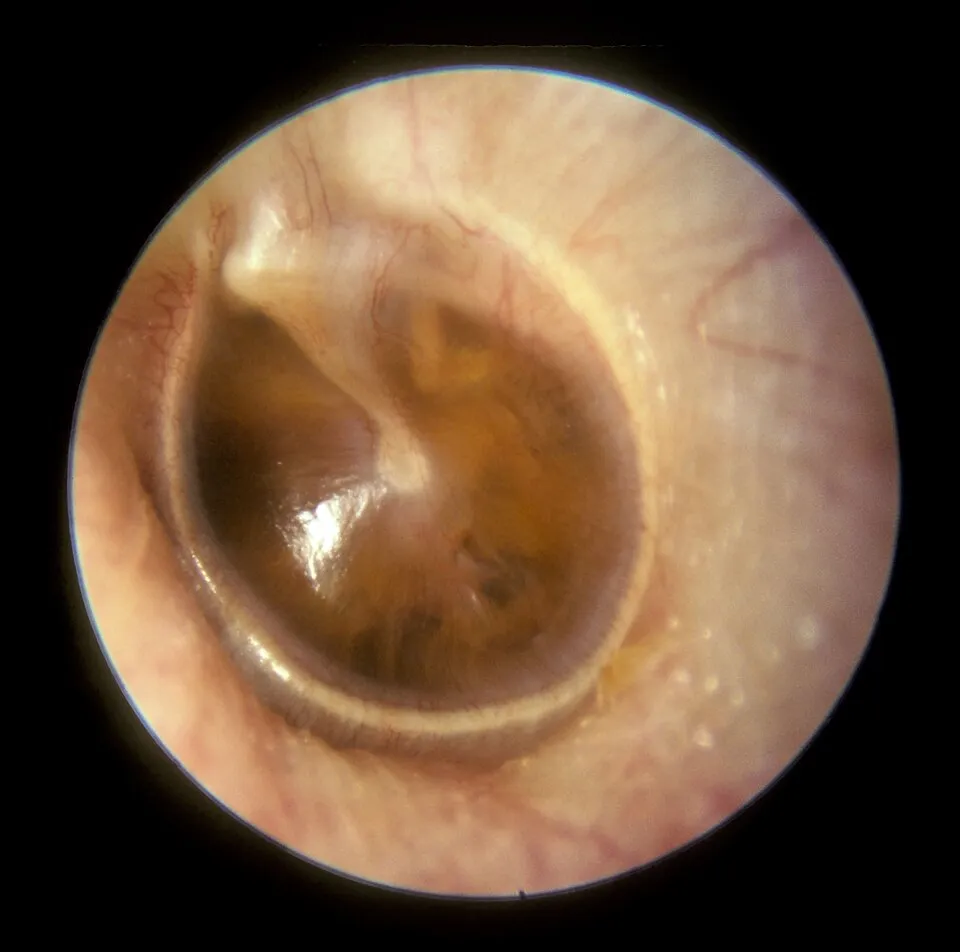
Otitis media with effusion (OME, 'glue ear') is fluid in the middle ear without signs or symptoms of acute infection. It is the commonest cause of hearing loss in children, affecting most at some point before school age, with peaks around 2 and 5 years. It often follows acute otitis media or colds and reflects Eustachian tube dysfunction; children with Down syndrome and cleft palate are at particular risk. The main problem is a fluctuating conductive hearing loss, typically 20–30 dB, which can delay speech, affect behaviour, balance and learning. The drum looks dull, retracted or amber with bubbles or a fluid level, and tympanometry shows a flat (type B) trace. Most effusions clear within 3 months, so management starts with active observation, hearing assessment and classroom strategies. Antibiotics, steroids, antihistamines and decongestants do not help. If hearing loss persists, NICE NG233 (2023) supports autoinflation, hearing aids or grommets, with adenoidectomy considered alongside grommets unless the palate is abnormal.
Patient case, mechanism, investigations, management, flashcards and exam-style questions.Open the lesson →
Key facts
- Commonest cause of acquired hearing loss in childhood; peaks at about 2 and 5 years; most children have at least one episode
- High-risk groups: Down syndrome, cleft palate (repaired or submucous), primary ciliary dyskinesia, craniofacial syndromes, recurrent AOM, passive smoking
- Hearing loss is conductive and fluctuating, usually 20–30 dB (up to about 40–50 dB)
- Tympanometry: type B (flat) trace with normal canal volume; a flat trace with high volume suggests perforation or patent grommet
- About half of effusions resolve within 3 months and most within a year
- NICE NG233: reassess hearing after 3 months in bilateral OME with hearing loss; do not offer antibiotics, steroids, antihistamines, decongestants, mucolytics or anti-reflux drugs
- Options for persistent hearing loss: autoinflation, air or bone conduction hearing aids, or grommets (with adenoidectomy unless palate abnormality)
- Persistent unilateral OME in an adult, particularly of East or Southeast Asian heritage, needs nasopharyngeal examination to exclude carcinoma
Differential diagnosis
| Condition | Clues | Key test |
|---|---|---|
| Acute otitis media | Acute pain, fever, bulging red drum | Otoscopy |
| Sensorineural hearing loss | Normal drum and tympanogram; congenital or acquired (CMV, meningitis, genetic) | Audiometry with bone conduction; ABR |
| Impacted wax or foreign body | Canal occluded; normal middle ear after removal | Otoscopy |
| Cholesteatoma | Persistent foul discharge, retraction pocket with keratin in attic | Otomicroscopy; CT temporal bone |
| Ossicular abnormality | Conductive loss with normal type A tympanogram | Audiometry; CT |
| Autism spectrum disorder or global developmental delay | Speech delay with social communication difficulties despite normal hearing | Hearing test first; developmental assessment |
| Nasopharyngeal mass (adenoids, rarely tumour) | Unilateral persistent effusion, nasal obstruction, epistaxis, neck mass | Nasendoscopy; imaging |
Exam pearls
Guideline
NICE NG233 Otitis media with effusion in under 12s (2023); AAO-HNS clinical practice guideline: otitis media with effusion (update 2016)
References
- National Institute for Health and Care Excellence. Otitis media with effusion in under 12s (NG233). NICE guideline 2023.
- Rosenfeld RM, Shin JJ, Schwartz SR, et al.. Clinical practice guideline: otitis media with effusion (update). Otolaryngol Head Neck Surg 2016.
- Williamson I, Vennik J, Harnden A, et al.. Effect of nasal balloon autoinflation in children with otitis media with effusion in primary care: an open randomized controlled trial. CMAJ 2015.
- Lieberthal AS, Carroll AE, Chonmaitree T, et al.. The diagnosis and management of acute otitis media. Pediatrics 2013.
- National Institute for Health and Care Excellence. Otitis media (acute): antimicrobial prescribing (NG91). NICE guideline 2018.
- O'Connor SS, Coggins R, Gagnon L, et al.. Plain language summary: otitis media with effusion. Otolaryngol Head Neck Surg 2016.
Related topics
By Dr Khalid Seidi (B.Sc., M.D.) · MedEd World Clinical Knowledge library. Original teaching content checked against current guidelines (November 2026); confirm the latest local guidance before clinical use. Not a substitute for clinical judgement.