Clinical Knowledge › Paediatrics › Respiratory and ENT
Bronchiolitis
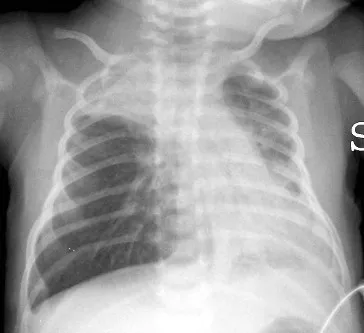
Bronchiolitis is a seasonal viral lower respiratory tract infection of infants under 2 years, peaking at 3–6 months, and is the commonest reason for infant hospital admission in winter. Respiratory syncytial virus causes most cases; rhinovirus, human metapneumovirus and others cause the rest. After 1–3 days of coryza, infants develop cough, tachypnoea, recession and widespread fine crackles and/or wheeze; symptoms peak on days 3–5 and the cough can last 3–4 weeks. Young infants may present with apnoea. Diagnosis is clinical, and NICE NG9 advises against routine chest X-ray, blood tests or viral swabs. Care is supportive: oxygen if saturation stays below 90% (92% under 6 weeks or with comorbidity), nasogastric then intravenous fluids if feeding is inadequate, and high-flow or CPAP for worsening distress. Bronchodilators, adrenaline, corticosteroids, hypertonic saline and antibiotics are not recommended. Risk of severe disease is highest in preterm infants, those under 3 months, and those with chronic lung disease, congenital heart disease, neuromuscular disease or immunodeficiency. Prevention has been transformed by maternal RSV vaccination and long-acting infant monoclonal antibodies (nirsevimab, clesrovimab).
Patient case, mechanism, investigations, management, flashcards and exam-style questions.Open the lesson →
Key facts
- Affects infants under 2 years, peak 3–6 months; about 1 in 3 infants develop bronchiolitis in the first year; 2–3% are admitted
- Respiratory syncytial virus causes 60–80% of cases; others: rhinovirus, human metapneumovirus, parainfluenza, adenovirus, coronaviruses
- Coryza for 1–3 days, then persistent cough, tachypnoea or recession, and wheeze and/or widespread fine inspiratory crackles
- Symptoms peak on days 3–5; cough resolves within 3–4 weeks in most
- NICE NG9: give oxygen if SpO2 persistently below 90% (6 weeks and over) or below 92% (under 6 weeks or underlying condition)
- Do not use salbutamol, adrenaline, ipratropium, montelukast, corticosteroids, hypertonic saline or antibiotics routinely
- Immediate referral: apnoea, child seriously unwell, severe distress (grunting, marked recession, RR over 70), central cyanosis, persistent SpO2 below 92%
- Prevention: maternal RSV prefusion F vaccine in pregnancy and long-acting monoclonal antibodies (nirsevimab, clesrovimab) for infants
Differential diagnosis
| Condition | Clues | Key test |
|---|---|---|
| Preschool (viral-induced) wheeze | Over 1 year, recurrent episodes, wheeze without crackles, responds to salbutamol | Clinical; trial of bronchodilator |
| Pneumonia | High fever (over 39 °C), focal crackles or bronchial breathing, toxic | Chest X-ray if diagnostic doubt or severe |
| Pertussis | Paroxysmal cough with whoop or apnoea, minimal signs between bouts, lymphocytosis | Nasopharyngeal PCR |
| Heart failure (VSD, PDA, AVSD) | Hepatomegaly, murmur, gallop, faltering growth, sweating on feeds | Echocardiography |
| Inhaled foreign body | Sudden choking, unilateral signs, older infant crawling | Inspiratory and expiratory chest X-ray, bronchoscopy |
| Sepsis or metabolic acidosis | Tachypnoea without recession, mottled, lethargic, deep breathing | Blood gas, lactate, cultures |
| Cystic fibrosis or other chronic lung disease | Recurrent or prolonged symptoms, faltering growth, steatorrhoea | Newborn screen result, sweat test |
| Congenital airway anomaly (tracheomalacia, vascular ring) | Persistent noisy breathing from birth | Bronchoscopy, CT angiography |
Exam pearls
Guideline
NICE NG9 Bronchiolitis in children: diagnosis and management (2015, updated 2021), with AAP bronchiolitis guideline (2014) and 2024–2026 RSV immunisation programmes (UKHSA/JCVI, CDC/ACIP)
References
- National Institute for Health and Care Excellence. Bronchiolitis in children: diagnosis and management (NG9). NICE guideline 2015.
- Ralston SL, Lieberthal AS, Meissner HC, et al.. Clinical practice guideline: the diagnosis, management, and prevention of bronchiolitis. Pediatrics 2014.
- Dalziel SR, Haskell L, O'Brien S, et al.. Bronchiolitis. Lancet 2022.
- Florin TA, Plint AC, Zorc JJ.. Viral bronchiolitis. Lancet 2017.
- Franklin D, Babl FE, Schlapbach LJ, et al.. A randomized trial of high-flow oxygen therapy in infants with bronchiolitis. N Engl J Med 2018.
- Kampmann B, Madhi SA, Munjal I, et al.. Bivalent prefusion F vaccine in pregnancy to prevent RSV illness in infants. N Engl J Med 2023.
Related topics
By Dr Khalid Seidi (B.Sc., M.D.) · MedEd World Clinical Knowledge library. Original teaching content checked against current guidelines (November 2026); confirm the latest local guidance before clinical use. Not a substitute for clinical judgement.