Clinical Knowledge › Paediatrics › Respiratory and ENT
Tonsillitis and peritonsillar abscess
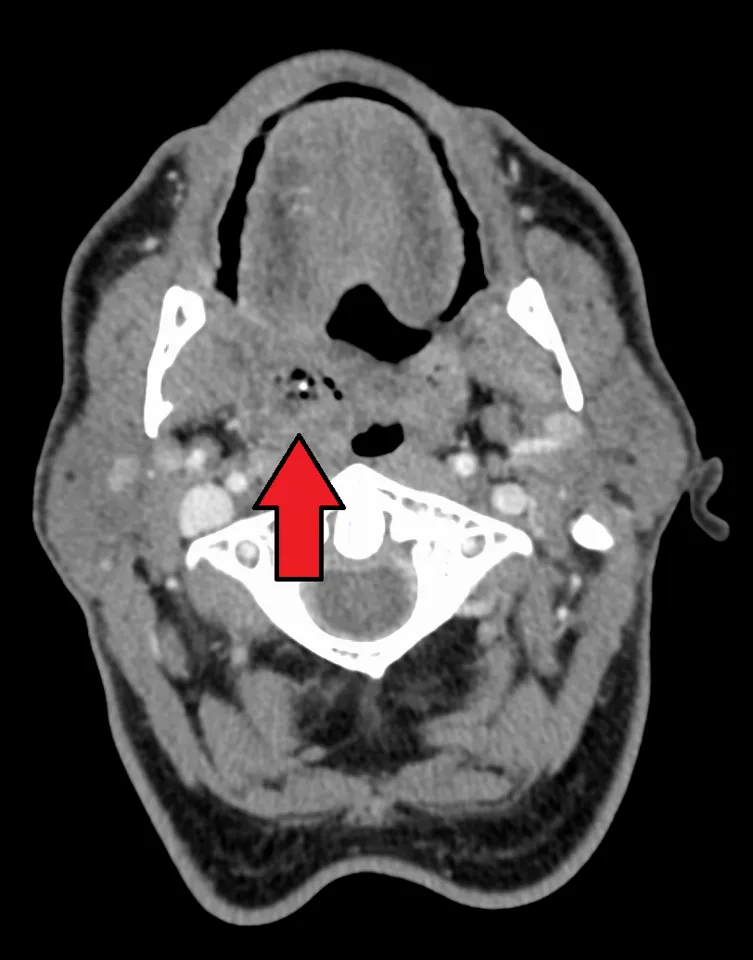
Acute tonsillitis is inflammation of the palatine tonsils, usually as part of pharyngitis. Most cases are viral (adenovirus, rhinovirus, Epstein–Barr virus); group A streptococcus (GAS, Streptococcus pyogenes) causes about a third of cases in school-age children and is uncommon under 3 years. Children present with sore throat, fever, painful swallowing, enlarged red or exudative tonsils and tender anterior cervical nodes. Clinical scores (FeverPAIN, Centor or McIsaac) and rapid antigen tests guide antibiotic use: phenoxymethylpenicillin for 5–10 days (NICE NG84) or 10 days (IDSA), with clarithromycin for penicillin allergy; amoxicillin is avoided if glandular fever is possible. Treating GAS prevents acute rheumatic fever. Peritonsillar abscess (quinsy) mainly affects adolescents: severe one-sided throat pain, trismus, 'hot potato' voice, drooling and a uvula pushed away from the swelling. It needs drainage, IV antibiotics, analgesia and fluids. Tonsillectomy is reserved for frequent, documented, disabling tonsillitis (Paradise criteria), recurrent quinsy or obstructive sleep apnoea.
Patient case, mechanism, investigations, management, flashcards and exam-style questions.Open the lesson →
Key facts
- Most tonsillitis is viral; GAS causes about 20–30% of sore throats in children aged 5–15 and is uncommon under 3 years
- FeverPAIN (Fever, Purulence, Attend within 3 days, severely Inflamed tonsils, No cough or coryza): 0–1 no antibiotic, 2–3 no or back-up, 4–5 immediate or back-up (NICE NG84)
- Centor (exudate, tender anterior nodes, fever, no cough); McIsaac adds 1 point for age 3–14 and subtracts 1 for 45 and over
- Phenoxymethylpenicillin 5–10 days (NICE NG84) or 10 days (IDSA; UK scarlet fever); clarithromycin if penicillin allergic
- Avoid amoxicillin when EBV is possible: most children with glandular fever develop a maculopapular rash
- Quinsy: unilateral peritonsillar bulge, uvula deviated to the opposite side, trismus, hot potato voice, drooling; adolescents and young adults
- Quinsy treatment: needle aspiration or incision and drainage plus IV antibiotics (for example benzylpenicillin with metronidazole, or co-amoxiclav)
- Tonsillectomy (SIGN 117, AAO-HNS 2019): 7 or more episodes in 1 year, 5 or more per year for 2 years, or 3 or more per year for 3 years; codeine is contraindicated after tonsillectomy in children
Differential diagnosis
| Condition | Clues | Key test |
|---|---|---|
| Infectious mononucleosis (EBV) | Adolescent with fatigue, posterior cervical nodes, palatal petechiae, splenomegaly, prolonged course | FBC (atypical lymphocytes), heterophile antibody (often negative under 4), EBV serology |
| Scarlet fever | Sandpaper rash, strawberry tongue, circumoral pallor, Pastia lines | Throat swab culture or rapid antigen test |
| Retropharyngeal abscess | Child under 5, fever, neck stiffness or refusal to extend neck, drooling, stridor | Lateral neck X-ray (widened prevertebral space); CT with contrast |
| Epiglottitis | Toxic, drooling, tripod position, stridor; unvaccinated | Do not examine throat; airway team |
| Kawasaki disease | Fever 5 days or more, conjunctival injection, red cracked lips, rash, extremity changes | Clinical criteria; CRP, echocardiogram |
| Diphtheria | Grey adherent pseudomembrane, bull neck, unvaccinated or travel | Throat swab culture and toxin testing; notify |
| Herpangina or hand, foot and mouth disease | Vesicles or ulcers on soft palate (with hand and foot lesions in HFMD) | Clinical |
| Lemierre syndrome | Adolescent with sore throat then rigors, neck swelling and septic lung emboli | Blood cultures (Fusobacterium necrophorum), CT neck and chest |
Exam pearls
Guideline
NICE NG84 Sore throat (acute): antimicrobial prescribing (2018); IDSA group A streptococcal pharyngitis (2012); SIGN 117 Management of sore throat and indications for tonsillectomy (2010); AAO-HNS Tonsillectomy in children (update 2019)
References
- National Institute for Health and Care Excellence. Sore throat (acute): antimicrobial prescribing (NG84). NICE guideline 2018.
- Shulman ST, Bisno AL, Clegg HW, et al.. Clinical practice guideline for the diagnosis and management of group A streptococcal pharyngitis: 2012 update by the Infectious Diseases Society of America. Clin Infect Dis 2012.
- Scottish Intercollegiate Guidelines Network. Management of sore throat and indications for tonsillectomy (SIGN 117). SIGN 2010.
- Mitchell RB, Archer SM, Ishman SL, et al.. Clinical practice guideline: tonsillectomy in children (update)—executive summary. Otolaryngol Head Neck Surg 2019.
- Little P, Hobbs FD, Moore M, et al.. Clinical score and rapid antigen detection test to guide antibiotic use for sore throats: randomised controlled trial of PRISM (primary care streptococcal management). BMJ 2013.
- Windfuhr JP, Toepfner N, Steffen G, Waldfahrer F, Berner R.. Clinical practice guideline: tonsillitis II. Surgical management. Eur Arch Otorhinolaryngol 2016.
Related topics
By Dr Khalid Seidi (B.Sc., M.D.) · MedEd World Clinical Knowledge library. Original teaching content checked against current guidelines (November 2026); confirm the latest local guidance before clinical use. Not a substitute for clinical judgement.