Clinical Knowledge › Paediatrics › Respiratory and ENT
Pneumonia in children
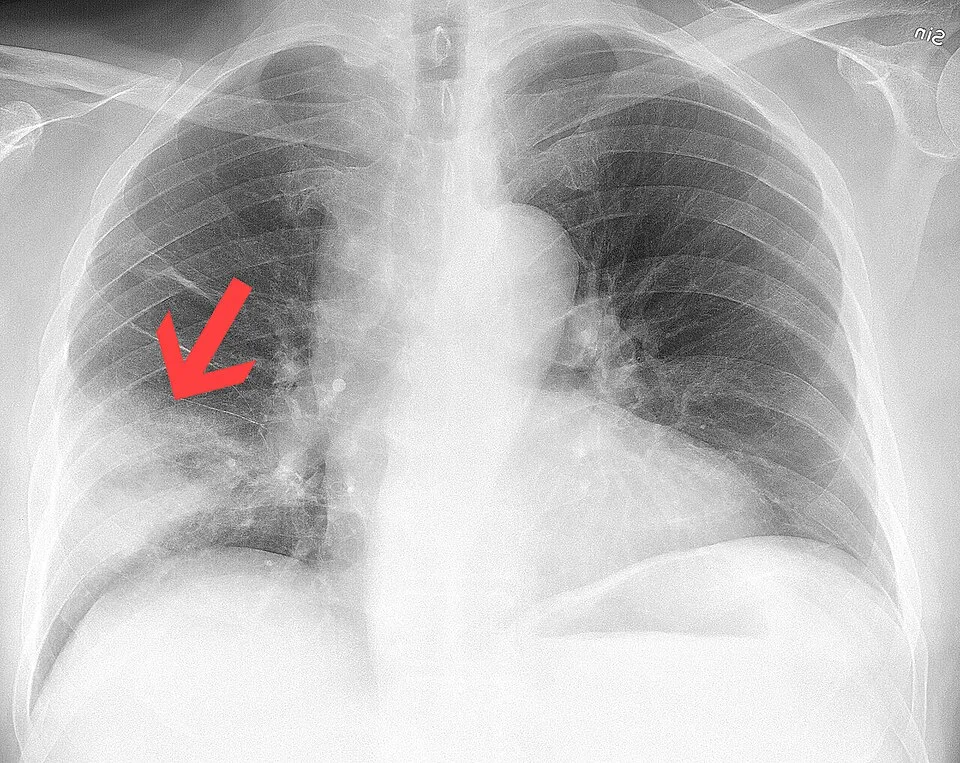
Community-acquired pneumonia (CAP) is infection of the lung parenchyma acquired outside hospital and remains the leading infectious cause of death in children under 5 worldwide. Viruses (RSV, rhinovirus, human metapneumovirus, influenza) cause most infections in preschool children; Streptococcus pneumoniae is the main bacterial cause at all ages, Mycoplasma pneumoniae is common in school-age children, and Staphylococcus aureus and group A streptococcus cause severe, necrotising or empyema-complicated disease. Diagnosis is clinical: fever, cough and fast breathing for age, with chest indrawing, crackles or bronchial breathing; chest X-ray and blood tests are not routine in children managed at home. Severity markers include SpO2 below 90–92%, grunting, severe recession, inability to feed and altered consciousness. Oral amoxicillin is first line, and short courses (3 days for most children aged 3 months to 11 years in NICE NG250) are as effective as longer ones (CAP-IT trial). Severe pneumonia needs oxygen and IV antibiotics. Persistent fever beyond 48–72 hours suggests empyema or abscess.
Patient case, mechanism, investigations, management, flashcards and exam-style questions.Open the lesson →
Key facts
- Leading infectious killer of children under 5 globally; most deaths are in low-income settings and preventable with vaccines, oxygen and amoxicillin
- Age guides aetiology: neonates (group B streptococcus, Gram-negative bacilli), infants (RSV, pneumococcus, Chlamydia trachomatis, pertussis), preschool (viruses, pneumococcus), school age (Mycoplasma, pneumococcus)
- WHO fast breathing: 60/min or more under 2 months, 50/min or more at 2–11 months, 40/min or more at 1–5 years
- Severe features: SpO2 below 90% (NICE NG250) or below 92% (BTS), grunting, severe chest indrawing, inability to feed or drink, lethargy, apnoea
- CXR and CRP are not needed for children treated in the community; CXR is reserved for severe, complicated or non-resolving cases
- First-line oral amoxicillin; NICE NG250 gives 3 days for most children 3 months to 11 years and 5 days for younger infants and adolescents
- Severe CAP: IV co-amoxiclav 30 mg/kg 8-hourly (maximum 1.2 g) per NICE, or ampicillin/benzylpenicillin plus gentamicin per WHO; add a macrolide if atypical infection suspected
- Fever beyond 48–72 hours on treatment suggests parapneumonic effusion, empyema, necrotising pneumonia or abscess: ultrasound the chest
Differential diagnosis
| Condition | Clues | Key test |
|---|---|---|
| Bronchiolitis | Infant under 12 months, coryza, widespread crackles and wheeze, usually low-grade fever | Clinical; viral swab |
| Preschool or asthmatic wheeze | Bilateral wheeze, previous episodes, responds to salbutamol | Clinical; response to bronchodilator |
| Inhaled foreign body | Sudden choking episode, persistent focal signs, recurrent pneumonia in same lobe | Expiratory CXR, CT, bronchoscopy |
| Sepsis or meningitis with tachypnoea | Tachypnoea from acidosis, non-blanching rash, neck stiffness, poor perfusion | Blood culture, lactate, lumbar puncture when safe |
| Diabetic ketoacidosis | Deep sighing (Kussmaul) breathing, polyuria, dehydration | Capillary glucose and ketones, blood gas |
| Heart failure or myocarditis | Tachypnoea with hepatomegaly, gallop, murmur, cardiomegaly | ECG, echocardiogram, troponin |
| Pulmonary tuberculosis | Chronic cough, weight loss, TB contact, hilar lymphadenopathy | Gastric aspirates or sputum (Xpert MTB/RIF Ultra), IGRA or tuberculin test |
| Pertussis | Paroxysmal cough with whoop or apnoea in infants, lymphocytosis | Nasopharyngeal PCR |
Exam pearls
Guideline
NICE NG250 Pneumonia: diagnosis and management (2025); BTS community-acquired pneumonia in children (2011); WHO guideline on management of pneumonia and diarrhoea in children up to 10 years of age (2024); IDSA/PIDS paediatric CAP (2011)
References
- National Institute for Health and Care Excellence. Pneumonia: diagnosis and management (NG250). NICE guideline 2025.
- Harris M, Clark J, Coote N, et al.. British Thoracic Society guidelines for the management of community acquired pneumonia in children: update 2011. Thorax 2011.
- World Health Organization. Guideline on management of pneumonia and diarrhoea in children up to 10 years of age. WHO 2024.
- Bradley JS, Byington CL, Shah SS, et al.. The management of community-acquired pneumonia in infants and children older than 3 months of age: clinical practice guidelines by the Pediatric Infectious Diseases Society and the Infectious Diseases Society of America. Clin Infect Dis 2011.
- World Health Organization. Integrated Management of Childhood Illness (IMCI) chart booklet. WHO 2014.
- Bielicki JA, Stöhr W, Barratt S, et al.. Effect of amoxicillin dose and treatment duration on the need for antibiotic re-treatment in children with community-acquired pneumonia: the CAP-IT randomized clinical trial. JAMA 2021.
Related topics
By Dr Khalid Seidi (B.Sc., M.D.) · MedEd World Clinical Knowledge library. Original teaching content checked against current guidelines (November 2026); confirm the latest local guidance before clinical use. Not a substitute for clinical judgement.