Clinical Knowledge › Obstetrics and gynaecology › Fertility and contraception
Assisted reproduction (IVF and ICSI)
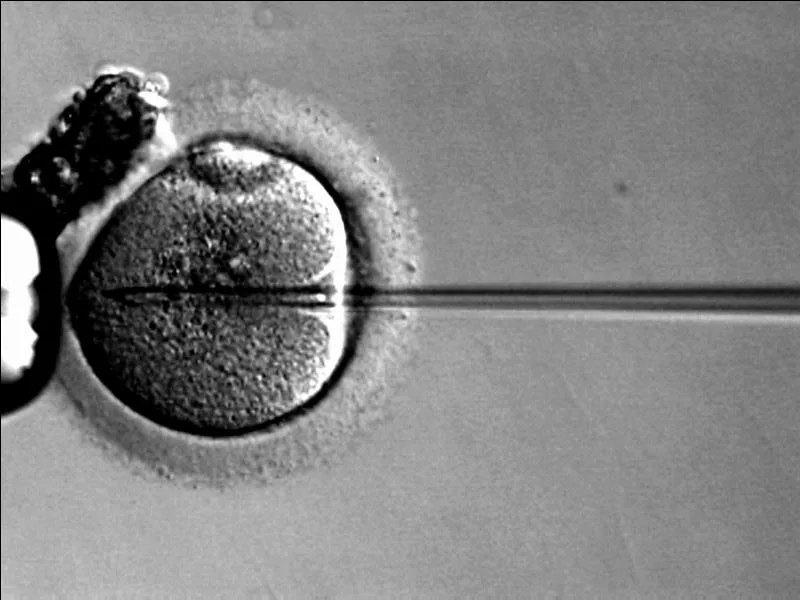
In vitro fertilisation (IVF) combines controlled ovarian stimulation, transvaginal oocyte retrieval, fertilisation in the laboratory and transfer of an embryo to the uterus. In intracytoplasmic sperm injection (ICSI) a single sperm is injected into each mature oocyte; it is indicated for severe male factor, surgically retrieved sperm and previous fertilisation failure, but adds nothing when sperm are normal. Other IVF indications include tubal disease, endometriosis, unexplained subfertility, donor gametes, surrogacy, preimplantation genetic testing and fertility preservation. A typical cycle uses FSH with a GnRH antagonist, an hCG or GnRH agonist trigger, retrieval 34–36 hours later, culture to blastocyst and single embryo transfer with luteal progesterone support; surplus embryos are vitrified. Success depends mainly on female age: live birth rates per embryo transferred fall from about a third under 35 to well under 10% above 43 with own eggs. Key risks are OHSS, multiple and ectopic pregnancy and higher obstetric risks, so single embryo transfer and OHSS prevention are central.
Patient case, mechanism, investigations, management, flashcards and exam-style questions.Open the lesson →
Key facts
- IVF steps: ovarian stimulation, trigger, oocyte retrieval 34–36 hours later, fertilisation (IVF or ICSI), embryo culture to day 3 or day 5 (blastocyst), transfer, luteal support, pregnancy test about 2 weeks after retrieval
- Standard protocol: recombinant or urinary FSH (often 150–225 IU daily, individualised by AMH and antral follicle count) with a GnRH antagonist to prevent a premature LH surge
- Trigger final maturation with hCG when about 3 or more follicles reach 17 mm or more; use a GnRH agonist trigger (antagonist cycles only) and freeze-all in high responders to prevent OHSS
- ICSI for severe male factor, surgically retrieved or frozen-limited sperm, previous fertilisation failure, PGT-M and some frozen oocytes; it does not improve live birth with normal sperm (Dang, Lancet 2021)
- Elective single embryo transfer is the best way to prevent multiple pregnancy; twins carry higher risks of preterm birth, pre-eclampsia, stillbirth and cerebral palsy
- NHS England access (NICE NG257, 2026): up to 3 full IVF cycles for eligible women under 40; access at 40 and over is more restricted and local funding rules vary
- Live birth per embryo transferred: about 30–35% under 35, falling steeply after 40; oocyte donation success depends on donor age
- Unproven add-ons (endometrial scratch, immune therapies, routine PGT-A, endometrial receptivity tests) should not be offered routinely (ESHRE 2023)
Differential diagnosis
| Condition | Clues | Key test |
|---|---|---|
| IVF with conventional insemination | Normal semen parameters, tubal or unexplained subfertility | Semen analysis meets WHO limits |
| ICSI | Severe oligoasthenoteratozoospermia, surgical sperm, previous fertilisation failure | Repeated severely abnormal semen analysis |
| Intrauterine insemination | Unexplained or mild male factor, patent tubes | Tubal patency and adequate motile sperm count |
| Ovulation induction alone | Anovulatory PCOS with patent tubes and normal semen | Ovulation tracking |
| Oocyte donation | POI, very low reserve, advanced age, genetic disease | FSH, AMH, age |
| Gestational surrogacy | Absent or non-functional uterus (MRKH, hysterectomy), severe medical contraindication to pregnancy | Pelvic imaging; medical assessment |
| Fertility preservation (oocyte or embryo vitrification) | Before gonadotoxic cancer treatment or by choice | Oncology timeline; AMH |
Exam pearls
Guideline
ESHRE Ovarian stimulation for IVF/ICSI guideline (2025 update), NICE NG257 Fertility problems (2026) and ESHRE good practice recommendations on add-ons (2023)
References
- Ata B, Bosch E, Broer S, et al.. ESHRE guideline: ovarian stimulation for IVF/ICSI: an update in 2025. Hum Reprod 2026.
- National Institute for Health and Care Excellence. Fertility problems: assessment and treatment (NG257). NICE 2026.
- World Health Organization. Guideline for the prevention, diagnosis and treatment of infertility. WHO 2025.
- Lundin K, Bentzen JG, Bozdag G, et al.. Good practice recommendations on add-ons in reproductive medicine. Hum Reprod 2023.
- Dang VQ, Vuong LN, Luu TM, et al.. Intracytoplasmic sperm injection versus conventional in-vitro fertilisation in couples with infertility in whom the male partner has normal total sperm count and motility: an open-label, randomised controlled trial. Lancet 2021.
- Chen ZJ, Shi Y, Sun Y, et al.. Fresh versus frozen embryos for infertility in the polycystic ovary syndrome. N Engl J Med 2016.
Related topics
By Dr Khalid Seidi (B.Sc., M.D.) · MedEd World Clinical Knowledge library. Original teaching content checked against current guidelines (November 2026); confirm the latest local guidance before clinical use. Not a substitute for clinical judgement.