Clinical Knowledge › Obstetrics and gynaecology › Fertility and contraception
Progestogen-only contraception
Progestogen-only contraception avoids oestrogen and so is suitable for most women who cannot use combined methods, including smokers over 35, women with migraine with aura, previous VTE and those breastfeeding. Methods are the progestogen-only pill (traditional levonorgestrel or norethisterone pills, desogestrel 75 µg and drospirenone 4 mg), the etonogestrel subdermal implant and the injectable depot medroxyprogesterone acetate (DMPA). Desogestrel, drospirenone, the implant and DMPA reliably inhibit ovulation; traditional pills act mainly by thickening cervical mucus. The implant is the most effective reversible method (failure about 0.05% a year), DMPA typical failure is about 4–6%, and pills about 9% with typical use. Missed-pill windows differ: 3 hours for traditional pills, 12 hours for desogestrel and 24 hours for drospirenone. DMPA can delay return of fertility by up to a year and reduces bone density, so it needs review every 2 years and caution under 18 and over 45. Enzyme-inducing drugs reduce the efficacy of pills and the implant but not of DMPA.
Patient case, mechanism, investigations, management, flashcards and exam-style questions.Open the lesson →
Key facts
- Progestogen-only methods are UKMEC 1 for smokers of any age and for breastfeeding women, and UKMEC 2 for migraine with aura and previous VTE; under UKMEC 2025 DMPA is 3 for known thrombogenic mutations and positive antiphospholipid antibodies
- Missed-pill thresholds: traditional POP 3 hours late (27 hours since last pill), desogestrel 12 hours (36 hours), drospirenone 24 hours
- After a missed traditional or desogestrel pill: take it, continue, condoms for 48 hours, consider EC if unprotected sex since the missed pill
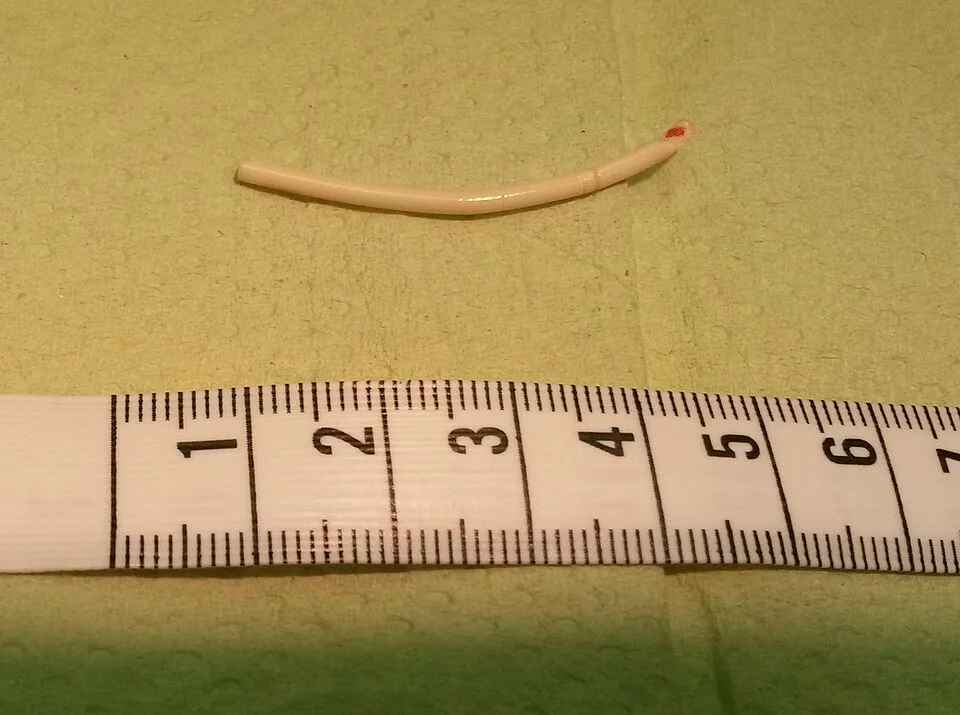
- Etonogestrel implant (68 mg) in the inner non-dominant upper arm; licensed for 3 years in the UK; failure about 0.05% a year
- DMPA 150 mg IM every 13 weeks (up to 14 weeks per CoSRH) or 104 mg subcutaneously every 13 weeks, including self-injection
- DMPA reduces bone mineral density (largely reversible), may cause weight gain and delays return of fertility by up to 1 year
- Enzyme inducers reduce the efficacy of pills and implants; DMPA and the LNG-IUD are unaffected
- Start on days 1–5 for immediate protection; otherwise 48 hours of precautions for pills and 7 days for the implant and injection
Differential diagnosis
| Condition | Clues | Key test |
|---|---|---|
| Combined hormonal contraception | Regular bleeding and acne benefit; oestrogen contraindications apply | UKMEC assessment |
| Levonorgestrel intrauterine device | Very effective, lighter bleeding, unaffected by enzyme inducers | Counselling; STI risk |
| Copper intrauterine device | Non-hormonal; heavier periods | Counselling |
| Pregnancy (as cause of amenorrhoea on POC) | Missed pills or late injection | Urine hCG |
| Chlamydia cervicitis (as cause of new bleeding) | Postcoital or intermenstrual bleeding with new partner | NAAT swab |
| Cervical or endometrial pathology | Persistent bleeding, older age, postcoital bleeding | Speculum, cervical screening, ultrasound or biopsy |
Exam pearls
Guideline
CoSRH (formerly FSRH) guidelines: Progestogen-only Pills (2022, amended 2023), Progestogen-only Implant (2021, amended 2023), Progestogen-only Injectable (2014, amended 2023); UKMEC 2025; US SPR 2024
References
- Faculty of Sexual and Reproductive Healthcare (now CoSRH). FSRH Clinical Guideline: Progestogen-only Pills (August 2022, amended July 2023). FSRH/CoSRH 2023.
- Faculty of Sexual and Reproductive Healthcare (now CoSRH). FSRH Clinical Guideline: Progestogen-only Implant (February 2021, amended July 2023). FSRH/CoSRH 2023.
- Faculty of Sexual and Reproductive Healthcare (now CoSRH). FSRH Clinical Guideline: Progestogen-only Injectable Contraception (December 2014, amended 2023). FSRH/CoSRH 2023.
- College of Sexual and Reproductive Healthcare. UK Medical Eligibility Criteria for Contraceptive Use (UKMEC 2025). CoSRH 2025.
- Curtis KM, Nguyen AT, Tepper NK, et al. (CDC). U.S. Selected Practice Recommendations for Contraceptive Use, 2024. MMWR Recomm Rep 2024.
- Evidence for Contraceptive Options and HIV Outcomes (ECHO) Trial Consortium. HIV incidence among women using intramuscular depot medroxyprogesterone acetate, a copper intrauterine device, or a levonorgestrel implant for contraception: a randomised, multicentre, open-label trial. Lancet 2019.
Related topics
By Dr Khalid Seidi (B.Sc., M.D.) · MedEd World Clinical Knowledge library. Original teaching content checked against current guidelines (November 2026); confirm the latest local guidance before clinical use. Not a substitute for clinical judgement.