Clinical Knowledge › Obstetrics and gynaecology › Fertility and contraception
Subfertility: investigation and management
Subfertility is failure to conceive after 12 months of regular unprotected intercourse and affects about 1 in 6 people during their reproductive lives. About 80–85% of couples conceive within a year and over 90% within two. Causes are male factors (contributing to about half), ovulatory disorders (about a quarter, mostly PCOS), tubal and pelvic disease (previous chlamydia or PID, endometriosis), uterine factors and unexplained subfertility (about a quarter). Both partners are assessed together after a year, or earlier when the woman is older or there is a known cause. Core tests are semen analysis (WHO 2021 limits), mid-luteal progesterone, tubal patency testing (HSG, HyCoSy or laparoscopy and dye) and ovarian reserve (AMH or antral follicle count) to plan treatment. Management follows the cause: lifestyle optimisation, letrozole for anovulatory PCOS, gonadotrophins or pulsatile GnRH for hypothalamic anovulation, tubal surgery or salpingectomy before IVF, surgery for endometriosis or submucosal fibroids, IUI or IVF/ICSI, donor gametes, with psychosocial support.
Patient case, mechanism, investigations, management, flashcards and exam-style questions.Open the lesson →
Key facts
- Definition: no pregnancy after 12 months of regular unprotected intercourse; about 84% conceive within 1 year and 92% within 2 years
- Offer earlier assessment when the woman is older (about 36 and over) or has a known cause: amenorrhoea, previous PID, endometriosis, cancer treatment, or male history such as undescended testes
- Confirm ovulation with mid-luteal progesterone (day 21 of a 28-day cycle, 7 days before the expected period); above about 30 nmol/L indicates ovulation
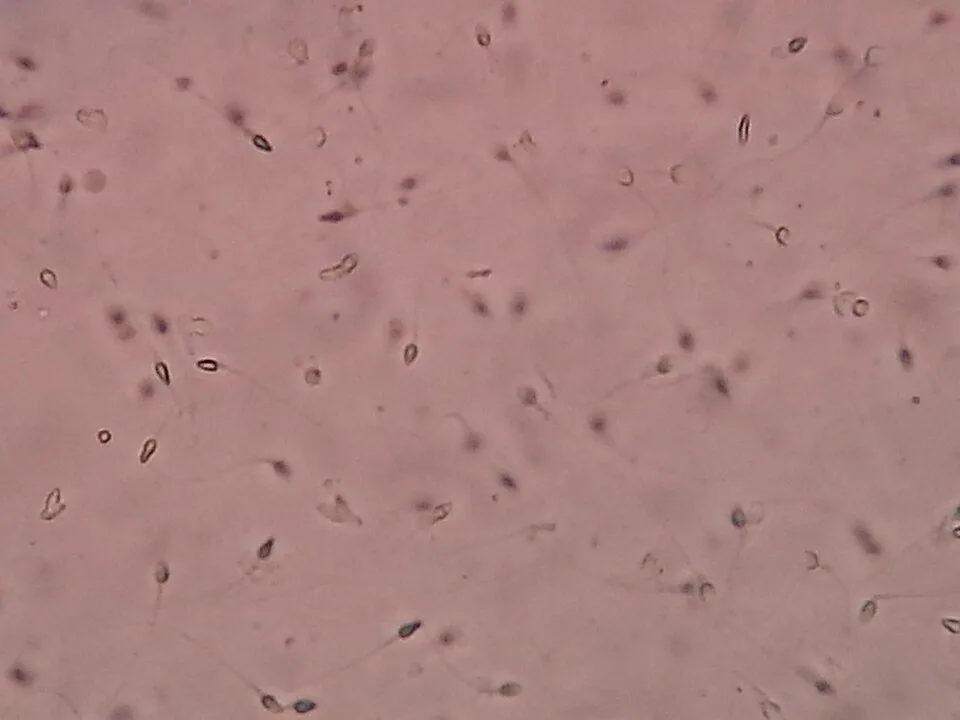
- Semen analysis (WHO 2021 lower reference limits): volume 1.4 mL, concentration 16 million/mL, total motility 42%, progressive motility 30%, normal forms 4%; repeat after about 3 months if abnormal
- Tubal assessment: HSG or HyCoSy if no known comorbidity; laparoscopy and dye if PID, endometriosis or previous pelvic surgery suspected; screen for chlamydia before uterine instrumentation
- AMH and antral follicle count predict response to ovarian stimulation, not the chance of natural conception
- Letrozole is first-line ovulation induction for PCOS; hydrosalpinges should be removed or clipped before IVF because fluid halves implantation
- Unexplained subfertility: expectant management or IUI with ovarian stimulation (ESHRE 2023), then IVF; ICSI only for male factor or previous fertilisation failure
Differential diagnosis
| Condition | Clues | Key test |
|---|---|---|
| Anovulation from PCOS (WHO group II) | Irregular cycles, acne, hirsutism, raised BMI | LH, testosterone, AMH or ultrasound; low mid-luteal progesterone |
| Hypothalamic anovulation (WHO group I) | Low weight, excessive exercise, amenorrhoea | Low FSH, LH and oestradiol |
| Premature ovarian insufficiency (WHO group III) | Under 40, oligo-amenorrhoea, hot flushes | FSH above 25 IU/L, very low AMH |
| Tubal factor | Previous PID, chlamydia, ectopic or pelvic surgery | HSG, HyCoSy or laparoscopy and dye |
| Endometriosis | Dysmenorrhoea, deep dyspareunia, pelvic pain | Transvaginal ultrasound; laparoscopy |
| Uterine factor | Heavy bleeding, previous curettage | Ultrasound, saline sonography or hysteroscopy (submucosal fibroid, polyp, adhesions) |
| Male factor | Undescended testes, mumps orchitis, varicocele, anabolic steroids | Semen analysis; FSH, testosterone, karyotype if severe |
| Coital or sexual dysfunction | Infrequent intercourse, erectile or ejaculatory problems, vaginismus | Sexual history |
Exam pearls
Guideline
NICE NG257 Fertility problems: assessment and treatment (2026, replacing CG156), WHO Guideline for the prevention, diagnosis and treatment of infertility (2025) and ESHRE unexplained infertility guideline (2023)
References
- National Institute for Health and Care Excellence. Fertility problems: assessment and treatment (NG257). NICE 2026.
- World Health Organization. Guideline for the prevention, diagnosis and treatment of infertility. WHO 2025.
- Romualdi D, Ata B, Bhattacharya S, et al.. Evidence-based guideline: unexplained infertility. Hum Reprod 2023.
- ESHRE. Good practice recommendations on add-ons in reproductive medicine. Hum Reprod 2023.
- World Health Organization. WHO laboratory manual for the examination and processing of human semen. 2021.
- Teede HJ, Mousa A, Tay CT, et al.. Summary of the 2023 international evidence-based guideline for the assessment and management of polycystic ovary syndrome: an Australian perspective. Med J Aust 2024.
Related topics
By Dr Khalid Seidi (B.Sc., M.D.) · MedEd World Clinical Knowledge library. Original teaching content checked against current guidelines (November 2026); confirm the latest local guidance before clinical use. Not a substitute for clinical judgement.