Clinical Knowledge › Obstetrics and gynaecology › Fertility and contraception
Combined hormonal contraception
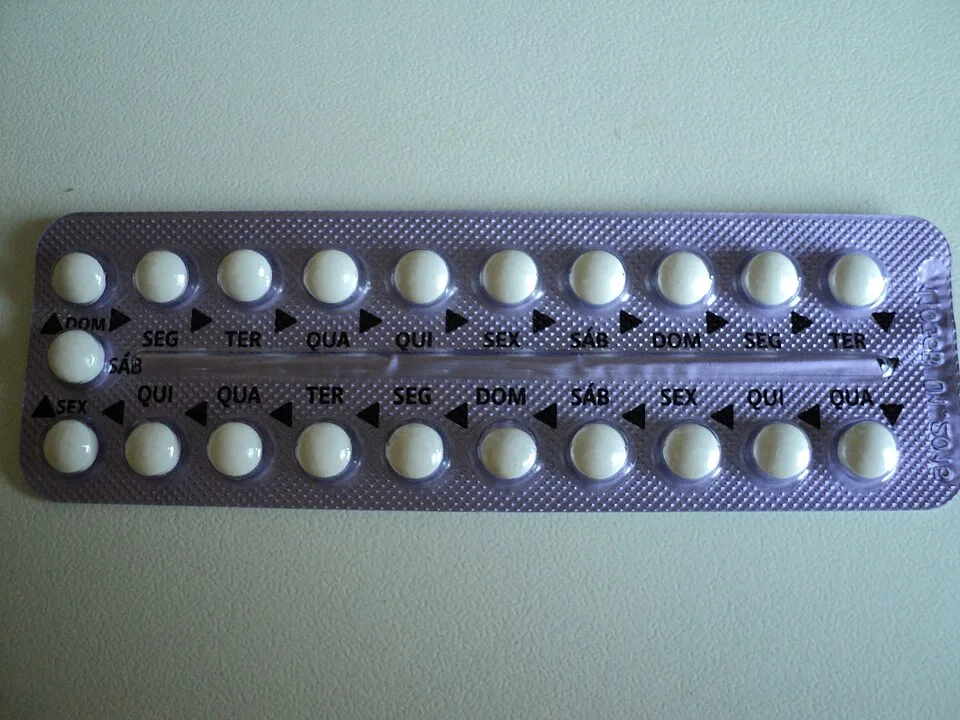
Combined hormonal contraception (CHC) contains an oestrogen, usually ethinylestradiol 20–35 µg, with a progestogen, and is taken as a pill, a weekly transdermal patch or a monthly vaginal ring. It works mainly by suppressing ovulation, with thickened cervical mucus and a thin endometrium adding protection. With perfect use fewer than 1 in 100 users conceive in a year, but typical use failure is about 9%, mostly from missed pills. The main harms are venous thromboembolism, which is roughly doubled to sextupled depending on the progestogen, and a small rise in ischaemic stroke and myocardial infarction. A small increase in breast and cervical cancer is offset by large long-lasting reductions in ovarian, endometrial and colorectal cancer. Eligibility is set by the UK MEC 2025 (or WHO MEC 2025 and US MEC 2024): CHC is unacceptable (category 4) with migraine with aura, previous VTE, a thrombogenic mutation, smoking 15 or more cigarettes a day at age 35 or over, BP of 160/100 mmHg or more and in the first 6 weeks after birth while breastfeeding.
Patient case, mechanism, investigations, management, flashcards and exam-style questions.Open the lesson →
Key facts
- Primary action is inhibition of ovulation through suppression of FSH and LH; only 7 consecutive active pills are needed to suppress the ovaries
- Typical-use failure about 9% per year, perfect use below 1%; failure is usually due to missed pills or a lengthened hormone-free interval
- Start on day 1–5 of the cycle for immediate protection; quick start at other times with 7 days of condoms and a pregnancy test 3 weeks after last unprotected sex
- Two or more pills missed (48 hours or more late): take the last missed pill, use condoms for 7 days, consider emergency contraception if in week 1, omit the break if in week 3
- VTE risk per 10,000 women per year: about 2 in non-users, 5–7 with levonorgestrel, norethisterone or norgestimate, 9–12 with desogestrel, gestodene or drospirenone; far higher in pregnancy and postpartum
- UKMEC 4: migraine with aura, past VTE, thrombogenic mutation, smoker aged 35 or over with 15 or more cigarettes a day, stage 2 or 3 hypertension and breastfeeding under 6 weeks postpartum
- Enzyme inducers (rifampicin, carbamazepine, phenytoin, St John's wort) reduce efficacy; standard antibiotics do not
- Can be used until age 50 if no other risk factors; check BP and BMI before starting and at least yearly
Differential diagnosis
| Condition | Clues | Key test |
|---|---|---|
| Progestogen-only pill | Oestrogen contraindicated (migraine with aura, VTE, smoking over 35, breastfeeding under 6 weeks) | UKMEC categories |
| Levonorgestrel intrauterine device | Wants long-acting method with lighter periods; no oestrogen | Counselling; STI risk assessment |
| Copper intrauterine device | Wants non-hormonal, very effective method; also emergency contraception | Counselling |
| Etonogestrel implant | Most effective reversible method, no oestrogen; irregular bleeding | Counselling |
| Depot medroxyprogesterone acetate | Injection every 13 weeks; works with enzyme inducers; bone density concerns | Counselling; age and bone risk |
| Barrier methods | STI protection; less effective alone | Counselling |
Exam pearls
Guideline
CoSRH (formerly FSRH) Combined Hormonal Contraception guideline (2019, amended 2023) and UK Medical Eligibility Criteria (UKMEC 2025); WHO MEC 6th edition (2025) and US MEC 2024
References
- Faculty of Sexual and Reproductive Healthcare (now College of Sexual and Reproductive Healthcare). FSRH Guideline: Combined Hormonal Contraception (January 2019, amended October 2023). FSRH/CoSRH 2023.
- College of Sexual and Reproductive Healthcare. UK Medical Eligibility Criteria for Contraceptive Use (UKMEC 2025). CoSRH 2025.
- Nguyen AT, Curtis KM, Tepper NK, et al. (CDC). U.S. Medical Eligibility Criteria for Contraceptive Use, 2024. MMWR Recomm Rep 2024.
- World Health Organization. Medical eligibility criteria for contraceptive use, 6th edition. WHO 2025.
- Lidegaard Ø, Nielsen LH, Skovlund CW, Skjeldestad FE, Løkkegaard E.. Risk of venous thromboembolism from use of oral contraceptives containing different progestogens and oestrogen doses: Danish cohort study, 2001-9. BMJ 2011.
- Lidegaard Ø, Løkkegaard E, Jensen A, Skovlund CW, Keiding N.. Thrombotic stroke and myocardial infarction with hormonal contraception. N Engl J Med 2012.
Related topics
By Dr Khalid Seidi (B.Sc., M.D.) · MedEd World Clinical Knowledge library. Original teaching content checked against current guidelines (November 2026); confirm the latest local guidance before clinical use. Not a substitute for clinical judgement.