Clinical Knowledge › Obstetrics and gynaecology › Fertility and contraception
Emergency contraception
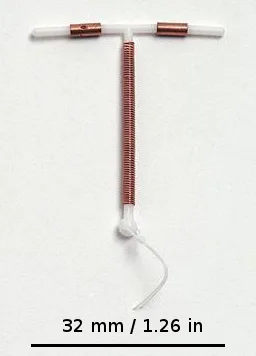
Emergency contraception (EC) reduces the risk of pregnancy after unprotected sex or contraceptive failure. There are three options. The copper intrauterine device (Cu-IUD) is the most effective (failure below 1 in 1000): it can be fitted up to 120 hours after the first episode of unprotected sex in a cycle, or up to 5 days after the earliest likely ovulation, and then provides ongoing contraception. Ulipristal acetate 30 mg, a selective progesterone receptor modulator, is licensed up to 120 hours and delays ovulation even when the LH surge has begun. Levonorgestrel 1.5 mg is licensed up to 72 hours and works only before the LH surge starts; 3 mg is used for women with BMI above 26 kg/m², weight above 70 kg or taking enzyme inducers. Oral EC does not work after ovulation, does not protect against later sex in the same cycle and does not disrupt an established pregnancy. After ulipristal, hormonal contraception is delayed for 5 days. Every EC consultation should cover ongoing contraception, STI and HIV risk, a pregnancy test 3 weeks later and safeguarding, especially in young people.
Patient case, mechanism, investigations, management, flashcards and exam-style questions.Open the lesson →
Key facts
- Cu-IUD: most effective EC; up to 120 hours after first unprotected sex or up to 5 days after earliest expected ovulation; provides ongoing contraception
- Ulipristal acetate 30 mg orally within 120 hours; delays ovulation until after the LH surge has started but not after the LH peak
- Levonorgestrel 1.5 mg orally within 72 hours (licensed); 3 mg if BMI above 26, weight above 70 kg or on enzyme inducers (teaching doses; check local formulary)
- Ulipristal is more effective than levonorgestrel, particularly close to ovulation; its effect is reduced by progestogen taken within 5 days after it
- After levonorgestrel start hormonal contraception immediately; after ulipristal wait 5 days, then use extra precautions (7 days CHC, 2 days POP, 7 days implant or DMPA)
- Repeat the dose if vomiting occurs within 3 hours; oral EC can be repeated in the same cycle
- EC is not needed before day 21 after birth or within 5 days of miscarriage, abortion or ectopic pregnancy
- Pregnancy test 3 weeks after the last unprotected sex; there is no evidence of teratogenicity from oral EC
Differential diagnosis
| Condition | Clues | Key test |
|---|---|---|
| Copper IUD | Wants most effective option or ongoing non-hormonal method; up to 5 days after expected ovulation | Pregnancy test; STI risk assessment |
| Ulipristal acetate 30 mg | Up to 120 hours; better near ovulation | Check for recent progestogen and gastric pH-raising drugs |
| Levonorgestrel 1.5 mg | Up to 72 hours; quick start of hormonal method possible | Weight and drug history (3 mg if needed) |
| Existing pregnancy | Unprotected sex earlier in cycle or late period | Urine hCG |
| Sexual assault | Non-consensual sex, injuries or distress | Referral to sexual assault referral centre; forensic and PEP assessment |
| No EC needed | Under 21 days postpartum or within 5 days of abortion or miscarriage | History |
Exam pearls
Guideline
CoSRH (formerly FSRH) Emergency Contraception guideline (March 2017; amended July 2023 and April 2026); US Selected Practice Recommendations 2024; WHO MEC 6th edition (2025)
References
- Faculty of Sexual and Reproductive Healthcare (now College of Sexual and Reproductive Healthcare). FSRH Clinical Guideline: Emergency Contraception (March 2017; amended July 2023 and April 2026). CoSRH 2026.
- Curtis KM, Nguyen AT, Tepper NK, et al. (CDC). U.S. Selected Practice Recommendations for Contraceptive Use, 2024. MMWR Recomm Rep 2024.
- World Health Organization. Medical eligibility criteria for contraceptive use, 6th edition. WHO 2025.
- World Health Organization Department of Sexual and Reproductive Health and Research; Johns Hopkins Center for Communication Programs. Family Planning: A Global Handbook for Providers, 2022 update. WHO 2022.
- Glasier AF, Cameron ST, Fine PM, et al.. Ulipristal acetate versus levonorgestrel for emergency contraception: a randomised non-inferiority trial and meta-analysis. Lancet 2010.
- Turok DK, Gero A, Simmons RG, et al.. Levonorgestrel vs. copper intrauterine devices for emergency contraception. N Engl J Med 2021.
Related topics
By Dr Khalid Seidi (B.Sc., M.D.) · MedEd World Clinical Knowledge library. Original teaching content checked against current guidelines (November 2026); confirm the latest local guidance before clinical use. Not a substitute for clinical judgement.