Clinical Knowledge › Obstetrics and gynaecology › Fertility and contraception
Intrauterine contraception
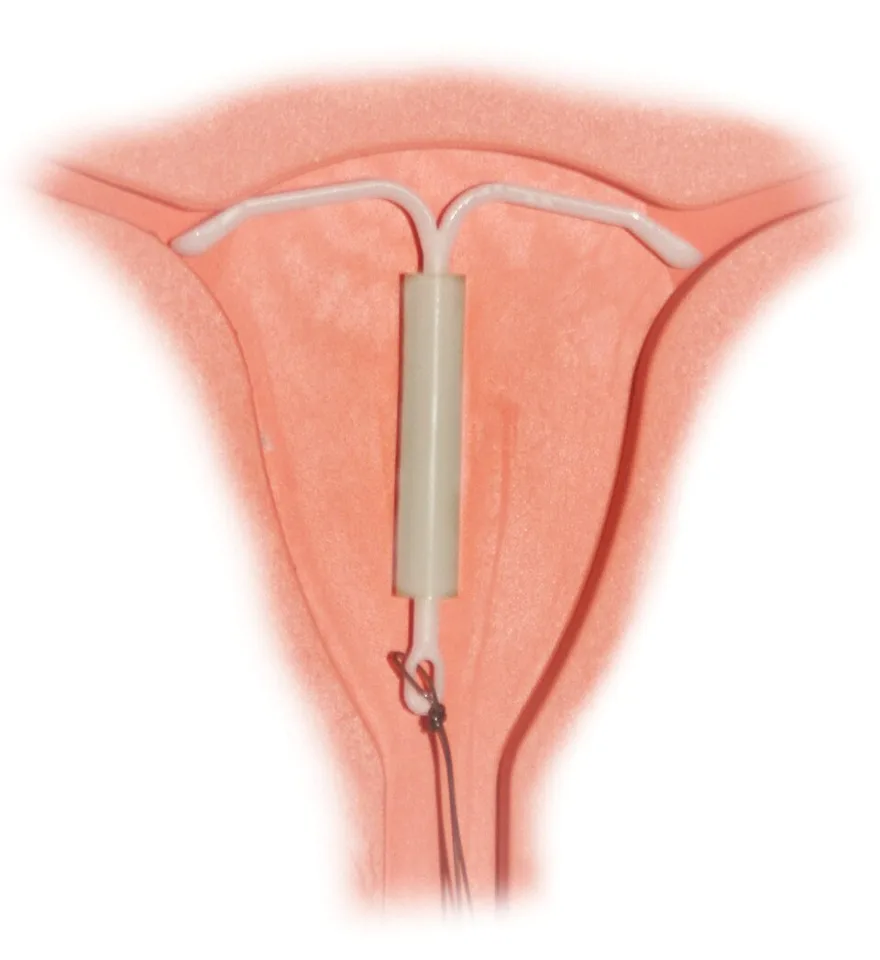
Intrauterine contraception (IUC) comprises the copper intrauterine device (Cu-IUD) and the levonorgestrel intrauterine device (LNG-IUD). Both are long-acting, have first-year failure below 1% and are unaffected by enzyme inducers. Copper ions are toxic to sperm and ova and cause an endometrial inflammatory reaction; the Cu-IUD works immediately, lasts 5–10 years and is the most effective emergency contraceptive. The LNG-IUD suppresses the endometrium and thickens cervical mucus; 52 mg devices last up to 8 years for contraception, make periods lighter, are first-line treatment for heavy menstrual bleeding and give endometrial protection with oestrogen HRT. Insertion risks include pain, vasovagal reactions, perforation (up to 2 per 1000, higher when breastfeeding or postpartum), expulsion (about 1 in 20) and a small rise in pelvic infection in the first 3 weeks. If pregnancy occurs with a device in place, ectopic pregnancy must be excluded. A device inserted at 40 or over (Cu-IUD) or 45 or over (52 mg LNG-IUD) can stay until contraception is no longer needed.
Patient case, mechanism, investigations, management, flashcards and exam-style questions.Open the lesson →
Key facts
- Cu-IUD (300 mm² or more of copper) lasts 5–10 years, works immediately and is non-hormonal; periods may become heavier and more painful
- LNG-IUD 52 mg: up to 8 years for contraception; lighter bleeding, about 20% amenorrhoea at 1 year; smaller 19.5 mg (5 years) and 13.5 mg (3 years) devices exist
- First-year failure: about 0.8% for Cu-IUD and 0.2% for LNG-IUD 52 mg
- Perforation up to about 2 per 1000 insertions; about 6 times higher when breastfeeding; expulsion about 1 in 20
- Pelvic infection risk is increased only in the first 20 days after insertion and mainly relates to existing STI
- Insert within 48 hours of birth or from 4 weeks; between 48 hours and 4 weeks is UKMEC 3
- Lost threads: pregnancy test, emergency contraception if needed, condoms, then pelvic ultrasound and, if not in the uterus, abdominal X-ray
- Pregnancy with an IUD: exclude ectopic; remove the device if threads are visible and gestation is under 12 weeks
Differential diagnosis
| Condition | Clues | Key test |
|---|---|---|
| Expulsion | Threads longer or absent, cramping, device felt at cervix | Speculum and ultrasound |
| Uterine perforation | Threads absent, device not in uterus on ultrasound | Abdominal or pelvic X-ray; laparoscopy |
| Ectopic pregnancy | Positive hCG with pain or bleeding in an IUD user | Transvaginal ultrasound, serial hCG |
| Pelvic inflammatory disease | Pelvic pain, fever, cervical motion tenderness within weeks of insertion | NAAT for chlamydia and gonorrhoea; clinical diagnosis |
| Malpositioned device | Pain or bleeding; device low in cavity or in cervix | Ultrasound |
| Endometrial or cervical pathology | New bleeding after a settled pattern, older age | Speculum, screening history, ultrasound, biopsy |
Exam pearls
Guideline
CoSRH (formerly FSRH) Intrauterine Contraception guideline (March 2023, with later amendments); UKMEC 2025; US SPR 2024; NICE NG88 heavy menstrual bleeding (2018, updated 2021)
References
- Faculty of Sexual and Reproductive Healthcare (now CoSRH). FSRH Clinical Guideline: Intrauterine Contraception (March 2023, with later amendments). FSRH/CoSRH 2025.
- College of Sexual and Reproductive Healthcare. UK Medical Eligibility Criteria for Contraceptive Use (UKMEC 2025). CoSRH 2025.
- Curtis KM, Nguyen AT, Tepper NK, et al. (CDC). U.S. Selected Practice Recommendations for Contraceptive Use, 2024. MMWR Recomm Rep 2024.
- Nguyen AT, Curtis KM, Tepper NK, et al. (CDC). U.S. Medical Eligibility Criteria for Contraceptive Use, 2024. MMWR Recomm Rep 2024.
- Heinemann K, Reed S, Moehner S, Minh TD.. Risk of uterine perforation with levonorgestrel-releasing and copper intrauterine devices in the European Active Surveillance Study on Intrauterine Devices. Contraception 2015.
- Reed SD, Zhou X, Ichikawa L, et al.. Intrauterine device-related uterine perforation incidence and risk (APEX-IUD): a large multisite cohort study. Lancet 2022.
Related topics
By Dr Khalid Seidi (B.Sc., M.D.) · MedEd World Clinical Knowledge library. Original teaching content checked against current guidelines (November 2026); confirm the latest local guidance before clinical use. Not a substitute for clinical judgement.