Clinical Knowledge › Obstetrics and gynaecology › Fertility and contraception
Ovarian hyperstimulation syndrome
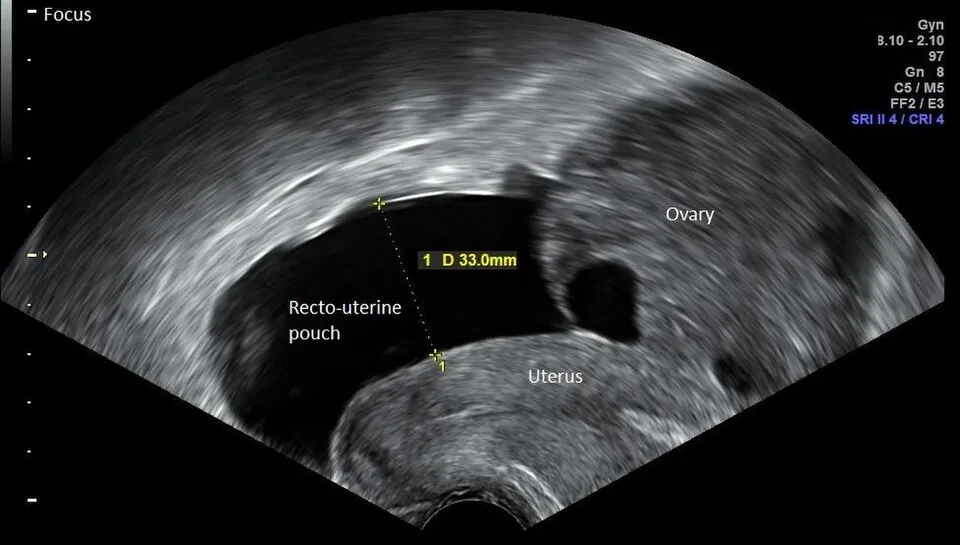
Ovarian hyperstimulation syndrome (OHSS) is an iatrogenic complication of ovarian stimulation, most often during IVF. Human chorionic gonadotrophin (hCG), given as the ovulation trigger or produced by an early pregnancy, makes the many luteinised follicles release vascular endothelial growth factor (VEGF). Capillaries become leaky and fluid shifts into the third space, causing enlarged ovaries, ascites, pleural effusion, haemoconcentration, hyponatraemia, oliguria and a high risk of thrombosis. Early OHSS begins within about 9 days of the trigger; late OHSS starts 10 days or more later, is driven by pregnancy hCG and tends to be more severe and longer lasting. Mild cases are managed as outpatients; severe cases need admission, careful fluid balance, low-molecular-weight heparin and ultrasound-guided paracentesis when ascites is tense. Prevention is the main skill: individualised gonadotrophin dosing, the GnRH antagonist protocol, a GnRH agonist trigger and freezing all embryos.
Patient case, mechanism, investigations, management, flashcards and exam-style questions.Open the lesson →
Key facts
- OHSS needs hCG: exogenous hCG trigger (early OHSS, within about 9 days) or endogenous pregnancy hCG (late OHSS, 10 days or more after trigger)
- VEGF from luteinised granulosa cells increases capillary permeability, shifting fluid into the peritoneal and pleural spaces
- High-risk markers: PCOS, high AMH or antral follicle count, young age, previous OHSS, many follicles or a high oestradiol on trigger day
- RCOG severe OHSS: clinical ascites, oliguria, haematocrit above 0.45, sodium below 135 mmol/L, potassium above 5 mmol/L or albumin below 35 g/L
- Critical OHSS: tense ascites or large hydrothorax, haematocrit above 0.55, WCC above 25 × 10⁹/L, anuria, thromboembolism or ARDS
- Avoid NSAIDs and diuretics; give oral fluids to thirst, paracetamol or opioids, daily weight and girth, and strict fluid balance when admitted
- Thromboprophylaxis with LMWH for severe OHSS; thrombosis may occur in unusual sites such as the neck and arm veins, weeks later
- Prevention: GnRH antagonist protocol, GnRH agonist trigger instead of hCG, freeze-all (segmented IVF), cabergoline and lower gonadotrophin doses
Differential diagnosis
| Condition | Clues | Key test |
|---|---|---|
| Ovarian torsion | Sudden severe unilateral pain with vomiting in an enlarged stimulated ovary | Urgent ultrasound with Doppler; laparoscopy |
| Intra-abdominal bleeding after oocyte retrieval | Pain and falling haemoglobin within hours of retrieval, no haemoconcentration | FBC (falling Hb), ultrasound for free fluid |
| Ectopic or heterotopic pregnancy | Positive hCG with pain or bleeding after embryo transfer | Serial hCG, transvaginal ultrasound |
| Pelvic infection or tubo-ovarian abscess after retrieval | Fever, rising CRP and tenderness days after retrieval | CRP, cultures, ultrasound |
| Pulmonary embolism | Sudden dyspnoea, pleuritic pain, tachycardia | CTPA or V/Q scan |
| Appendicitis | Migrating right iliac fossa pain with fever | Ultrasound or MRI, clinical review |
| Ruptured ovarian cyst | Sudden pain with free fluid, often after intercourse or exertion | Ultrasound, haemoglobin |
Exam pearls
Guideline
RCOG Green-top Guideline No. 5 (2016); ESHRE ovarian stimulation for IVF/ICSI (2019, updated 2025); ASRM prevention of moderate and severe OHSS (2024)
References
- Royal College of Obstetricians and Gynaecologists. The Management of Ovarian Hyperstimulation Syndrome. Green-top Guideline No. 5. RCOG 2016.
- ESHRE Guideline Group on Ovarian Stimulation; Bosch E, Broer S, Griesinger G, et al.. ESHRE guideline: ovarian stimulation for IVF/ICSI. Hum Reprod Open 2020.
- ESHRE Guideline Group on Ovarian Stimulation. ESHRE guideline: ovarian stimulation for IVF/ICSI: an update in 2025. Hum Reprod 2026.
- Practice Committee of the American Society for Reproductive Medicine. Prevention of moderate and severe ovarian hyperstimulation syndrome: a guideline. Fertil Steril 2024.
- Humaidan P, Quartarolo J, Papanikolaou EG.. Preventing ovarian hyperstimulation syndrome: guidance for the clinician. Fertil Steril 2010.
- Chen ZJ, Shi Y, Sun Y, et al.. Fresh versus frozen embryos for infertility in the polycystic ovary syndrome. N Engl J Med 2016.
Related topics
By Dr Khalid Seidi (B.Sc., M.D.) · MedEd World Clinical Knowledge library. Original teaching content checked against current guidelines (November 2026); confirm the latest local guidance before clinical use. Not a substitute for clinical judgement.