Clinical Knowledge › Internal medicine › Basics of internal medicine › Nutrition
Enteral nutrition
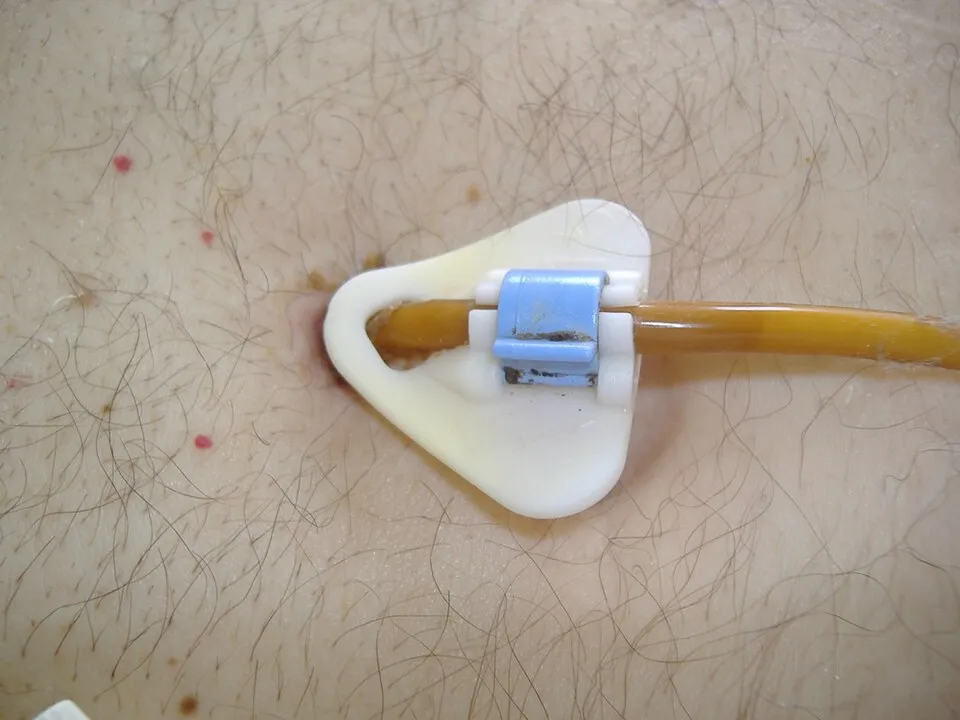
Enteral nutrition is feeding into the gut, usually by tube, when oral intake and supplements cannot meet needs but the gastrointestinal tract works. It is preferred to parenteral nutrition because it preserves gut function, avoids line infections and costs less. Nasogastric tubes are used for short-term feeding and gastrostomy (endoscopic or radiological) when feeding will last more than about 4 weeks; post-pyloric tubes help when gastric emptying is poor. Before every use, nasogastric tube position must be confirmed by aspirate pH of 5.5 or below or by a chest X-ray read by a trained clinician; feeding into the lung is a never event. Feeds are usually polymeric at about 1 kcal/mL, prescribed to energy and protein targets and started cautiously in patients at refeeding risk. Common problems are tube displacement or blockage, diarrhoea (often caused by medicines or C. difficile), aspiration, refeeding syndrome and gastrostomy complications. Tube feeding is a medical treatment: it is offered early after stroke with unsafe swallow but is not recommended in severe dementia.
Patient case, mechanism, investigations, management, flashcards and exam-style questions.Open the lesson →
Key facts
- Use the gut if it works: enteral before parenteral nutrition
- Nasogastric for short-term feeding; gastrostomy if needed for more than about 4 weeks
- Confirm NG position before every use: aspirate pH 5.5 or below, otherwise chest X-ray read by a trained clinician
- Never use the whoosh test, litmus paper or bubbling to check tube position
- Standard polymeric feed provides about 1 kcal/mL
- Head of bed at 30–45° during and after feeds reduces aspiration
- Diarrhoea on tube feeds: review sorbitol-containing liquids, laxatives and antibiotics and test for C. difficile before stopping feed
- Tube feeding is not recommended in severe dementia; NG feeding should start within about 7 days after stroke with unsafe swallow
Differential diagnosis
| Condition | Clues | Key test |
|---|---|---|
| Oral nutritional supplements | Can swallow safely but intake insufficient | Food chart and dietetic assessment |
| Nasogastric tube feeding | Short-term need, functioning stomach | Expected duration under 4 weeks |
| Post-pyloric feeding | Gastroparesis, gastric outlet obstruction, recurrent aspiration | Gastric residuals, imaging |
| Gastrostomy (PEG/RIG) | Long-term need, intolerance of NG tube | Expected duration over 4 weeks; endoscopy or imaging |
| Parenteral nutrition | Gut not functioning or not accessible | Obstruction, ischaemia, short bowel, high-output fistula |
| Comfort (careful hand) feeding | Advanced dementia or end of life | Goals-of-care discussion |
Exam pearls
Guideline
ESPEN practical guideline on home enteral nutrition (2022), ESPEN ICU guideline (2023 partial revision), ASPEN critical care guideline (2022), ESGE enteral tube guideline (2021), ESPEN dementia update (2024) and NICE CG32 (2006, updated 2017)
References
- National Institute for Health and Care Excellence. Nutrition support for adults: oral nutrition support, enteral tube feeding and parenteral nutrition (CG32). NICE (last updated 2017) 2006.
- Bischoff SC, Austin P, Boeykens K, et al.. ESPEN practical guideline: home enteral nutrition. Clin Nutr 2022.
- Singer P, Blaser AR, Berger MM, et al.. ESPEN practical and partially revised guideline: clinical nutrition in the intensive care unit. Clin Nutr 2023.
- Compher C, Bingham AL, McCall M, et al.. Guidelines for the provision of nutrition support therapy in the adult critically ill patient: ASPEN. JPEN J Parenter Enteral Nutr 2022.
- Arvanitakis M, Gkolfakis P, Despott EJ, et al.. Endoscopic management of enteral tubes in adult patients – Part 1: definitions and indications. ESGE guideline. Endoscopy 2021.
- Dennis MS, Lewis SC, Warlow C; FOOD Trial Collaboration. Effect of timing and method of enteral tube feeding for dysphagic stroke patients (FOOD): a multicentre randomised controlled trial. Lancet 2005.
Related topics
By Dr Khalid Seidi (B.Sc., M.D.) · MedEd World Clinical Knowledge library. Original teaching content checked against current guidelines (November 2026); confirm the latest local guidance before clinical use. Not a substitute for clinical judgement.