Clinical Knowledge › Internal medicine › Basics of internal medicine › Nutrition
Parenteral nutrition
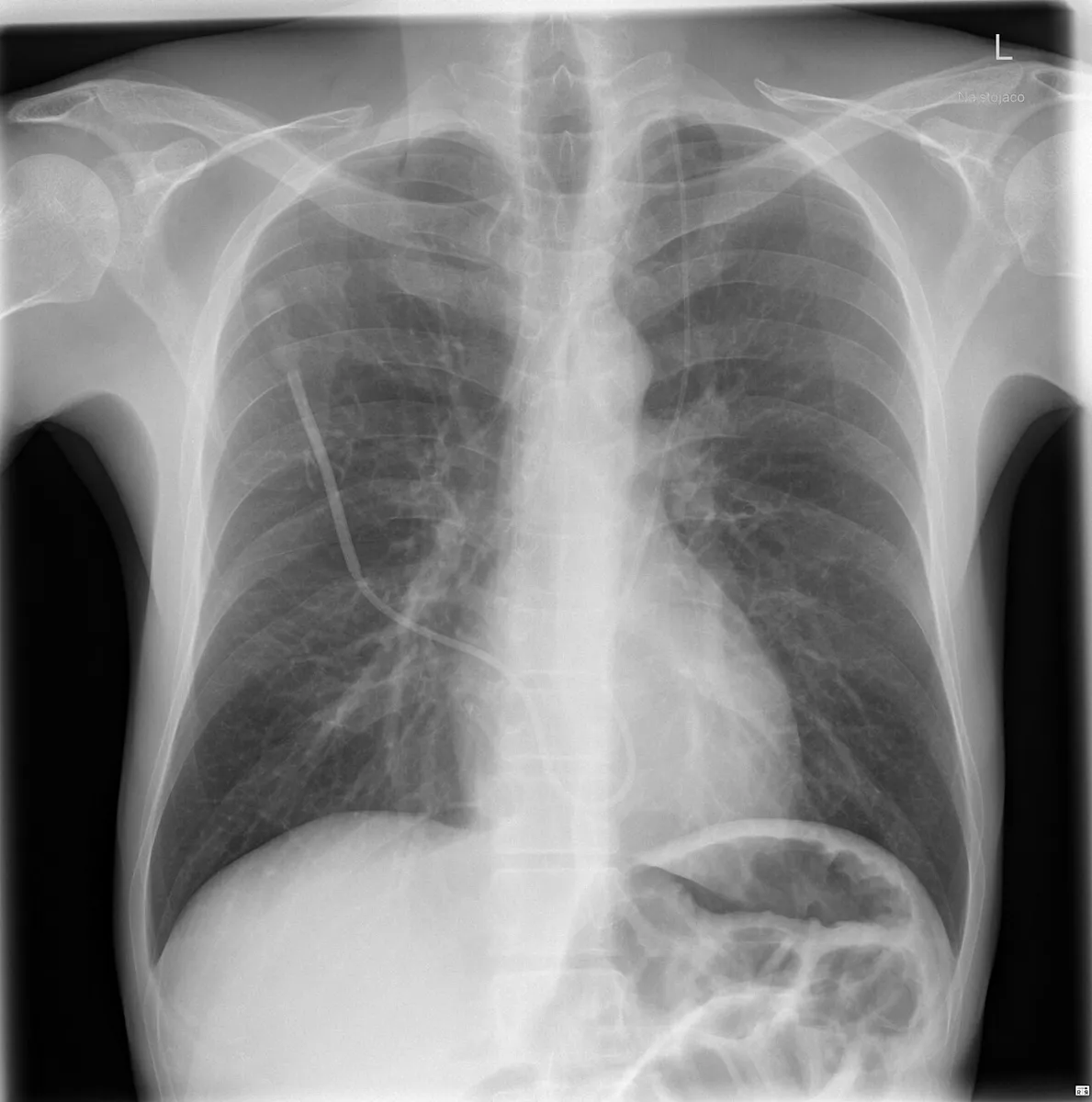
Parenteral nutrition (PN) delivers amino acids, glucose, lipid, electrolytes, vitamins, trace elements and water intravenously when the gut cannot be used, cannot be accessed or cannot absorb enough (intestinal failure). Indications include prolonged ileus, high-output fistula, bowel obstruction, short bowel syndrome and failure of enteral feeding to meet needs. Most full PN is given through a dedicated lumen of a central catheter or PICC with the tip at the cavoatrial junction; peripheral PN is limited by osmolarity. Energy is usually 20–30 kcal/kg/day and protein 1.0–1.5 g/kg/day, introduced gradually in patients at refeeding risk. In critical care, enteral feeding is preferred, and trials such as EPaNIC and CALORIES shape timing: supplemental PN is usually delayed for about a week in well-nourished patients but started earlier in the severely malnourished. Major complications are catheter-related bloodstream infection, thrombosis, hyperglycaemia, electrolyte disturbance, refeeding syndrome, hypertriglyceridaemia and intestinal failure-associated liver disease.
Patient case, mechanism, investigations, management, flashcards and exam-style questions.Open the lesson →
Key facts
- PN is for intestinal failure: when the gut cannot be used, accessed or absorb enough
- Full PN needs central access (central line or PICC) with a dedicated lumen and tip at the cavoatrial junction
- Peripheral PN is limited to osmolarity of about 850–900 mOsm/L and short-term use
- Typical targets: 20–30 kcal/kg/day energy, 1.0–1.5 g/kg/day protein, glucose not over about 4–5 mg/kg/min
- EPaNIC: delaying supplemental PN until after day 7 in ICU reduced infections; CALORIES: early PN vs early EN had similar mortality
- Hyperglycaemia is the commonest metabolic complication; catheter-related bloodstream infection is the most serious
- Fever or rigors on connection = suspect line infection: paired catheter and peripheral cultures
- Long-term PN risks liver disease, metabolic bone disease and micronutrient imbalance; manage in intestinal failure units
Differential diagnosis
| Condition | Clues | Key test |
|---|---|---|
| Enteral tube feeding | Gut functional and accessible | Clinical assessment of GI function |
| Supplemental PN | EN tolerated but below target after about a week | Daily intake record |
| Total PN | Obstruction, ischaemia, high-output proximal fistula, short bowel | Imaging, stoma or fistula output |
| Peripheral PN | Short-term, low-osmolarity need, no central access | Osmolarity of the formulation |
| Oral nutritional supplements | Can eat but intake inadequate | Food chart and dietetic review |
| Comfort-focused care | End of life; burden exceeds benefit | Goals-of-care discussion |
Exam pearls
Guideline
ESPEN ICU guideline (2023 partial revision), ASPEN critical care guideline (2022), ESPEN home PN practical guideline (2023), ESPEN chronic intestinal failure update (2023), ESPEN micronutrient guideline (2022) and NICE CG32 (2006, updated 2017)
References
- National Institute for Health and Care Excellence. Nutrition support for adults: oral nutrition support, enteral tube feeding and parenteral nutrition (CG32). NICE (last updated 2017) 2006.
- Singer P, Blaser AR, Berger MM, et al.. ESPEN practical and partially revised guideline: clinical nutrition in the intensive care unit. Clin Nutr 2023.
- Compher C, Bingham AL, McCall M, et al.. Guidelines for the provision of nutrition support therapy in the adult critically ill patient: ASPEN. JPEN J Parenter Enteral Nutr 2022.
- Pironi L, Boeykens K, Bozzetti F, et al.. ESPEN practical guideline: home parenteral nutrition. Clin Nutr 2023.
- Pironi L, Cuerda C, Jeppesen PB, et al.. ESPEN guideline on chronic intestinal failure in adults – update 2023. Clin Nutr 2023.
- Berger MM, Shenkin A, Schweinlin A, et al.. ESPEN micronutrient guideline. Clin Nutr 2022.
Related topics
By Dr Khalid Seidi (B.Sc., M.D.) · MedEd World Clinical Knowledge library. Original teaching content checked against current guidelines (November 2026); confirm the latest local guidance before clinical use. Not a substitute for clinical judgement.