Clinical Knowledge › Internal medicine › Basics of internal medicine › Nutrition
Trace element deficiencies (zinc, copper, selenium)
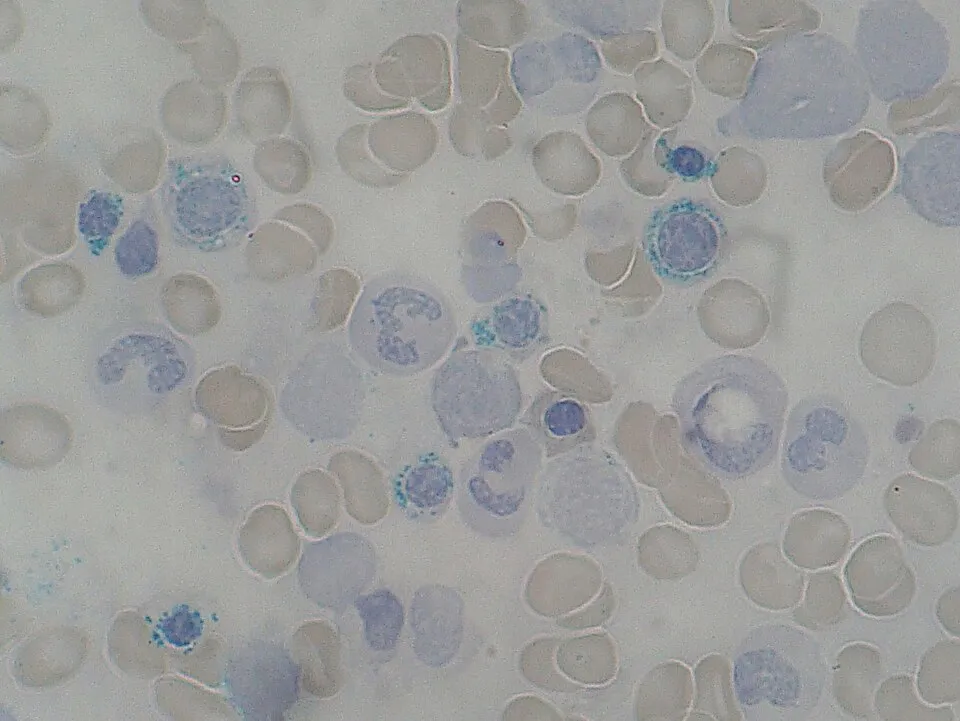
Zinc, copper and selenium are trace elements needed in milligram or microgram amounts as cofactors for hundreds of enzymes. Deficiencies are common worldwide where diets are poor or rich in phytate, and in hospital they follow gastrointestinal losses (diarrhoea, high-output stomas and fistulae), malabsorption, bariatric surgery, burns, continuous renal replacement therapy and parenteral nutrition without adequate trace elements. Zinc deficiency causes periorificial and acral dermatitis, alopecia, diarrhoea, loss of taste, poor wound healing and growth failure. Copper deficiency causes anaemia, neutropenia and a myeloneuropathy that mimics vitamin B12 deficiency, and often follows gastric surgery or excess zinc intake. Selenium deficiency causes cardiomyopathy, skeletal myopathy and nail whitening. Plasma levels must be interpreted with CRP and albumin, because inflammation lowers zinc and selenium and raises copper. Treatment is oral or intravenous replacement, removal of the cause and daily trace elements in all parenteral nutrition.
Patient case, mechanism, investigations, management, flashcards and exam-style questions.Open the lesson →
Key facts
- Zinc deficiency: periorificial and acral dermatitis, alopecia, diarrhoea, hypogeusia, poor wound healing, growth failure
- Acrodermatitis enteropathica is an inherited defect of the intestinal zinc transporter ZIP4 (SLC39A4)
- Copper deficiency: anaemia, neutropenia and a dorsal column myelopathy resembling subacute combined degeneration
- Classic causes of copper deficiency: gastric bypass or gastrectomy and excess zinc (supplements, zinc-containing denture creams)
- Selenium deficiency: cardiomyopathy (Keshan disease), skeletal myopathy, white nail beds, macrocytosis
- Acute inflammation lowers plasma zinc and selenium but raises copper and caeruloplasmin: always measure CRP
- WHO advises zinc 20 mg daily for 10–14 days (10 mg under 6 months) for children with acute diarrhoea
- ESPEN advises daily trace elements in parenteral nutrition, including about 3–5 mg zinc, 0.3–0.5 mg copper and 60–100 µg selenium for adults
Differential diagnosis
| Condition | Clues | Key test |
|---|---|---|
| Vitamin B12 deficiency | Subacute combined degeneration, macrocytic anaemia, glossitis | Low B12, raised methylmalonic acid; copper normal |
| Myelodysplastic syndrome | Older adult with cytopenias and dysplasia | Bone marrow with clonal cytogenetics; copper normal |
| Necrolytic migratory erythema (glucagonoma) | Migratory perioral and perineal rash, diabetes, weight loss | Raised glucagon; CT pancreas |
| Pellagra | Photosensitive dermatitis, diarrhoea, dementia | Clinical response to niacin; low tryptophan intake |
| Seborrhoeic or atopic dermatitis | Greasy scaly rash without diarrhoea or alopecia | Clinical; normal zinc |
| Wilson disease | Low caeruloplasmin with liver disease or neuropsychiatric signs | High 24-hour urinary copper, Kayser–Fleischer rings |
| Dilated cardiomyopathy from other causes | Heart failure without nutritional risk | Echocardiography, genetic or ischaemic work-up; normal selenium |
Exam pearls
Guideline
ESPEN micronutrient guideline (2022), ASMBS integrated health nutritional guidelines for bariatric surgery (2016 update, published 2017) and WHO/UNICEF joint statement on zinc in acute diarrhoea (2004)
References
- Berger MM, Shenkin A, Schweinlin A, et al.. ESPEN micronutrient guideline. Clin Nutr 2022.
- Berger MM, Talwar D, Shenkin A. Pitfalls in the interpretation of blood tests used to assess and monitor micronutrient nutrition status. Nutr Clin Pract 2023.
- Altarelli M, Ben-Hamouda N, Schneider A, Berger MM. Copper deficiency: causes, manifestations, and treatment. Nutr Clin Pract 2019.
- Kumar N. Copper deficiency myelopathy (human swayback). Mayo Clin Proc 2006.
- Halfdanarson TR, Kumar N, Li CY, Phyliky RL, Hogan WJ. Hematological manifestations of copper deficiency: a retrospective review. Eur J Haematol 2008.
- Parrott J, Frank L, Rabena R, et al.. American Society for Metabolic and Bariatric Surgery integrated health nutritional guidelines for the surgical weight loss patient 2016 update: micronutrients. Surg Obes Relat Dis 2017.
Related topics
By Dr Khalid Seidi (B.Sc., M.D.) · MedEd World Clinical Knowledge library. Original teaching content checked against current guidelines (November 2026); confirm the latest local guidance before clinical use. Not a substitute for clinical judgement.