Clinical Knowledge › Internal medicine › Basics of internal medicine › Nutrition
Vitamin A deficiency
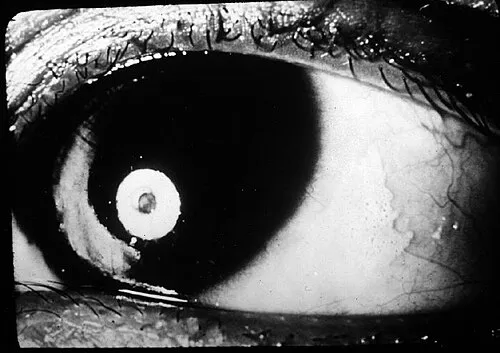
Vitamin A deficiency is inadequate body stores of retinol, the fat-soluble vitamin needed for rod photoreceptor function (rhodopsin), the integrity of mucus-secreting epithelia and normal immunity. Worldwide it remains a major cause of preventable childhood blindness and infectious death in parts of sub-Saharan Africa and South Asia, where it follows poor dietary intake, repeated infection (especially measles and diarrhoea) and early weaning. In high-income countries the ward doctor meets it mainly in adults with fat malabsorption: bariatric surgery, cystic fibrosis, cholestatic or alcohol-related liver disease, pancreatic insufficiency, Crohn disease, short bowel and highly restrictive diets. Night blindness is the earliest symptom; conjunctival and corneal xerosis, Bitot spots, keratomalacia and follicular hyperkeratosis follow. The diagnosis is clinical and supported by a low serum retinol interpreted with CRP, zinc and protein status. WHO-based treatment is high-dose oral vitamin A on days 1, 2 and 14 for xerophthalmia, with lower daily doses in women who may be pregnant. Corneal involvement is an emergency.
Patient case, mechanism, investigations, management, flashcards and exam-style questions.Open the lesson →
Key facts
- Night blindness (impaired rod function) is the earliest and most specific symptom
- WHO xerophthalmia grades: XN night blindness, X1A conjunctival xerosis, X1B Bitot spots, X2 corneal xerosis, X3A/X3B corneal ulceration or keratomalacia, XS scar, XF fundus
- Serum retinol below 0.70 µmol/L (20 µg/dL) indicates deficiency; below 0.35 µmol/L (10 µg/dL) is severe
- Retinol falls in acute inflammation and with zinc or protein deficiency (low retinol-binding protein), so interpret with CRP
- In high-income settings think of malabsorption: bariatric surgery, cystic fibrosis, cholestasis, pancreatic insufficiency, short bowel
- WHO treatment of xerophthalmia (age over 12 months): 200 000 IU orally on day 1, day 2 and at least 2 weeks later
- Women of reproductive age with night blindness or Bitot spots get low daily (10 000 IU) or weekly (25 000 IU) doses for at least 4 weeks because of teratogenicity
- Vitamin A in measles reduces severity and blindness; WHO advises two doses on consecutive days for every child with measles
Differential diagnosis
| Condition | Clues | Key test |
|---|---|---|
| Retinitis pigmentosa | Progressive night blindness from childhood, family history, bone-spicule pigment | Electroretinography; genetic testing; normal retinol |
| Dry eye disease (keratoconjunctivitis sicca, Sjögren) | Gritty dry eyes without night blindness, older women, dry mouth | Schirmer test; anti-Ro/La; normal retinol |
| Zinc deficiency | Night blindness plus periorificial dermatitis, diarrhoea, poor wound healing | Plasma zinc (with CRP); retinol may be low secondarily |
| Infective keratitis or corneal ulcer | Painful red eye, contact lens use, no xerosis | Corneal scrape and culture |
| Pinguecula or pterygium | Raised yellowish nasal or temporal conjunctival lesion, sun exposure, normal vision at night | Slit-lamp examination |
| Keratosis pilaris | Follicular papules on arms in a well young person | Clinical; no eye signs; normal retinol |
| Congenital stationary night blindness | Non-progressive night blindness since birth | Electroretinography pattern; normal retinol |
Exam pearls
Guideline
WHO guideline on vitamin A supplementation in infants and children 6–59 months (2011), WHO/UNICEF/IVACG guide to treatment and prevention of xerophthalmia (2nd ed, 1997) and ESPEN micronutrient guideline (2022)
References
- World Health Organization. Guideline: Vitamin A supplementation in infants and children 6–59 months of age. WHO, Geneva 2011.
- World Health Organization, UNICEF, International Vitamin A Consultative Group. Vitamin A supplements: a guide to their use in the treatment and prevention of vitamin A deficiency and xerophthalmia, 2nd edition. WHO, Geneva 1997.
- Berger MM, Shenkin A, Schweinlin A, et al.. ESPEN micronutrient guideline. Clin Nutr 2022.
- Imdad A, Mayo-Wilson E, Haykal MR, et al.. Vitamin A supplementation for preventing morbidity and mortality in children from six months to five years of age. Cochrane Database Syst Rev 2022.
- McLaren DS, Kraemer K. Xerophthalmia. World Rev Nutr Diet 2012.
- Song A, Mousa HM, Soifer M, et al.. Recognizing vitamin A deficiency: special considerations in low-prevalence areas. Curr Opin Pediatr 2022.
Related topics
By Dr Khalid Seidi (B.Sc., M.D.) · MedEd World Clinical Knowledge library. Original teaching content checked against current guidelines (November 2026); confirm the latest local guidance before clinical use. Not a substitute for clinical judgement.