Clinical Knowledge › Internal medicine › Haematology and oncology › Bleeding, platelet and thrombotic disorders
Heparin-induced thrombocytopenia (HIT)
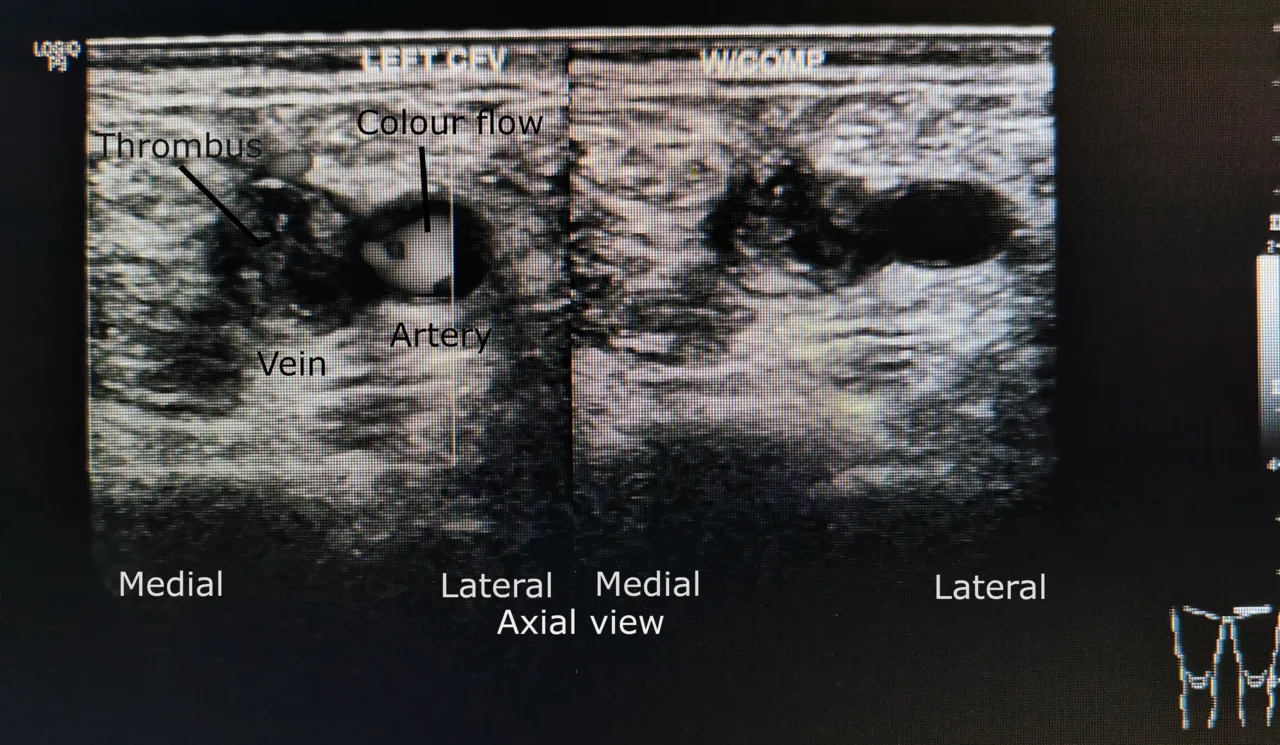
Heparin-induced thrombocytopenia (HIT) is an immune, prothrombotic adverse drug reaction. IgG antibodies recognise complexes of platelet factor 4 (PF4) and heparin and activate platelets through FcγRIIa receptors, causing a fall in platelet count and a high risk of venous and arterial thrombosis. It typically begins 5–10 days after starting heparin, earlier if heparin was given in the previous 100 days, and is commoner with unfractionated heparin than low-molecular-weight heparin and after cardiac or orthopaedic surgery. The platelet count usually falls by more than 50% to a nadir of 20–100 × 10⁹/L; bleeding is unusual. The 4Ts score estimates pre-test probability, and a low score effectively excludes HIT. Anti-PF4/heparin immunoassays are sensitive, and functional assays confirm. Management is to stop all heparin and start a therapeutic non-heparin anticoagulant such as argatroban, fondaparinux, danaparoid or a DOAC; avoid warfarin until the platelet count recovers and avoid platelet transfusion.
Patient case, mechanism, investigations, management, flashcards and exam-style questions.Open the lesson →
Key facts
- HIT = IgG antibodies to PF4–heparin complexes that activate platelets: a prothrombotic, not a bleeding, disorder
- Platelet fall over 50% starting 5–10 days after heparin; within 24 hours if heparin was given in the previous 30 (up to 100) days
- Nadir is usually 20–100 × 10⁹/L; counts below 20 × 10⁹/L suggest another cause
- Risk is higher with unfractionated heparin, after cardiac and orthopaedic surgery, and in women
- Up to half of untreated patients develop thrombosis, venous more often than arterial
- A low 4Ts score (0–3) has a negative predictive value close to 99%; no testing is needed
- Stop ALL heparin and start a therapeutic-dose non-heparin anticoagulant even without thrombosis
- Warfarin started during acute HIT can cause venous limb gangrene; delay it until platelets recover
Differential diagnosis
| Condition | Clues | Key test |
|---|---|---|
| Pseudothrombocytopenia | Well patient, no bleeding, platelet clumps | Repeat count in citrate tube; film shows clumps |
| Sepsis or DIC | Fever, shock, prolonged clotting times | PT/APTT, fibrinogen, D-dimer, cultures |
| Post-operative haemodilution and consumption | Fall in first 1–3 days after surgery then recovery | Timing of platelet trend |
| Drug-induced immune thrombocytopenia (e.g. vancomycin, piperacillin, quinine) | Sudden severe fall, often below 20 × 10⁹/L, with bleeding | Drug history; drug-dependent antibody tests |
| GP IIb/IIIa inhibitor thrombocytopenia | Profound fall within hours of tirofiban or eptifibatide | Timing; recovery on stopping |
| Post-transfusion purpura | Severe thrombocytopenia 5–10 days after transfusion | Anti-HPA-1a antibodies |
| Vaccine-induced or spontaneous anti-PF4 disorder (VITT) | Thrombosis and low platelets without heparin, unusual sites | Anti-PF4 ELISA positive; no heparin exposure |
| Antiphospholipid syndrome | Thrombosis with mild thrombocytopenia, pregnancy loss | Lupus anticoagulant, anticardiolipin, anti-β2GPI |
Exam pearls
Guideline
American Society of Hematology 2018 guidelines for management of VTE: heparin-induced thrombocytopenia, and British Society for Haematology guideline on diagnosis and management of HIT, third edition (2023/2024)
References
- Cuker A, Arepally GM, Chong BH, et al.. American Society of Hematology 2018 guidelines for management of venous thromboembolism: heparin-induced thrombocytopenia. Blood Adv 2018.
- Arachchillage DJ, Thachil J, Anderson JAM, et al.. Diagnosis and management of heparin-induced thrombocytopenia: third edition. Br J Haematol 2024.
- Lo GK, Juhl D, Warkentin TE, et al.. Evaluation of pretest clinical score (4 T's) for the diagnosis of heparin-induced thrombocytopenia in two clinical settings. J Thromb Haemost 2006.
- Cuker A, Gimotty PA, Crowther MA, Warkentin TE. Predictive value of the 4Ts scoring system for heparin-induced thrombocytopenia: a systematic review and meta-analysis. Blood 2012.
- Greinacher A. Heparin-induced thrombocytopenia. N Engl J Med 2015.
- Greinacher A, Thiele T, Warkentin TE, et al.. Thrombotic thrombocytopenia after ChAdOx1 nCov-19 vaccination. N Engl J Med 2021.
Related topics
By Dr Khalid Seidi (B.Sc., M.D.) · MedEd World Clinical Knowledge library. Original teaching content checked against current guidelines (November 2026); confirm the latest local guidance before clinical use. Not a substitute for clinical judgement.