Clinical Knowledge › Internal medicine › Haematology and oncology › Bleeding, platelet and thrombotic disorders
Inherited thrombophilia
Inherited thrombophilias are genetic changes in coagulation proteins that increase the risk of venous thromboembolism (VTE). The commonest, in people of European ancestry, are factor V Leiden, which makes factor Va resistant to activated protein C, and the prothrombin G20210A variant, which raises prothrombin levels; both are mild risk factors. Deficiencies of the natural anticoagulants antithrombin, protein C and protein S are rare but carry a higher risk. Thrombophilia rarely causes thrombosis alone: clots usually occur when a second factor such as surgery, pregnancy, oestrogen or immobility is added, and arterial thrombosis is not a feature. Testing is not routine after VTE, because results seldom change management and tests are affected by acute thrombosis, anticoagulants, pregnancy and oestrogen. Current guidelines limit testing to situations where a result would alter treatment, for example relatives of people with high-risk thrombophilia considering oestrogen or pregnancy, or unusual-site thrombosis. VTE is treated as usual, and prophylaxis is targeted at high-risk periods.
Patient case, mechanism, investigations, management, flashcards and exam-style questions.Open the lesson →
Key facts
- Factor V Leiden (F5 R506Q) causes activated protein C resistance; about 5% of white Europeans are heterozygous
- Prothrombin G20210A raises prothrombin levels; about 2% of white Europeans
- Antithrombin, protein C and protein S deficiencies are rare (well under 1%) but higher-risk
- Thrombophilias increase venous, not arterial, thrombosis risk; homozygous or combined defects carry the highest risk
- Oestrogen-containing contraception multiplies risk; avoid combined pills in known thrombophilia
- Most patients with VTE should NOT be tested; results rarely change duration of anticoagulation
- Do not test protein C, S or antithrombin during acute thrombosis or on anticoagulants; genetic tests are unaffected
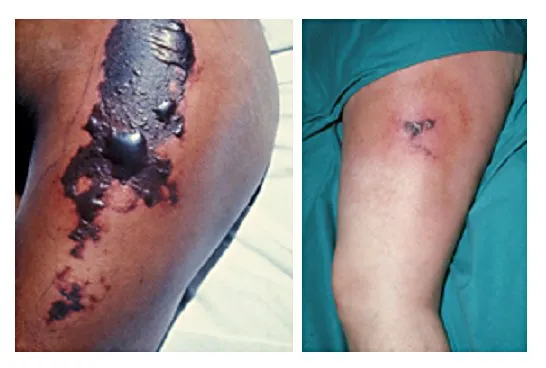
- Warfarin can cause skin necrosis in protein C deficiency; antithrombin deficiency can cause heparin resistance
Differential diagnosis
| Condition | Clues | Key test |
|---|---|---|
| Antiphospholipid syndrome (acquired) | Venous and arterial thrombosis, pregnancy loss, SLE | Lupus anticoagulant, anticardiolipin, anti-β2GPI on two occasions 12 weeks apart |
| Cancer-associated thrombosis | Older age, weight loss, unprovoked or recurrent VTE | Clinical assessment and targeted investigation |
| Myeloproliferative neoplasm | Splanchnic vein thrombosis, high Hb or platelets | JAK2 V617F, CALR testing |
| Paroxysmal nocturnal haemoglobinuria | Thrombosis at unusual sites with haemolysis, cytopenias | Flow cytometry for GPI-anchored proteins |
| Nephrotic syndrome | Oedema, proteinuria, renal vein thrombosis | Urine protein; low albumin; acquired antithrombin loss |
| Heparin-induced thrombocytopenia | Thrombosis with falling platelets on heparin | 4Ts score and anti-PF4 antibodies |
| Oestrogen or pregnancy-related VTE | Combined pill, HRT, pregnancy, postpartum | History; may coexist with thrombophilia |
Exam pearls
Guideline
American Society of Hematology 2023 guidelines for management of VTE: thrombophilia testing; British Society for Haematology thrombophilia testing guideline (2022); NICE NG158 VTE diseases (2020, updated 2023)
References
- Middeldorp S, Nieuwlaat R, Baumann Kreuziger L, et al.. American Society of Hematology 2023 guidelines for management of venous thromboembolism: thrombophilia testing. Blood Adv 2023.
- Arachchillage DJ, Mackillop L, Chandratheva A, et al.. Thrombophilia testing: a British Society for Haematology guideline. Br J Haematol 2022.
- National Institute for Health and Care Excellence. Venous thromboembolic diseases: diagnosis, management and thrombophilia testing (NG158). NICE 2020.
- Royal College of Obstetricians and Gynaecologists. Reducing the risk of venous thromboembolism during pregnancy and the puerperium (Green-top Guideline No. 37a). RCOG 2015.
- Faculty of Sexual and Reproductive Healthcare. UK Medical Eligibility Criteria for Contraceptive Use (UKMEC). FSRH 2016.
- Connors JM. Thrombophilia testing and venous thrombosis. N Engl J Med 2017.
Related topics
By Dr Khalid Seidi (B.Sc., M.D.) · MedEd World Clinical Knowledge library. Original teaching content checked against current guidelines (November 2026); confirm the latest local guidance before clinical use. Not a substitute for clinical judgement.