Clinical Knowledge › Internal medicine › Infectious diseases › Zoonoses and parasitic infections
Toxocariasis
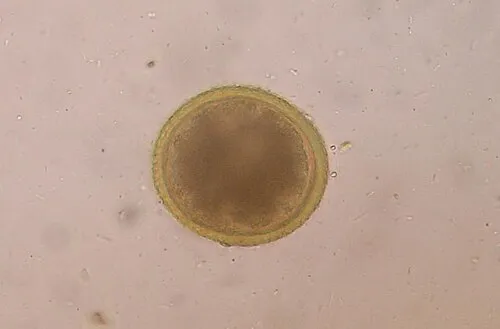
Toxocariasis is a worldwide zoonosis caused by larvae of the dog roundworm Toxocara canis and the cat roundworm T. cati. People, usually young children with pica, swallow embryonated eggs from soil contaminated with dog or cat faeces, or eat undercooked liver of infected animals. Larvae hatch, penetrate the gut and wander through tissues but cannot mature in humans, so eggs never appear in stool. Visceral larva migrans causes fever, hepatomegaly, wheeze and marked eosinophilia; ocular toxocariasis affects one eye of an older child, producing a retinal granuloma, endophthalmitis and leukocoria that must be distinguished from retinoblastoma; covert toxocariasis causes vague symptoms with mild eosinophilia; and neurotoxocariasis is rare. Diagnosis rests on the clinical picture with ELISA for Toxocara excretory–secretory antigen, confirmed by Western blot, while eye disease may be seronegative and need intraocular antibody testing. Symptomatic systemic disease is treated with albendazole, often with corticosteroids; ocular disease needs corticosteroids and specialist eye care. Prevention is regular deworming of puppies and kittens, removing pet faeces and hand hygiene.
Patient case, mechanism, investigations, management, flashcards and exam-style questions.Open the lesson →
Key facts
- Caused by larvae of Toxocara canis (dogs) and T. cati (cats); humans are accidental paratenic hosts in which larvae cannot mature
- Infection is by swallowing embryonated eggs from soil, sandpits or hands; eggs need weeks in soil to become infective, so fresh faeces are not infectious
- Eating raw or undercooked liver of chickens, ducks, cattle or other paratenic hosts is an important route in adults, especially in East Asia
- Stool microscopy is useless: adult worms never develop in humans
- Visceral larva migrans: child aged 1–5 years with pica, fever, hepatomegaly, wheeze and eosinophilia often above 3 × 10⁹/L
- Ocular toxocariasis: usually unilateral in children aged 5–10 years; posterior pole or peripheral granuloma or endophthalmitis; often no eosinophilia and serology may be negative
- Diagnosis: Toxocara excretory–secretory antigen ELISA confirmed by Western blot; seropositivity is common in the general population, so interpret with the clinical picture
- Treatment: albendazole 400 mg twice daily for 5 days for symptomatic systemic disease; corticosteroids for severe or ocular inflammation (teaching doses; check local formulary)
Differential diagnosis
| Condition | Clues | Key test |
|---|---|---|
| Retinoblastoma (versus ocular toxocariasis) | Leukocoria in a child under 3, may be bilateral, family history | Ultrasound and MRI: calcified intraocular mass; urgent ophthalmic oncology |
| Strongyloidiasis | Larva currens, gut symptoms, risk of hyperinfection with steroids | Strongyloides serology and stool agar culture |
| Hepatic fascioliasis | Eosinophilia with tender hepatomegaly and track-like liver lesions after eating watercress | Fasciola serology |
| Asthma or eosinophilic pneumonia | Wheeze and eosinophilia without exposure to soil or pets | Toxocara serology, IgE |
| Hypereosinophilic syndrome or haematological neoplasm | Persistent eosinophils above 1.5 × 10⁹/L with organ damage, no parasitic exposure | Blood film, tryptase, B12, FIP1L1::PDGFRA testing, bone marrow |
| Toxoplasma retinochoroiditis | Active white lesion next to a pigmented scar ('headlight in the fog'), vitritis | Toxoplasma serology; aqueous PCR |
| Coats disease or retinopathy of prematurity | Leukocoria with exudative telangiectasia, or prematurity history | Fundoscopy and fluorescein angiography |
| Baylisascariasis | Severe eosinophilic meningoencephalitis after raccoon exposure in North America | Specialist serology, MRI |
Exam pearls
Guideline
No dedicated international guideline: UK recommendations for eosinophilia in returning travellers and migrants (British Infection Society, 2010), BSH guideline on investigation of eosinophilia (2017) and CDC clinical guidance in the CDC Yellow Book 2026
References
- Checkley AM, Chiodini PL, Dockrell DH, et al.. Eosinophilia in returning travellers and migrants from the tropics: UK recommendations for investigation and initial management. J Infect 2010.
- Butt NM, Lambert J, Ali S, et al.. Guideline for the investigation and management of eosinophilia. Br J Haematol 2017.
- Centers for Disease Control and Prevention. CDC Yellow Book 2026: Health Information for International Travel. 2025.
- Ma G, Holland CV, Wang T, et al.. Human toxocariasis. Lancet Infect Dis 2018.
- Despommier D. Toxocariasis: clinical aspects, epidemiology, medical ecology, and molecular aspects. Clin Microbiol Rev 2003.
- Rostami A, Riahi SM, Holland CV, et al.. Seroprevalence estimates for toxocariasis in people worldwide: a systematic review and meta-analysis. PLoS Negl Trop Dis 2019.
Related topics
By Dr Khalid Seidi (B.Sc., M.D.) · MedEd World Clinical Knowledge library. Original teaching content checked against current guidelines (November 2026); confirm the latest local guidance before clinical use. Not a substitute for clinical judgement.