Clinical Knowledge › Internal medicine › Infectious diseases › Tropical and travel medicine
Dengue
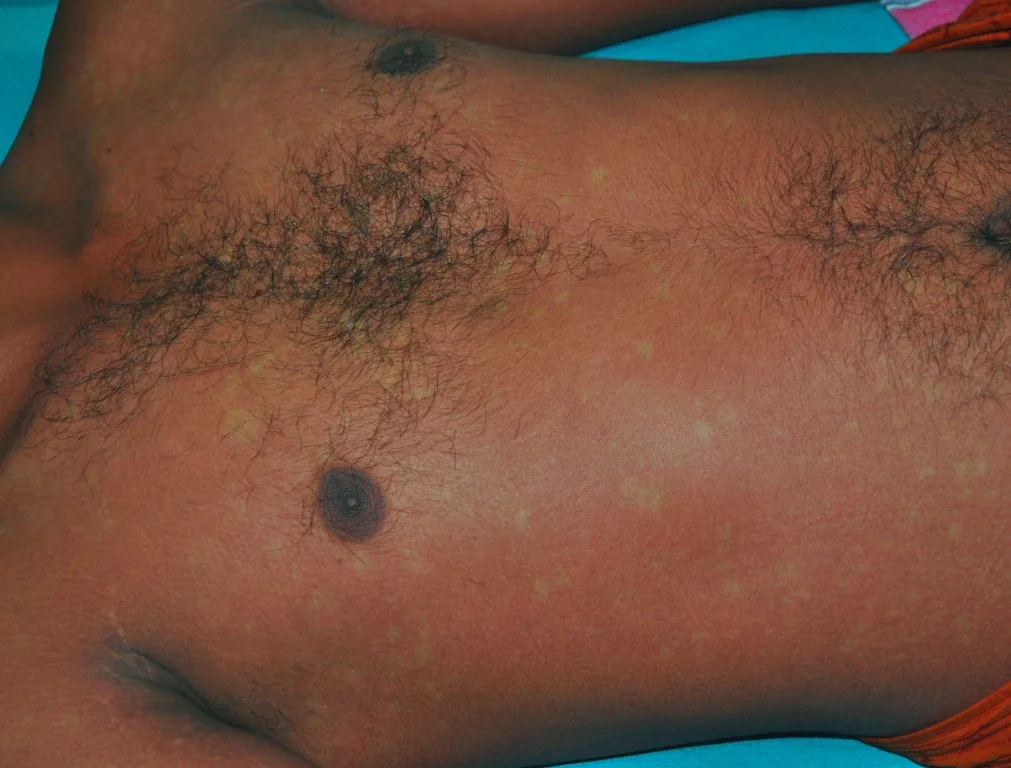
Dengue is the commonest arboviral infection in the world, caused by four dengue virus serotypes (DENV-1 to 4, flaviviruses) and spread by day-biting Aedes aegypti and Aedes albopictus mosquitoes in tropical and, increasingly, subtropical cities. Most infections are mild or silent. Symptomatic dengue begins 4–10 days after the bite with high fever, severe headache, retro-orbital pain, myalgia, arthralgia, rash, leucopenia and thrombocytopenia. Around defervescence (days 3–7) a minority enter a 24–48-hour critical phase of plasma leakage that can cause shock, bleeding and organ impairment; risk is highest in a second infection with a different serotype. The WHO classifies dengue as without warning signs, with warning signs, or severe. Diagnosis uses NS1 antigen or RT-PCR in the first week and IgM serology later. There is no antiviral: care is paracetamol, oral fluids and close monitoring of haematocrit, platelets and warning signs, with carefully titrated isotonic crystalloid for leakage and shock; NSAIDs, aspirin, intramuscular injections and routine steroids or platelet transfusions are avoided. Prevention relies on vector control, bite avoidance and, in selected people, the TAK-003 vaccine.
Patient case, mechanism, investigations, management, flashcards and exam-style questions.Open the lesson →
Key facts
- Four serotypes (DENV-1 to 4); infection gives lifelong immunity to that serotype only
- A second infection with a different serotype carries the highest risk of severe dengue (antibody-dependent enhancement)
- Incubation 4–10 days: fever starting more than 14 days after leaving an endemic area makes dengue unlikely
- The critical phase occurs around defervescence (days 3–7): falling fever does not mean recovery
- Warning signs: abdominal pain, persistent vomiting, fluid accumulation, mucosal bleeding, lethargy or restlessness, liver enlargement over 2 cm, rising haematocrit with rapidly falling platelets
- NS1 antigen or RT-PCR diagnose dengue in days 1–5; IgM becomes positive from about day 5
- Avoid NSAIDs and aspirin; paracetamol only for fever and pain
- Isotonic crystalloid, titrated to haematocrit and clinical response, is the fluid of choice for leakage and shock
Differential diagnosis
| Condition | Clues | Key test |
|---|---|---|
| Malaria | Fever after travel to Africa or Asia, no rash, splenomegaly | Thick and thin films, RDT |
| Chikungunya | Severe symmetrical polyarthritis, often prolonged; same vector | Chikungunya PCR or IgM |
| Zika | Mild fever, conjunctivitis, itchy rash; pregnancy concerns | Zika PCR (blood, urine) |
| Enteric fever | Gradual fever, abdominal pain, relative bradycardia | Blood culture |
| Leptospirosis | Freshwater exposure, calf tenderness, conjunctival suffusion, AKI and jaundice | Leptospira PCR or serology |
| Rickettsial infection (scrub typhus) | Eschar, lymphadenopathy, rural Asia | Serology; response to doxycycline |
| Measles or acute HIV | Coryza, Koplik spots; or pharyngitis, ulcers, lymphadenopathy | Measles IgM/PCR; HIV antigen/antibody |
Exam pearls
Guideline
WHO guidelines for clinical management of arboviral diseases: dengue, chikungunya, Zika and yellow fever (2025), with the WHO dengue guidelines (2009) and WHO dengue clinical management handbook (2012)
References
- World Health Organization. WHO guidelines for clinical management of arboviral diseases: dengue, chikungunya, Zika and yellow fever. World Health Organization, Geneva 2025.
- World Health Organization. Dengue: guidelines for diagnosis, treatment, prevention and control. New edition. World Health Organization, Geneva 2009.
- World Health Organization. Handbook for clinical management of dengue. World Health Organization, Geneva 2012.
- Simmons CP, Farrar JJ, Nguyen vV, Wills B. Dengue. N Engl J Med 2012.
- Bhatt S, Gething PW, Brady OJ, et al.. The global distribution and burden of dengue. Nature 2013.
- Wills BA, Nguyen MD, Ha TL, et al.. Comparison of three fluid solutions for resuscitation in dengue shock syndrome. N Engl J Med 2005.
Related topics
By Dr Khalid Seidi (B.Sc., M.D.) · MedEd World Clinical Knowledge library. Original teaching content checked against current guidelines (November 2026); confirm the latest local guidance before clinical use. Not a substitute for clinical judgement.