Clinical Knowledge › Internal medicine › Infectious diseases › Tropical and travel medicine
Yellow fever
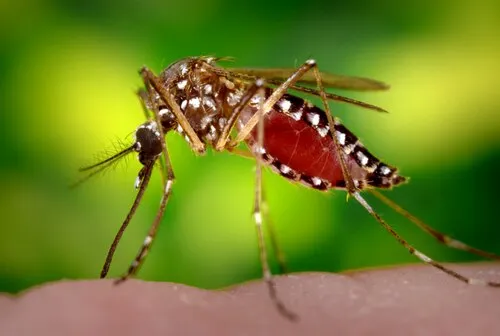
Yellow fever is an acute mosquito-borne flavivirus infection endemic in tropical sub-Saharan Africa and Central and South America. The virus circulates between non-human primates and forest mosquitoes (Haemagogus and Sabethes in the Americas, Aedes species in Africa) and can spread in towns through Aedes aegypti. After an incubation of 3–6 days, most infections are mild or silent, but about 12–15% of symptomatic patients enter a toxic phase after a brief remission, with jaundice, haemorrhage ('black vomit'), acute kidney injury, shock and encephalopathy; case fatality in severe disease is 30–60%. Hepatocyte apoptosis in the midzonal lobule (Councilman bodies) explains very high transaminases with AST exceeding ALT. Diagnosis uses RT-PCR early and IgM serology later, interpreted against vaccination history and cross-reacting flaviviruses. There is no specific antiviral, so management is intensive supportive care. A single dose of the live attenuated 17D vaccine gives lifelong protection for most people and underpins prevention, outbreak control and travel certification.
Patient case, mechanism, investigations, management, flashcards and exam-style questions.Open the lesson →
Key facts
- Flavivirus transmitted by day-biting mosquitoes; sylvatic (jungle), intermediate (savannah) and urban (Aedes aegypti) cycles
- Endemic in 34 African and 13 Central and South American countries; not established in Asia despite abundant Aedes aegypti
- Incubation 3–6 days; most infections are asymptomatic or a short febrile illness with relative bradycardia (Faget sign)
- About 12–15% of symptomatic patients enter the toxic phase: jaundice, bleeding, AKI, shock; 30–60% of them die
- Pathology: midzonal (zone 2) hepatocyte necrosis with apoptotic Councilman bodies; AST typically higher than ALT
- RT-PCR is positive in the first days of illness; IgM appears later and cross-reacts with other flaviviruses and recent vaccination
- No antiviral treatment: supportive care, avoid aspirin and NSAIDs
- A single dose of 17D vaccine protects for life in most people (WHO 2013; certificate valid for life since 2016) and becomes valid 10 days after vaccination
Differential diagnosis
| Condition | Clues | Key test |
|---|---|---|
| Falciparum malaria | Fever, jaundice, confusion in endemic area | Malaria films or rapid antigen test |
| Viral hepatitis (A, B, E) | Jaundice with high ALT (ALT higher than AST), less bleeding and renal failure | Hepatitis serology |
| Leptospirosis | Fever, jaundice, AKI, conjunctival suffusion after water exposure | Leptospira PCR or serology |
| Severe dengue | Plasma leakage, thrombocytopenia, bleeding; jaundice uncommon | Dengue NS1, PCR, IgM |
| Viral haemorrhagic fevers (Ebola, Lassa, CCHF) | Fever and bleeding with person-to-person exposure | Exposure history; VHF RT-PCR in reference laboratory |
| Enteric fever | Prolonged fever, relative bradycardia, abdominal pain | Blood cultures |
| Drug- or toxin-induced acute liver failure | Jaundice and coagulopathy without fever | Drug history, paracetamol level |
Exam pearls
Guideline
WHO Vaccines and vaccination against yellow fever: position paper (2013) with IHR lifelong certificate validity (2016); WHO guidelines for clinical management of arboviral diseases: dengue, chikungunya, Zika and yellow fever (2025); UKHSA Green Book chapter on yellow fever and ACIP booster recommendations (2015)
References
- World Health Organization. Vaccines and vaccination against yellow fever. WHO position paper – June 2013. Wkly Epidemiol Rec 2013.
- World Health Organization. WHO guidelines for clinical management of arboviral diseases: dengue, chikungunya, Zika and yellow fever. World Health Organization, Geneva 2025.
- UK Health Security Agency. Immunisation against infectious disease (the Green Book): yellow fever chapter. UKHSA 2013.
- Monath TP, Vasconcelos PF. Yellow fever. J Clin Virol 2015.
- Staples JE, Bocchini JA, Rubin L, Fischer M. Yellow fever vaccine booster doses: recommendations of the Advisory Committee on Immunization Practices, 2015. MMWR Morb Mortal Wkly Rep 2015.
- World Health Organization. Eliminate Yellow fever Epidemics (EYE): a global strategy, 2017–2026. World Health Organization, Geneva 2017.
Related topics
By Dr Khalid Seidi (B.Sc., M.D.) · MedEd World Clinical Knowledge library. Original teaching content checked against current guidelines (November 2026); confirm the latest local guidance before clinical use. Not a substitute for clinical judgement.