Clinical Knowledge › Internal medicine › Infectious diseases › Tropical and travel medicine
Trypanosomiasis (Chagas disease and sleeping sickness)
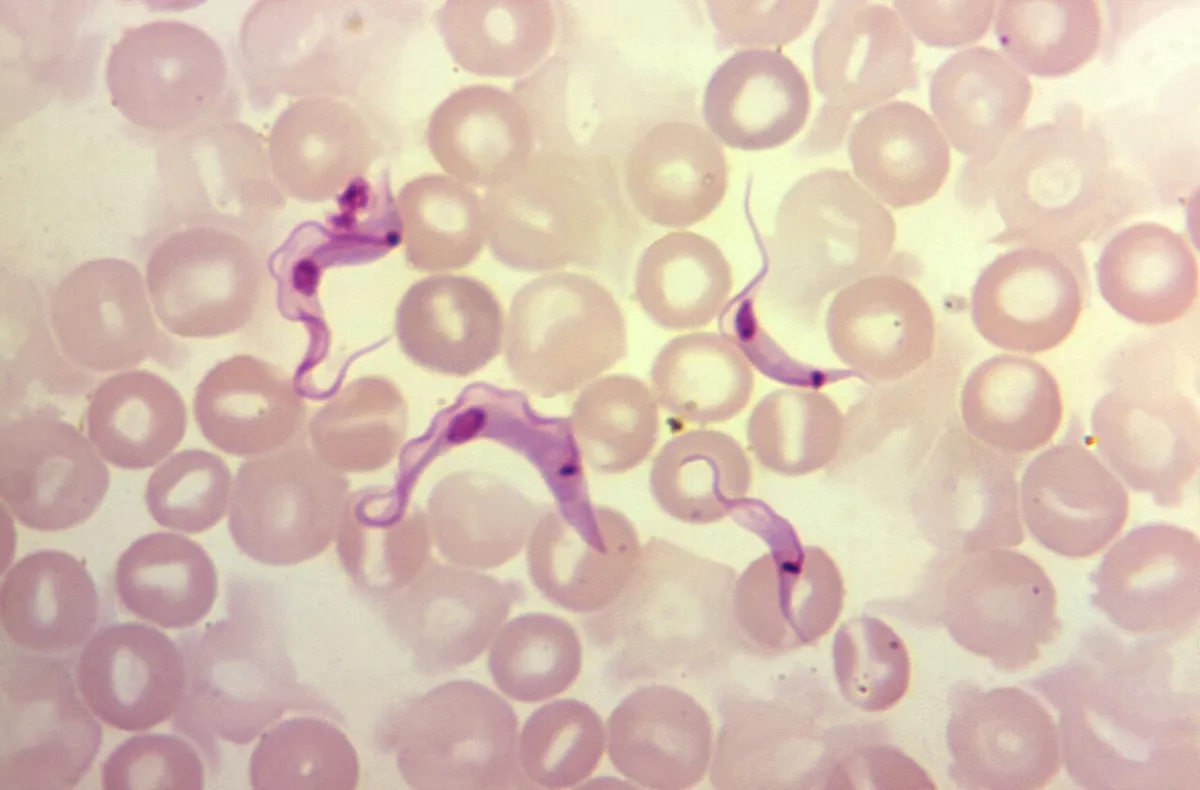
Trypanosomiasis covers two distinct diseases caused by flagellated protozoa. Chagas disease (American trypanosomiasis) is caused by Trypanosoma cruzi, spread mainly by triatomine ('kissing') bug faeces in Latin America, and also orally, by transfusion, transplantation and congenitally. After an often silent acute phase (chagoma or Romaña sign), most people remain in a lifelong indeterminate phase, but 20–30% develop chronic cardiomyopathy with conduction disease, ventricular arrhythmias, apical aneurysm and heart failure; some develop megaoesophagus or megacolon. Diagnosis of chronic disease needs two different positive serological tests; benznidazole or nifurtimox cure acute and congenital infection and are offered to children and to women of child-bearing age. Human African trypanosomiasis (sleeping sickness) is caused by T. brucei gambiense (chronic, West and Central Africa) or T. b. rhodesiense (acute, East and Southern Africa), transmitted by tsetse flies, and progresses from a haemolymphatic stage to a fatal meningoencephalitic stage. Oral fexinidazole has simplified treatment.
Patient case, mechanism, investigations, management, flashcards and exam-style questions.Open the lesson →
Key facts
- Chagas disease: T. cruzi transmitted by triatomine bug faeces rubbed into the bite, eye or mucosa; also oral, transfusion, transplant and congenital routes
- Romaña sign = painless unilateral periorbital oedema at the portal of entry in acute Chagas disease
- About 20–30% of chronically infected people develop cardiomyopathy: right bundle branch block with left anterior fascicular block, apical aneurysm, VT and sudden death
- Chronic Chagas diagnosis needs two serological tests based on different antigens or methods; acute and congenital disease are diagnosed by microscopy or PCR
- Benznidazole (60 days) or nifurtimox (60–90 days) cure acute and congenital infection; benefit in established cardiomyopathy was not shown in the BENEFIT trial
- Sleeping sickness: tsetse fly; T. b. gambiense causes over 90% of cases and runs a chronic course; T. b. rhodesiense is an acute zoonosis
- Winterbottom sign = enlarged posterior cervical lymph nodes in early gambiense disease; stage 2 causes sleep inversion, psychiatric change and coma
- Fexinidazole, a 10-day oral drug, treats both stages of gambiense disease (CSF white cells below 100/µL) and, under 2024 WHO guidance, rhodesiense disease
Differential diagnosis
| Condition | Clues | Key test |
|---|---|---|
| Idiopathic or ischaemic dilated cardiomyopathy | Heart failure without RBBB plus LAFB or apical aneurysm | T. cruzi serology, coronary assessment, cardiac MRI |
| Sarcoidosis of the heart | Conduction block and VT in a young adult | Cardiac MRI or PET; tissue granulomas; T. cruzi serology negative |
| Achalasia (idiopathic) | Dysphagia, dilated oesophagus without residence in endemic area | Manometry; T. cruzi serology |
| Malaria | Fever after travel to Africa | Thick and thin films or rapid antigen test |
| HIV-related CNS disease (toxoplasmosis, cryptococcus) | Encephalopathy and fever in Africa | HIV test, CT, CSF cryptococcal antigen |
| Tuberculous lymphadenitis or meningitis | Cervical nodes, chronic meningitis | Node aspirate for AFB, CSF analysis |
| Psychiatric disorder | Behaviour change in stage 2 sleeping sickness | Screening serology (CATT) and CSF examination in endemic areas |
Exam pearls
Guideline
PAHO Guidelines for the diagnosis and treatment of Chagas disease (2019); WHO interim guidelines for treatment of gambiense human African trypanosomiasis (2019) and WHO guidelines for the treatment of human African trypanosomiasis (2024)
References
- Pan American Health Organization. Guidelines for the diagnosis and treatment of Chagas disease. PAHO, Washington DC 2019.
- Pérez-Molina JA, Molina I. Chagas disease. Lancet 2018.
- Bern C. Chagas' disease. N Engl J Med 2015.
- Morillo CA, Marin-Neto JA, Avezum A, Sosa-Estani S, et al.. Randomized trial of benznidazole for chronic Chagas' cardiomyopathy. N Engl J Med 2015.
- Büscher P, Cecchi G, Jamonneau V, Priotto G. Human African trypanosomiasis. Lancet 2017.
- Lindner AK, Lejon V, Chappuis F, Seixas J, et al.. New WHO guidelines for treatment of gambiense human African trypanosomiasis including fexinidazole: substantial changes for clinical practice. Lancet Infect Dis 2020.
Related topics
By Dr Khalid Seidi (B.Sc., M.D.) · MedEd World Clinical Knowledge library. Original teaching content checked against current guidelines (November 2026); confirm the latest local guidance before clinical use. Not a substitute for clinical judgement.