Clinical Knowledge › Internal medicine › Infectious diseases › Tropical and travel medicine
Schistosomiasis
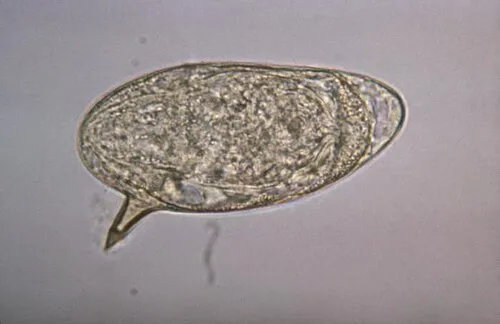
Schistosomiasis (bilharzia) is a chronic trematode infection acquired when cercariae released by freshwater snails penetrate intact skin in fresh water. Adult worm pairs live for years in mesenteric or vesical venous plexuses and release eggs, and disease is caused mainly by the host granulomatous reaction to eggs trapped in tissue rather than by the worms. Schistosoma mansoni and S. japonicum cause intestinal and hepatosplenic disease with periportal (Symmers) fibrosis, presinusoidal portal hypertension and variceal bleeding with preserved liver synthetic function; S. haematobium causes urogenital disease with terminal haematuria, obstructive uropathy, female genital schistosomiasis and bladder squamous cell carcinoma. Non-immune travellers may develop acute schistosomiasis (Katayama syndrome) with fever, urticaria, cough and marked eosinophilia 2–8 weeks after exposure. Diagnosis uses egg microscopy, serology, antigen tests and imaging. Praziquantel is the treatment of choice; WHO 2022 guidance extends preventive chemotherapy to all age groups from 2 years in endemic communities.
Patient case, mechanism, investigations, management, flashcards and exam-style questions.Open the lesson →
Key facts
- About 250 million people are infected, over 90% in sub-Saharan Africa; infection follows skin contact with fresh water containing cercariae
- S. haematobium: urogenital disease (terminal haematuria, bladder calcification, squamous cell carcinoma); S. mansoni and S. japonicum: intestinal and hepatosplenic disease
- Pathology is driven by Th2 granulomas around trapped eggs, not by adult worms, which evade immunity for years
- Hepatosplenic disease causes presinusoidal portal hypertension with varices and splenomegaly but usually normal liver synthetic function
- Katayama syndrome: fever, urticaria, dry cough and eosinophilia 2–8 weeks after freshwater exposure in non-immune travellers; eggs are often absent at this stage
- Serology turns positive 6–12 weeks after exposure and cannot distinguish past from current infection; eggs in urine or stool confirm active infection
- Praziquantel 40 mg/kg as a single dose (60 mg/kg in divided doses for S. japonicum and S. mekongi) is first-line; it does not kill immature worms, so travellers are often re-treated after 6–12 weeks
- Female genital schistosomiasis causes 'sandy patches', infertility and contact bleeding and increases the risk of HIV acquisition
Differential diagnosis
| Condition | Clues | Key test |
|---|---|---|
| Cirrhosis with portal hypertension | Stigmata of chronic liver disease, low albumin, raised INR, alcohol or viral hepatitis | Liver tests, elastography; ultrasound nodular liver without periportal fibrosis |
| Urothelial (transitional cell) bladder cancer | Older smoker, painless haematuria, no freshwater exposure | Cystoscopy and biopsy: urothelial rather than squamous histology |
| Urinary tract tuberculosis | Sterile pyuria, haematuria, night sweats | Early-morning urine for mycobacterial culture and NAAT |
| Strongyloidiasis | Eosinophilia with larva currens, abdominal pain; risk of hyperinfection with steroids | Strongyloides serology and stool agar plate culture |
| Acute HIV or other febrile illness in a traveller (dengue, enteric fever) | Fever with rash or cytopenias but no eosinophilia | HIV antigen/antibody test, dengue NS1, blood cultures |
| Visceral leishmaniasis | Fever, massive splenomegaly and pancytopenia | rK39 test, bone marrow or splenic aspirate |
| Transverse myelitis of other cause | Myelopathy without eosinophilia or freshwater exposure | MRI spine, CSF studies, AQP4 and MOG antibodies |
Exam pearls
Guideline
WHO guideline on control and elimination of human schistosomiasis (2022), within the WHO NTD road map 2021–2030
References
- World Health Organization. WHO guideline on control and elimination of human schistosomiasis. World Health Organization, Geneva 2022.
- Colley DG, Bustinduy AL, Secor WE, King CH. Human schistosomiasis. Lancet 2014.
- McManus DP, Dunne DW, Sacko M, Utzinger J, et al.. Schistosomiasis. Nat Rev Dis Primers 2018.
- Gray DJ, Ross AG, Li YS, McManus DP. Diagnosis and management of schistosomiasis. BMJ 2011.
- World Health Organization. Ending the neglect to attain the Sustainable Development Goals: a road map for neglected tropical diseases 2021–2030. World Health Organization, Geneva 2020.
- Checkley AM, Chiodini PL, Dockrell DH, et al.. Eosinophilia in returning travellers and migrants from the tropics: UK recommendations for investigation and initial management. J Infect 2010.
Related topics
By Dr Khalid Seidi (B.Sc., M.D.) · MedEd World Clinical Knowledge library. Original teaching content checked against current guidelines (November 2026); confirm the latest local guidance before clinical use. Not a substitute for clinical judgement.