Clinical Knowledge › Internal medicine › Infectious diseases › Tropical and travel medicine
Leptospirosis
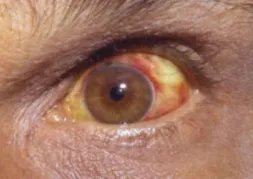
Leptospirosis is a worldwide zoonosis caused by pathogenic spirochaetes of the genus Leptospira, which colonise the renal tubules of rats, livestock and dogs and are shed in their urine. Humans are infected when abraded skin or mucous membranes contact contaminated water or soil, so cases surge after floods and affect farmers, sewer workers, vets, and people doing freshwater sports. About one million cases and 60,000 deaths occur each year. After 5–14 days most patients develop an abrupt, self-limiting febrile illness with severe myalgia (especially calves), headache and conjunctival suffusion, sometimes followed by aseptic meningitis or uveitis. A minority develop Weil disease (jaundice, acute kidney injury and bleeding) or severe pulmonary haemorrhage, which carry high mortality. PCR of blood in the first week and IgM or microscopic agglutination serology later confirm the diagnosis. Doxycycline treats mild disease; intravenous penicillin or ceftriaxone treats severe disease, with early dialysis and ventilatory support.
Patient case, mechanism, investigations, management, flashcards and exam-style questions.Open the lesson →
Key facts
- Leptospira interrogans and related species are thin, motile, hook-ended spirochaetes; rats are the most important reservoir, carrying them in their kidneys
- Transmission is through cuts, abrasions or mucous membranes exposed to urine-contaminated water or soil; outbreaks follow floods and heavy rain
- Incubation is usually 5–14 days (range 2–30 days)
- Classic features: abrupt fever, severe calf and lumbar myalgia, headache and conjunctival suffusion without discharge
- Weil disease = jaundice + acute kidney injury + haemorrhage; jaundice has a very high bilirubin with only modestly raised transaminases
- Leptospiral AKI is typically non-oliguric with hypokalaemia from tubular sodium and potassium wasting
- Severe pulmonary haemorrhage syndrome is the leading cause of death in many regions, with mortality often above 50%
- Treat mild disease with doxycycline 100 mg twice daily for 7 days; severe disease with IV benzylpenicillin or ceftriaxone 1 g daily for 7 days
Differential diagnosis
| Condition | Clues | Key test |
|---|---|---|
| Dengue | Retro-orbital pain, leucopenia, haemoconcentration, normal bilirubin and creatinine early | NS1 antigen or dengue PCR |
| Scrub typhus and other rickettsioses | Eschar, lymphadenopathy, rash | Eschar PCR, scrub typhus IgM; responds to doxycycline as well |
| Malaria | Travel to endemic area, rigors, anaemia, haemolysis | Blood films or rapid diagnostic test |
| Hantavirus infection | Rodent exposure, AKI with thrombocytopenia (haemorrhagic fever with renal syndrome) | Hantavirus serology or PCR |
| Acute viral hepatitis | Jaundice with very high transaminases (often above 1000 U/L), no AKI | Hepatitis A, B and E serology |
| Bacterial sepsis with cholangitis | Fever, jaundice, right upper quadrant pain, biliary dilatation | Blood cultures, ultrasound of biliary tree |
| Enteric fever | Stepwise fever, abdominal symptoms, relative bradycardia | Blood culture |
Exam pearls
Guideline
WHO and International Leptospirosis Society: Human leptospirosis – guidance for diagnosis, surveillance and control (2003), with subsequent randomised trial evidence on antibiotic choice
References
- World Health Organization; International Leptospirosis Society. Human leptospirosis: guidance for diagnosis, surveillance and control. World Health Organization, Geneva 2003.
- Haake DA, Levett PN.. Leptospirosis in humans. Curr Top Microbiol Immunol 2015.
- Bharti AR, Nally JE, Ricaldi JN, et al.. Leptospirosis: a zoonotic disease of global importance. Lancet Infect Dis 2003.
- Costa F, Hagan JE, Calcagno J, et al.. Global morbidity and mortality of leptospirosis: a systematic review. PLoS Negl Trop Dis 2015.
- Panaphut T, Domrongkitchaiporn S, Vibhagool A, Thinkamrop B, Susaengrat W.. Ceftriaxone compared with sodium penicillin G for treatment of severe leptospirosis. Clin Infect Dis 2003.
- Suputtamongkol Y, Niwattayakul K, Suttinont C, et al.. An open, randomized, controlled trial of penicillin, doxycycline, and cefotaxime for patients with severe leptospirosis. Clin Infect Dis 2004.
Related topics
By Dr Khalid Seidi (B.Sc., M.D.) · MedEd World Clinical Knowledge library. Original teaching content checked against current guidelines (November 2026); confirm the latest local guidance before clinical use. Not a substitute for clinical judgement.