Clinical Knowledge › Internal medicine › Infectious diseases › Tropical and travel medicine
Rickettsial infections (typhus and spotted fevers)
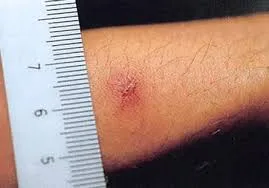
Rickettsial infections are acute febrile illnesses caused by obligately intracellular Gram-negative bacteria (order Rickettsiales) transmitted by ticks, mites, fleas or lice. The spotted fever group includes Rocky Mountain spotted fever (Rickettsia rickettsii), Mediterranean spotted fever (R. conorii) and African tick-bite fever (R. africae); the typhus group includes epidemic louse-borne typhus (R. prowazekii) and murine typhus (R. typhi); scrub typhus (Orientia tsutsugamushi), spread by larval mites, is the commonest severe form in the Asia-Pacific region. The organisms infect vascular endothelium, causing a disseminated vasculitis with fever, headache, myalgia, rash, an eschar at the bite site, thrombocytopenia, raised transaminases and hyponatraemia, and in severe cases pneumonitis, meningoencephalitis, kidney injury and shock. Diagnosis is clinical at first; serology confirms it in retrospect, and PCR of an eschar swab or blood helps early. Doxycycline is the treatment of choice at all ages and must be started on suspicion, because delay increases mortality.
Patient case, mechanism, investigations, management, flashcards and exam-style questions.Open the lesson →
Key facts
- Rickettsiae are obligate intracellular Gram-negative coccobacilli that infect endothelial cells; Orientia also infects monocytes and macrophages
- Vectors: ticks (spotted fevers), larval trombiculid mites or 'chiggers' (scrub typhus), rat fleas (murine typhus), human body lice (epidemic typhus)
- Classic triad: fever, rash and a history of tick, mite or louse exposure; an eschar (tache noire) marks the inoculation site in most spotted fevers and scrub typhus
- Rocky Mountain spotted fever rash starts on wrists and ankles and spreads centrally, involving palms and soles; epidemic typhus rash starts on the trunk and spares palms, soles and face
- Typical laboratory pattern: thrombocytopenia, normal or low white cell count, raised transaminases, hyponatraemia and raised CRP
- Doxycycline 100 mg twice daily (2.2 mg/kg twice daily in children under 45 kg) is first line at every age; start on clinical suspicion without waiting for serology
- Failure to defervesce within about 48–72 hours of doxycycline should prompt reconsideration of the diagnosis
- Paired serology (indirect immunofluorescence) showing a fourfold rise in IgG confirms infection retrospectively; the Weil–Felix test is obsolete but still appears in exams
Differential diagnosis
| Condition | Clues | Key test |
|---|---|---|
| Dengue | Retro-orbital pain, leucopenia, rising haematocrit, no eschar | NS1 antigen or dengue PCR (first 5 days), IgM later |
| Leptospirosis | Freshwater exposure, conjunctival suffusion, calf tenderness, jaundice with AKI | Leptospira PCR (first week), MAT or IgM serology |
| Malaria | Travel to endemic area, rigors, anaemia, no rash | Thick and thin blood films or rapid diagnostic test |
| Meningococcal septicaemia | Rapidly progressive non-blanching purpura, shock within hours | Blood cultures and meningococcal PCR; treat immediately |
| Enteric fever | Stepwise fever, relative bradycardia, rose spots, abdominal symptoms | Blood culture (bone marrow culture most sensitive) |
| Measles or other viral exanthem | Prodrome with cough, coryza, conjunctivitis, Koplik spots | Measles IgM or PCR |
| Drug reaction (DRESS) | Recent new drug, eosinophilia, facial oedema | Drug history, eosinophil count, RegiSCAR score |
Exam pearls
Guideline
CDC Diagnosis and Management of Tickborne Rickettsial Diseases (MMWR Recommendations and Reports, 2016), with INTREST randomised trial evidence for severe scrub typhus (2023)
References
- Biggs HM, Behravesh CB, Bradley KK, et al.. Diagnosis and management of tickborne rickettsial diseases: Rocky Mountain spotted fever and other spotted fever group rickettsioses, ehrlichioses, and anaplasmosis – United States. MMWR Recomm Rep 2016.
- Parola P, Paddock CD, Socolovschi C, et al.. Update on tick-borne rickettsioses around the world: a geographic approach. Clin Microbiol Rev 2013.
- Xu G, Walker DH, Jupiter D, Melby PC, Arcari CM.. A review of the global epidemiology of scrub typhus. PLoS Negl Trop Dis 2017.
- Varghese GM, Dayanand D, Gunasekaran K, et al.. Intravenous doxycycline, azithromycin, or both for severe scrub typhus. N Engl J Med 2023.
- Phimda K, Hoontrakul S, Suttinont C, et al.. Doxycycline versus azithromycin for treatment of leptospirosis and scrub typhus. Antimicrob Agents Chemother 2007.
- Penman ID, Ralston SH, Strachan MWJ, Hobson RP, eds.. Davidson's Principles and Practice of Medicine. 2022.
Related topics
By Dr Khalid Seidi (B.Sc., M.D.) · MedEd World Clinical Knowledge library. Original teaching content checked against current guidelines (November 2026); confirm the latest local guidance before clinical use. Not a substitute for clinical judgement.